Café Cortina marks 50 years with handmade pasta at its core
Café Cortina’s 50-year run in Farmington Hills proves handmade pasta can anchor a family restaurant, a regional identity, and a deeply personal dining room.

A half-century built around the pasta bowl
Café Cortina’s 50th anniversary is more than a milestone for a long-running restaurant in Farmington Hills. It is a reminder that handmade pasta, kept at the center of the menu for five decades, can still define what a local institution is and why people keep coming back.
Opened in 1976 by Rina and Adriano Tonon, the restaurant has held onto a clear identity while many Italian places have drifted toward the same predictable red-sauce formula. Café Cortina remains family-run today, with Rina still involved alongside her son Adrian and younger son Giancarlo, and that continuity is part of the story as much as the food itself.
Family continuity is the real signature
The restaurant’s endurance comes from more than nostalgia. The Tonon family has kept daily operations in the family, which gives Café Cortina the kind of consistency that diners can feel before the first course arrives. The business has not become a museum piece or a polished corporate throwback; it still functions as a working family restaurant shaped by the same people who built it.
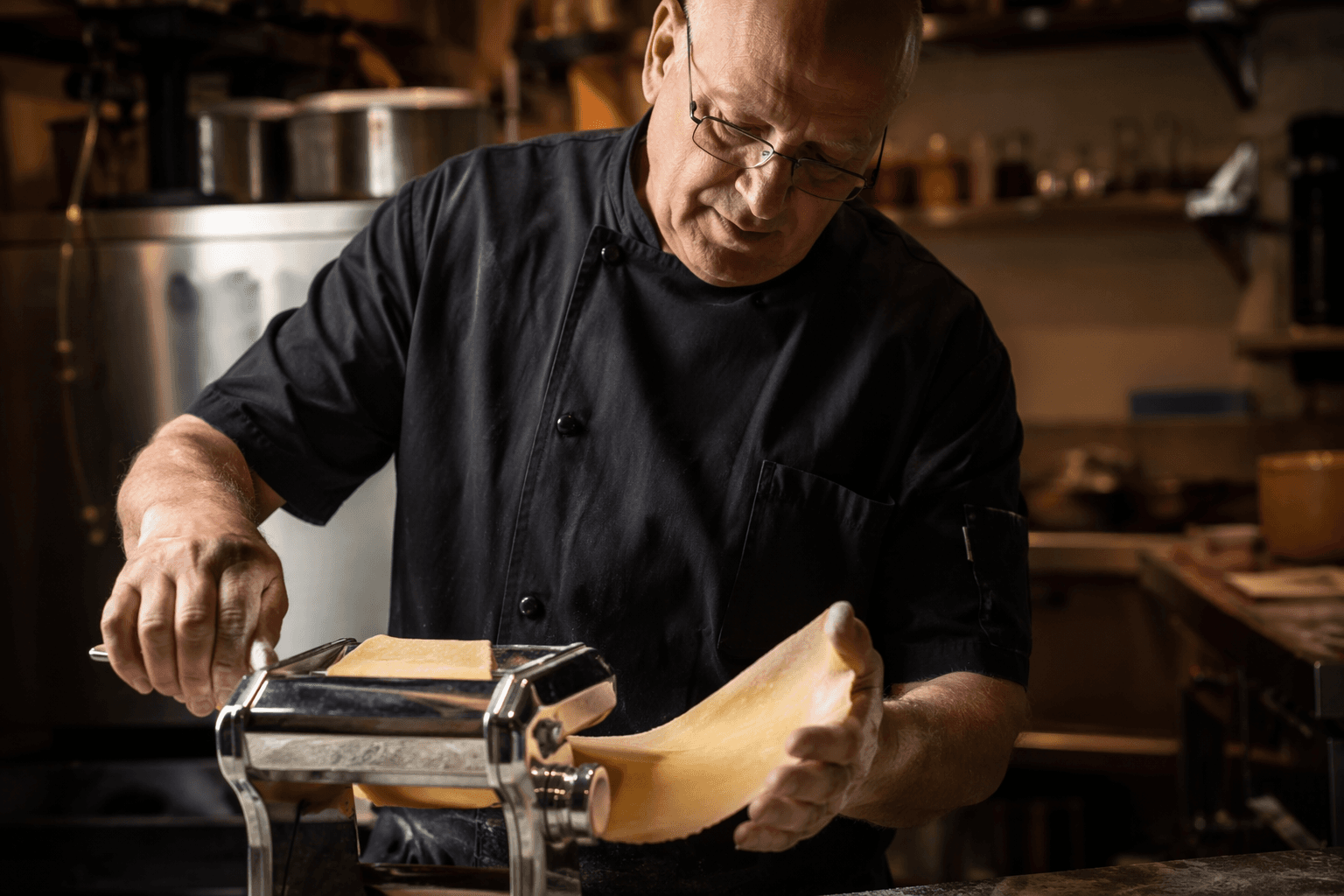
That kind of continuity matters in pasta culture because it preserves technique, memory, and standards. At Café Cortina, the handmade pasta is not a special-event flourish or a limited-time feature. It is still made by hand every day, and that detail is exactly what separates a destination restaurant from a generic Italian room built around volume and familiarity.
Why the pasta still matters
For pasta regulars, the phrase “handmade every day” is not just marketing language. It signals care in the dough, texture on the plate, and a kitchen that treats pasta as a craft rather than a convenience. At Café Cortina, the anniversary story makes clear that this practice has outlasted trends, menu churn, and the flattening of regional Italian cooking into one interchangeable style.
That persistence gives the restaurant its gravity. The pasta remains the anchor because it connects the kitchen to the dining room, the family to the guest, and the present day to the restaurant’s original identity. In a field where many places chase broad appeal by softening their point of view, Café Cortina has stayed recognizable by refusing to move the center of the plate.
A Northern Italian identity with real texture
The restaurant’s name ties back to Cortina d’Ampezzo, and the wider identity points to a rustic, hearty Veneto-style influence that shaped the early vision. That regional thread gives Café Cortina more depth than a standard anniversary profile, because it explains not just where the restaurant is, but what kind of Italian cooking it chose to represent from the start.
That background also helps explain why the story lands so strongly with pasta enthusiasts. Regional specificity still matters, especially in a dining landscape where too many menus blur everything into the same set of safe options. Café Cortina’s connection to Northern Italian tradition gives its handmade pasta a context that feels lived-in rather than borrowed.
The room is part of the experience
The dining room reinforces the same message as the menu. The space is described as dark, romantic, and intimate, with candlelit tables and a service style that feels deliberately old-school. That atmosphere turns a meal into a small event, and it helps explain why the restaurant has remained a local beacon instead of simply another place to eat.
There is a theatrical quality to that setup, but it is not empty theater. The room, the service, and the food all point in the same direction: garden-fresh ingredients, hospitality, and a sense of occasion. The result is a restaurant that feels intentionally distinct, one that knows atmosphere can strengthen identity when it is tied to substance.
What 50 years has preserved
Café Cortina’s milestone reads as a lesson in staying power. The restaurant has survived by keeping a very specific promise intact: family continuity, regional character, and handmade pasta at the center of the experience. That combination is rare enough to feel almost radical in a market where many Italian restaurants flatten themselves into the same format.
The most important part of the anniversary is that nothing about the core story has been diluted. Rina, Adrian, and Giancarlo still anchor the operation, the pasta is still made by hand every day, and the room still delivers the dark, candlelit intimacy that has long defined it. Fifty years in, Café Cortina is still recognizable because it never stopped knowing exactly what it was.
This article was produced by Prism’s automated news system from verified source data, official records, and press releases, then run through automated quality and moderation checks before publishing. The system is built and supervised by the people who set the standards it runs under. Read our full AI policy.
Did this article answer your question?