Creamy tomato rigatoni shows why ridged pasta holds sauce best
Creamy tomato rigatoni turns pantry staples into a 30-minute dinner that feels composed, thanks to ridged tubes and a sauce built to cling.
A weeknight pasta that still feels intentional
Creamy tomato rigatoni works because it gives a fast dinner the dignity of a dish that was planned. Kelli Foster’s updated recipe from The Kitchn lands in roughly 30 minutes, with only a few minutes of upfront prep, yet it still feels polished enough to make an ordinary night seem a little more deliberate. That balance, between convenience and care, is exactly why it reads like more than just another pasta recipe.
The appeal is not only speed. The recipe leans on a short list of pantry-friendly ingredients and a mostly hands-off method, which means the cook gets comfort without babysitting the pot. Foster has said this is the sort of dependable dinner she keeps in regular rotation because it is low-effort, comforting, and almost entirely pantry-based, a description that fits the way the dish behaves in the kitchen too.
Why rigatoni is the right shape for the job
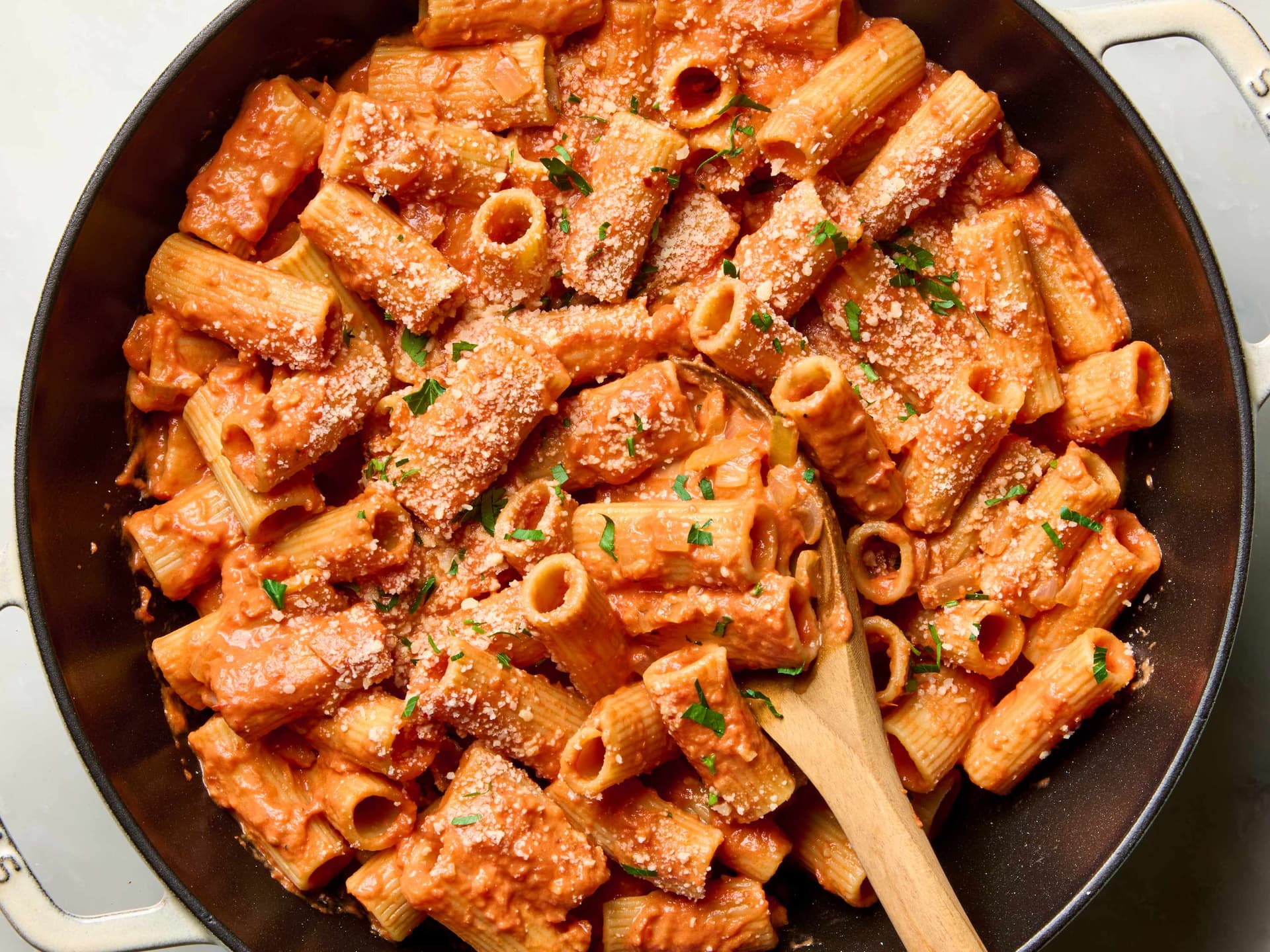
Rigatoni is not chosen here just because it is familiar or hearty. Its ridges and its larger tube shape are doing real work, and that is what makes the dish feel so satisfying from the first bite. Britannica notes that the ridges help retain heavy sauces, while the larger diameter holds sauce both inside and outside the pasta, so each piece carries more than a thin coating.
That detail matters especially with a creamy tomato sauce, where texture is part of the point. The tubes trap sauce in the center, the ridges catch it on the outside, and the result is a bite that feels fuller than you would get from a smoother shape. In other words, rigatoni does not just hold sauce, it frames it.
The sauce is simple, but each ingredient has a job
The sauce starts in a familiar place: basic aromatics, canned crushed tomatoes, butter, and heavy cream. The Kitchn’s approach is straightforward enough to feel accessible, but each layer adds something specific. The tomatoes bring the bright, savory base, the butter rounds the edges, and the heavy cream softens the sharpness into a sauce that feels rich without becoming heavy.
That tomato-plus-dairy formula is part of why this style of pasta keeps showing up in The Kitchn’s quick dinner coverage. The site has previously highlighted other creamy tomato pastas, including a 30-minute creamy tomato pasta and a creamy tomato pasta with bacon and ricotta that it says takes no more than thirty minutes. This rigatoni version sits comfortably in that lane, where speed does not mean giving up on texture or depth.
The real trick is the pasta water
If the shape is what makes the pasta hold sauce, the pasta water is what makes the sauce behave. The recipe uses starchy cooking water to help the sauce emulsify, thicken, and cling to every noodle, which is why the final bowl looks glossy instead of loose. The Kitchn calls that pasta water the key to the sauce clinging so well, and that is the kind of small technical move that quietly separates a composed pasta from a rushed one.
This lines up with broader cooking guidance from King Arthur Baking, which emphasizes that pasta water’s starch helps sauces cling more smoothly to noodles. Once you start thinking about pasta water as an ingredient rather than a byproduct, the method makes more sense: the sauce is not just sitting on top of the rigatoni, it is binding to it. That is what gives the dish its creamy, unified finish.
Timing is part of the texture
The recipe’s timing matters as much as its ingredient list. Cooking the pasta a minute short of al dente keeps it from going soft once it meets the sauce, and letting the sauce simmer gives the tomatoes, butter, and cream time to meld. Those two steps sound small, but they shape the final result more than any garnish could.
That sequence also keeps the dish weeknight-friendly. You are not juggling a long list of tasks, just paying attention at the right moments: simmer long enough for the sauce to come together, then finish the pasta in the sauce with a splash of its own water. The method rewards a little attention, but not much, which is why it feels like an upgrade without becoming a project.
Why this recipe fits The Kitchn’s lane
The Kitchn has long treated fast pasta as a sensible answer to dinner fatigue, and this recipe fits that editorial instinct neatly. Its quick creamy tomato pastas are built for people who want dinner to feel satisfying without turning the kitchen into a second job. The formula is practical, but it is also instructive, because it shows how a few ordinary ingredients can become something with better texture and more presence.
Foster’s authority in this space comes through clearly as well. The Kitchn describes her as an expert in figuring out what to cook for dinner and how to meal plan, and her education at the French Culinary Institute helps explain why the recipe feels approachable without losing its technical shape. It is a good reminder that comfort food does not have to be blunt. In the best version, it teaches you something while dinner is already on the table.
Creamy tomato rigatoni succeeds because it treats speed as a starting point, not a limitation. The ridged pasta, the gently simmered sauce, and the final splash of pasta water all push the dish toward something more composed than the clock suggests, which is exactly why it earns a place in the regular weeknight rotation.
This article was produced by Prism’s automated news system from verified source data, official records, and press releases, then run through automated quality and moderation checks before publishing. The system is built and supervised by the people who set the standards it runs under. Read our full AI policy.
Did this article answer your question?