Rotisserie chicken pasta turns pantry scraps into a 10-minute dinner
A rotisserie chicken, a pot, and pantry pasta become a 10-minute template dinner that stretches from move-day scramble to weeknight standby.
A move-day dinner built from almost nothing
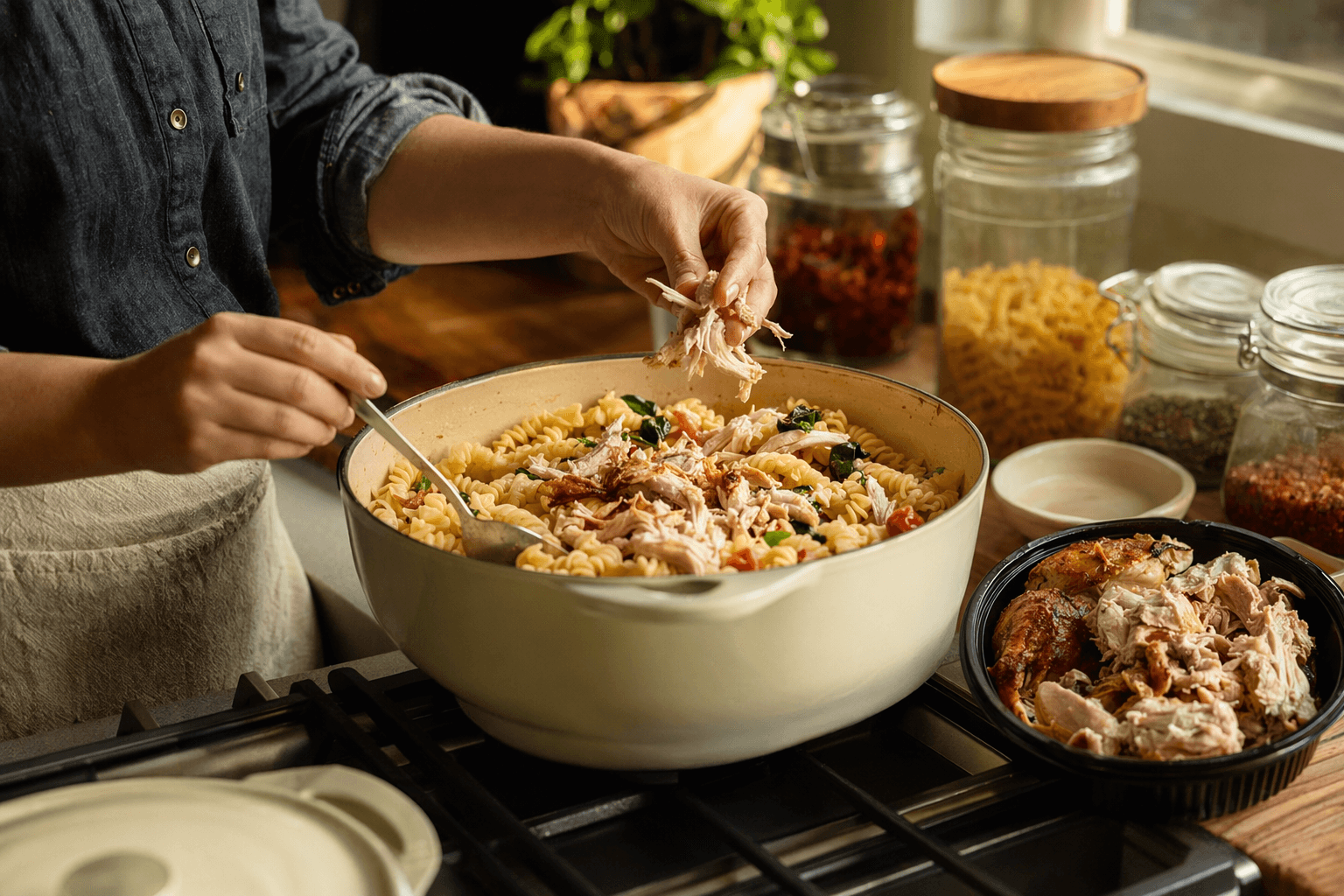
Danny Palumbo’s rotisserie chicken pasta starts with a classic kitchen panic and ends as a formula worth keeping. Packing for a cross-country move with very little equipment left within reach, he needed a real dinner after grazing on rotisserie chicken all day, and the answer was a minimalist one-pot pasta that turned scraps into something complete.
That’s the appeal here: the dish is fast, but it is also repeatable. It leans on a pot, olive oil, salt, a small reserve of pasta water, and shredded rotisserie chicken, then uses heat and starch to pull everything together into a glossy, savory bowl that feels more finished than the ingredient list suggests.
The formula that makes it work
The recipe card is stripped down in the best way. It calls for 12 ounces of ricotta cavatelli or another eggy pasta, 8 to 10 ounces of rotisserie chicken, 3 tablespoons of olive oil, 1/2 teaspoon kosher salt, and just 2 to 3 tablespoons of reserved pasta water.
That balance matters because this is not a sauce-heavy pasta. The pasta water, oil, and chicken mingle over heat to create a light coating that clings to the noodles without turning them heavy, creamy, or fussy. The dish comes together in less than 10 minutes, feeds two, and can be doubled to feed four, which makes it just as useful for a solo dinner as it is for a quick family meal.
Why fuller pasta shapes are the smart move
Palumbo’s shape guidance is what pushes this from convenience food into a real pasta lesson. He points toward ricotta cavatelli, egg-enriched pasta, tortellini, and even sweet potato gnocchi because those shapes bring more body and texture than standard dried pasta, and they hold onto the light oil-and-starch finish instead of letting it slide off.
Ricotta cavatelli are especially well suited to this kind of treatment. They are often described as soft, pillowy, and hearty, which makes them a natural fit for a simple pasta-water sauce that depends on surface texture more than richness. Food Network’s ricotta cavatelli recipe also shows how quickly this style cooks, in just 3 to 5 minutes, which matches the speed of the whole dish and keeps the one-pot method moving.
The result is a bowl that tastes bigger than its pantry footprint. A fuller pasta shape gives the chicken somewhere to land, lets the olive oil coat every bite, and makes the whole thing feel deliberate rather than improvised, even though it began as a move-day fix.
How to build the bowl without overthinking it
The structure is simple enough to memorize, which is why it works so well for busy nights and small kitchens.
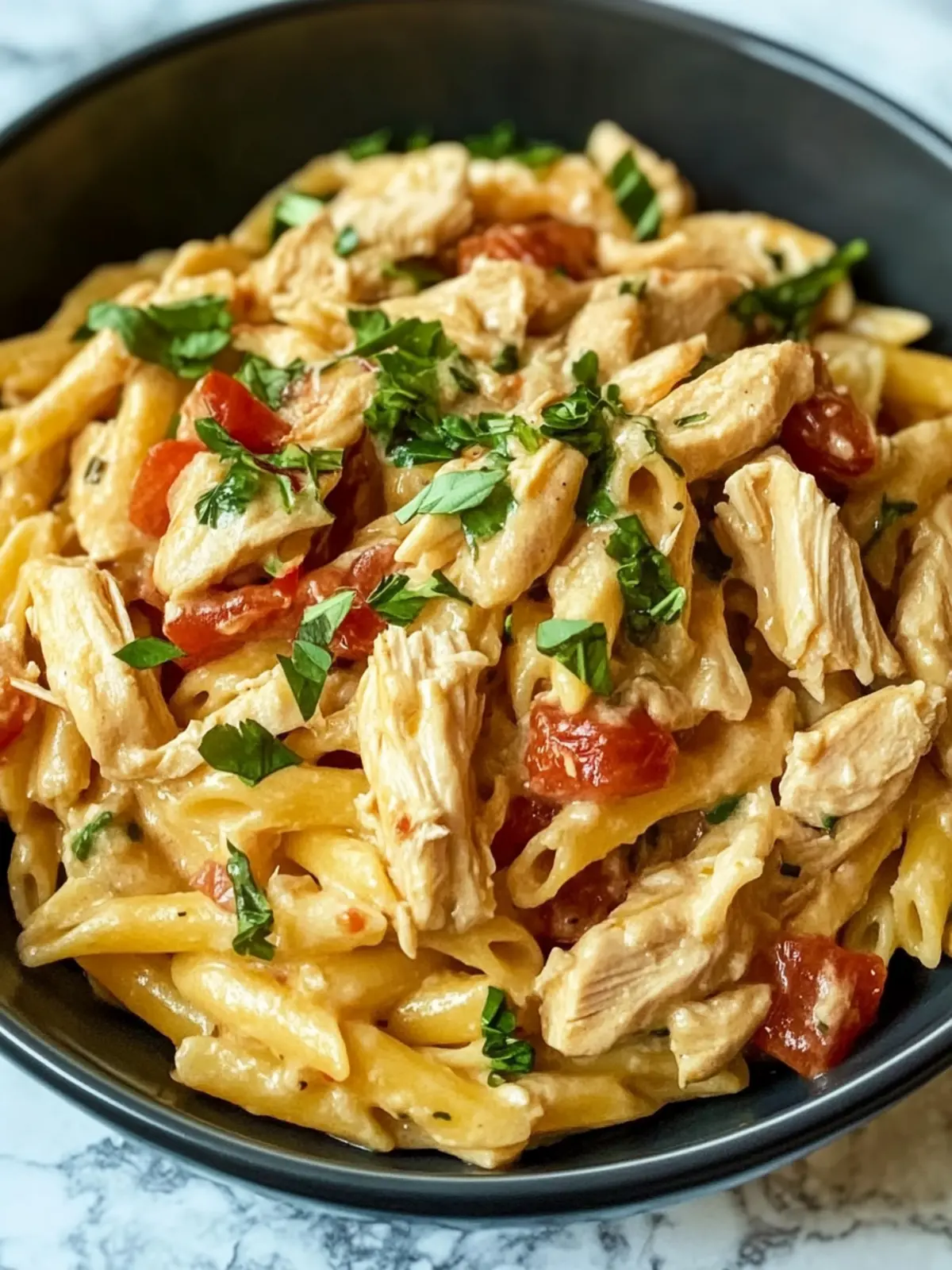
1. Cook the pasta and keep back a little of the cooking water.
2. Add the rotisserie chicken, olive oil, salt, and a splash of pasta water to the hot pot.
3. Toss until the pasta turns glossy and the chicken is warmed through.
4. Finish with whatever you have on hand to sharpen the flavor.
That last step is where the dish becomes a template instead of a one-off. If you have black pepper, a little cheese, butter, or fresh herbs, those extras can deepen the flavor without changing the core method. The point is not to rebuild the recipe from scratch, but to use what is already in the kitchen to make the bowl feel complete.
This is also what makes the dish especially useful for anyone leaning on a store-bought rotisserie bird for more than sandwiches. A bird that might otherwise get picked apart over several random meals becomes the center of a fast pasta, and the whole dinner is held together by pantry logic instead of a long ingredient list.
Why this kind of cooking feels so current
The broader food landscape makes this recipe feel very timely. The U.S. Department of Agriculture Economic Research Service says food prepared away from home plays an increasingly large role in American diets, shaped in part by more two-earner households and a wider market for convenient food options. That shift helps explain why rotisserie chicken has become such a useful shortcut: it is ready-made protein that can be turned into a complete meal with very little cleanup.
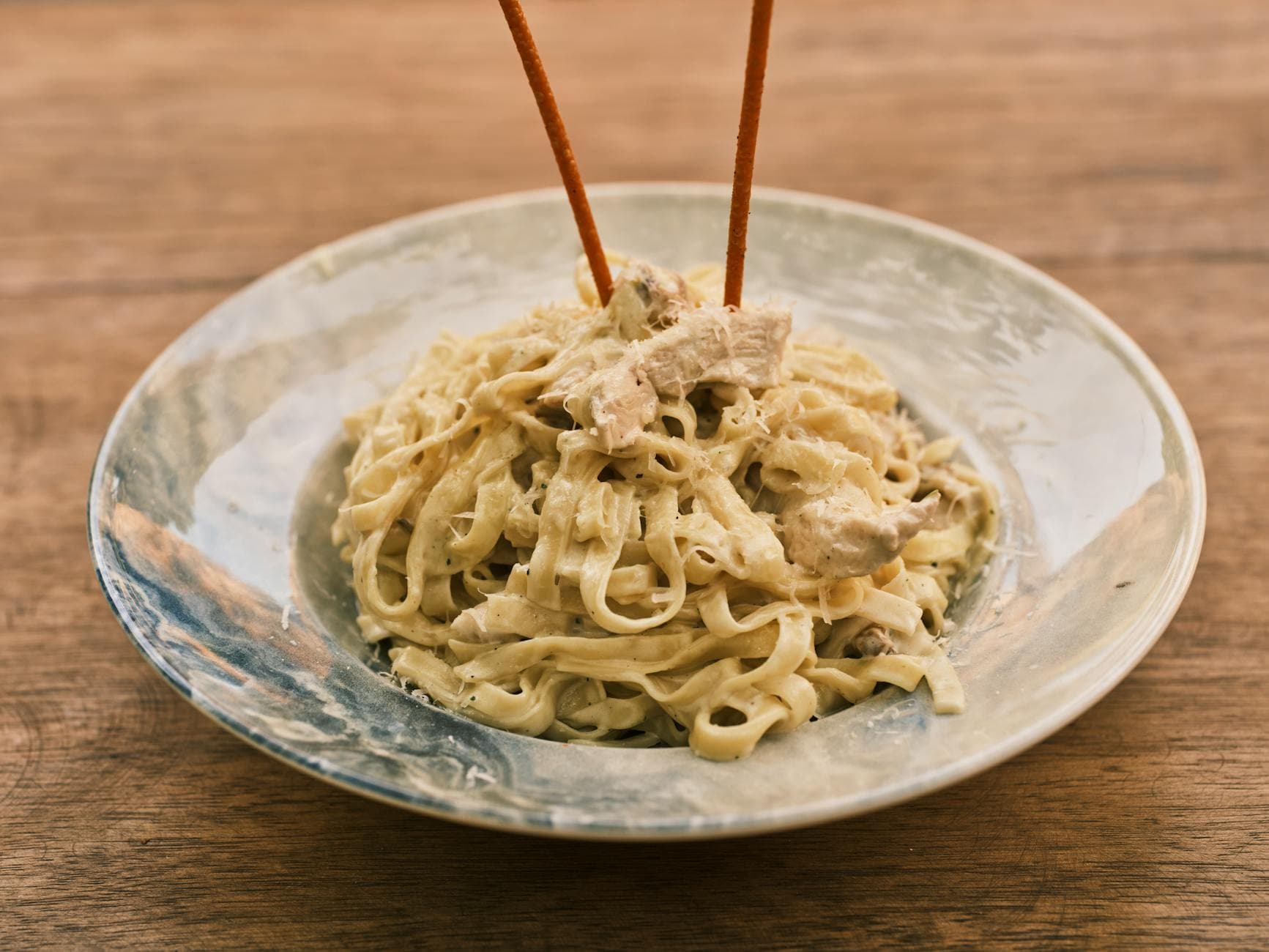
A National Chicken Council survey from June 2025, which interviewed 625 U.S. adults ages 18 to 67, adds another layer. More than half of chicken buyers said they were extremely concerned about food costs, and seven in 10 consumers now shop for groceries online or via mobile app. Younger shoppers in particular valued heat-and-serve meals and minimal cleanup, which puts a quick rotisserie chicken pasta squarely in line with how many people are actually cooking and shopping.
The debate around rotisserie chicken has even reached policy. In April 2026, a bipartisan group of senators, including John Fetterman, Jim Justice, Shelley Moore Capito, and Michael Bennet, introduced the Hot Rotisserie Chicken Act, which would let SNAP recipients buy hot rotisserie chickens with benefits without expanding SNAP eligibility more broadly. National Chicken Council president Harrison Kircher argued that current cooling rules waste energy and reduce food quality, underscoring how central rotisserie chicken has become as a symbol of affordable, ready-to-eat food.
A template worth keeping on repeat
What begins as a nearly empty-kitchen scramble ends up as a clean little formula: cooked protein, one pot, pantry pasta, and fast sauce logic. That is why Palumbo’s pasta lands with home cooks beyond the moving truck story, because it teaches the real skill underneath the recipe, which is how to turn a stray rotisserie chicken into dinner that feels planned.
In that sense, the meal is doing more than feeding two in under 10 minutes. It shows how a good pasta move can rescue a hectic day and still give you a method worth repeating the next time the fridge looks bare.
This article was produced by Prism’s automated news system from verified source data, official records, and press releases, then run through automated quality and moderation checks before publishing. The system is built and supervised by the people who set the standards it runs under. Read our full AI policy.
Did this article answer your question?