ESA Astronaut Conducts PASTA-3 Emulsion Experiment on ISS for Better Pasta Dough
French ESA astronaut Sophie Adenot ran the PASTA-3 emulsion experiment aboard the ISS, research that could extend the shelf life of pasta dough and dozens of everyday products.
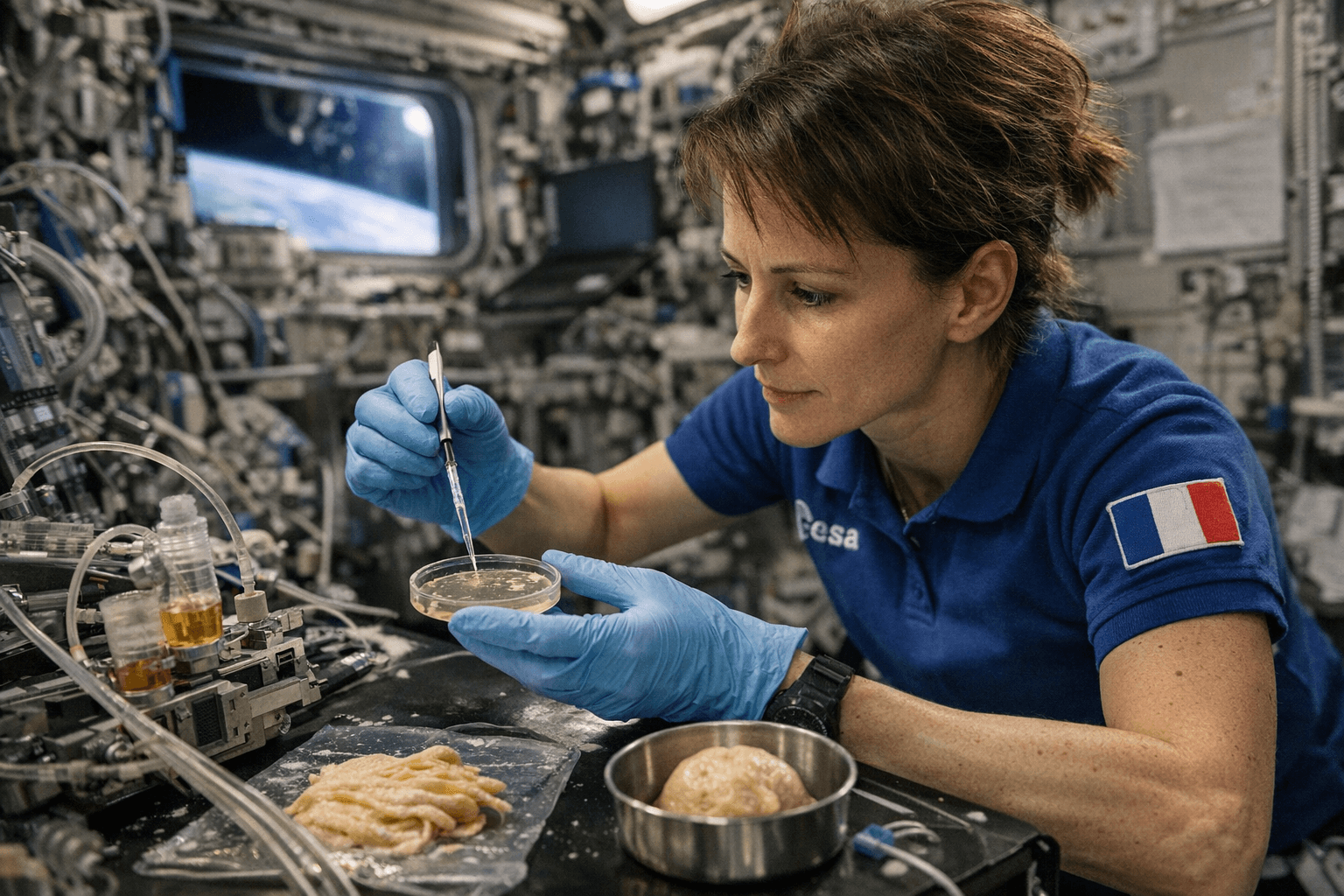
Sophie Adenot floated a cartridge filled with a white oil-and-water emulsion into place inside Europe's Columbus laboratory on February 27, carrying out what turned out to be the final scientific crew activity ever performed on the Fluid Science Laboratory before the rack's decommissioning, scheduled for summer 2026.
The experiment is called PASTA, short for PArticle STAbilised emulsions, and the third round of sample cells, PASTA-3, sits inside the Soft Matter Dynamics container housed within the FSL rack. Adenot swapped in the new cells under real-time guidance from operators at the Belgian User Support and Operations Centre, B.USOC, running the experiment from their control room inside BIRA-IASB in Uccle. Ground controllers monitor the samples as a piston agitates them and multiple cameras and sensors track how droplets form, grow, and interact in the absence of gravity's interference.
That interference is exactly the problem the experiment is designed to remove. On Earth, buoyancy causes oil and water to separate far faster than they would otherwise, making it nearly impossible to isolate the pure physics of emulsion destabilization. Microgravity strips out that variable entirely, giving scientists a cleaner look at how particle additives either hold an emulsion together or allow it to fall apart. The research, which builds on nearly two decades of European experimentation aboard the station, has already shown that it is possible to create super-stable emulsions in orbit, where the breakdown that happens rapidly on Earth slows dramatically.
The practical applications stretch well beyond kitchen curiosity. Better emulsion models translate directly into longer-lasting pasta dough and other food products, improved pharmaceutical formulations, and more stable cosmetics, all industries where the ratio of oil to water and the particles mediating that boundary determines shelf life and performance.
Adenot launched to the ISS on February 13 aboard SpaceX Crew-12 for her first spaceflight, a nine-month mission she named εpsilon, and she joined Expedition 74 as part of an agenda that includes more than 200 microgravity experiments. The PASTA-3 session marked a closing chapter for the FSL itself: the laboratory has hosted fluid dynamics investigations since the Columbus module was installed, covering everything from granular material dynamics to boiling processes, and the summer 2026 decommissioning will end that run permanently.
The SMD-SEEDS/PASTA experiment investigates droplet dynamics to help pave the way for more sustainable emulsions on Earth, a goal that becomes harder to pursue once the only microgravity platform capable of running this class of experiment goes offline. The data Adenot helped collect in those final sample runs will keep researchers busy long after the FSL goes dark.
Know something we missed? Have a correction or additional information?
Submit a Tip