Essential Dried Pasta Techniques, A Practical Guide for Home Cooks
On August 16, 2022 a concise how to guide on cooking dried pasta was published, laying out reliable, repeatable techniques from pot selection to finishing in sauce. The guidance matters because it gives home cooks concrete steps to achieve consistent al dente results and better sauce integration for everyday meals and special occasions.

On August 16, 2022 a focused how to guide clarified the fundamentals of cooking dried pasta, presenting straightforward steps that make a real difference at the stove. The guide covered pot size and water volume recommendations, the importance of salting water until it tastes like the sea, when and how to add pasta to fully boiling water, stirring frequency to prevent sticking, how to test for al dente by tasting two minutes before the package time, reserving pasta water, proper draining, and finishing pasta in the sauce to bind flavors and texture.
Start with a pot large enough so the pasta can move freely and use plenty of water to dilute starch and keep strands separate. Salt the water generously, tasting for a briny note, because that is the primary seasoning that reaches the pasta itself. Bring the water to a rolling boil before adding pasta, then stir early and periodically to stop pieces from clinging together or to the pot.
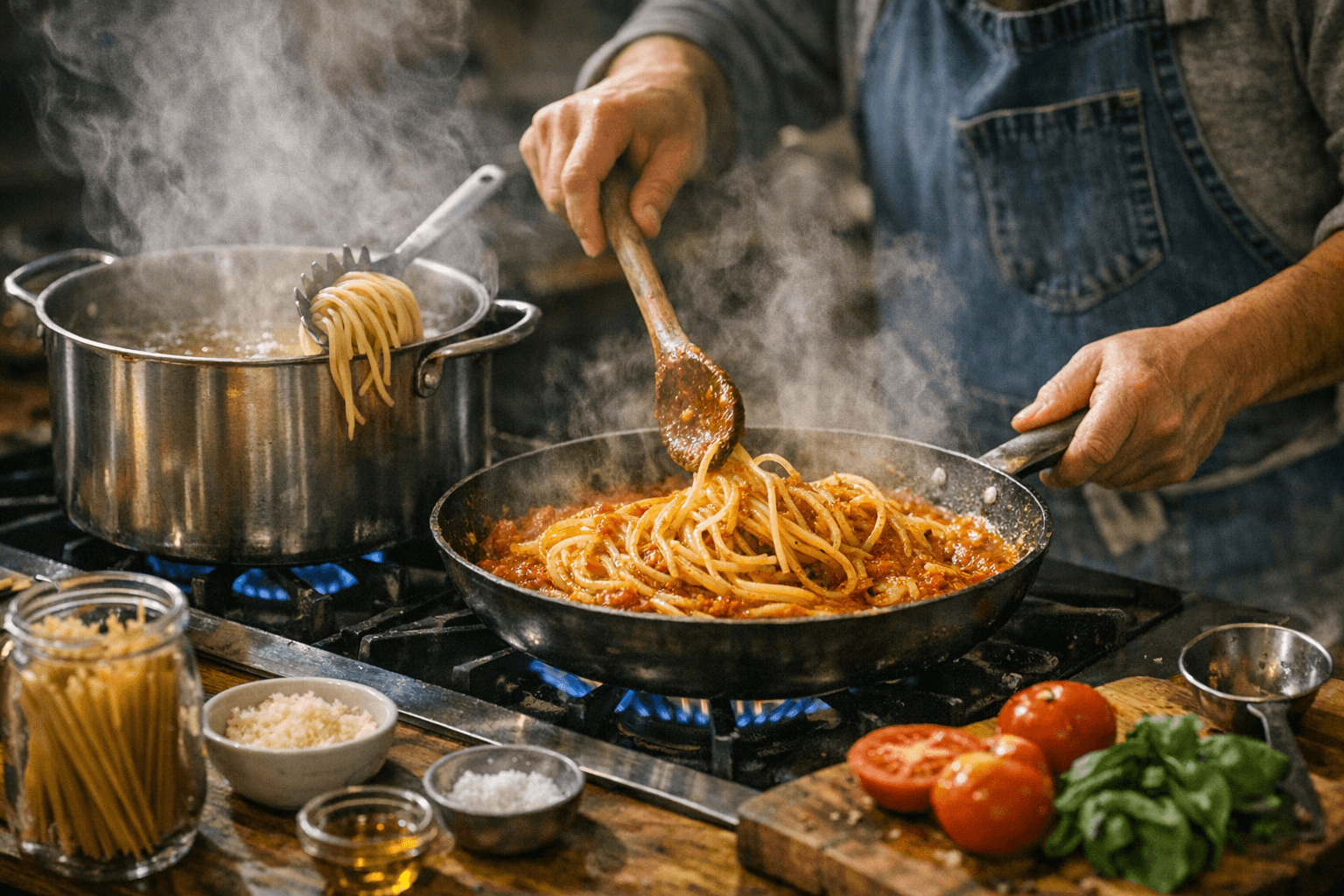
Timing is a guideline not an absolute. Taste two minutes before the package time to gauge doneness, aiming for al dente where a slight bite remains. Reserve a cup of the starchy cooking water before draining. That liquid is a key tool, useful for loosening thick sauces and helping them cling to pasta when you finish the dish over low heat. Finishing pasta in the sauce for a minute or two lets the flavors marry and the textures harmonize. Do not rinse after draining, unless you are making a cold salad, because rinsing strips the surface starch that helps sauce adhere.
The practical value is immediate. Follow these steps and weekday dinners gain consistency, restaurant leaving surprises are reduced, and the base technique makes it easier to explore more advanced recipes like homemade pasta or complex sauces. For community cooks teaching others, these fundamentals form a reliable curriculum that produces predictable results.
These methods are simple to apply, require no special equipment, and reward routine practice. Use a large pot, salt like the sea, taste early, save some cooking water, and finish pasta in the sauce for a noticeably better plate every time.
This article was produced by Prism’s automated news system from verified source data, official records, and press releases, then run through automated quality and moderation checks before publishing. The system is built and supervised by the people who set the standards it runs under. Read our full AI policy.
Did this article answer your question?