High-Protein Pasta Salad Packs 50 Grams Using Lentil Pasta and Edamame
This pasta salad hits 50g of protein per serving using red lentil or chickpea pasta plus frozen edamame, no meat required.
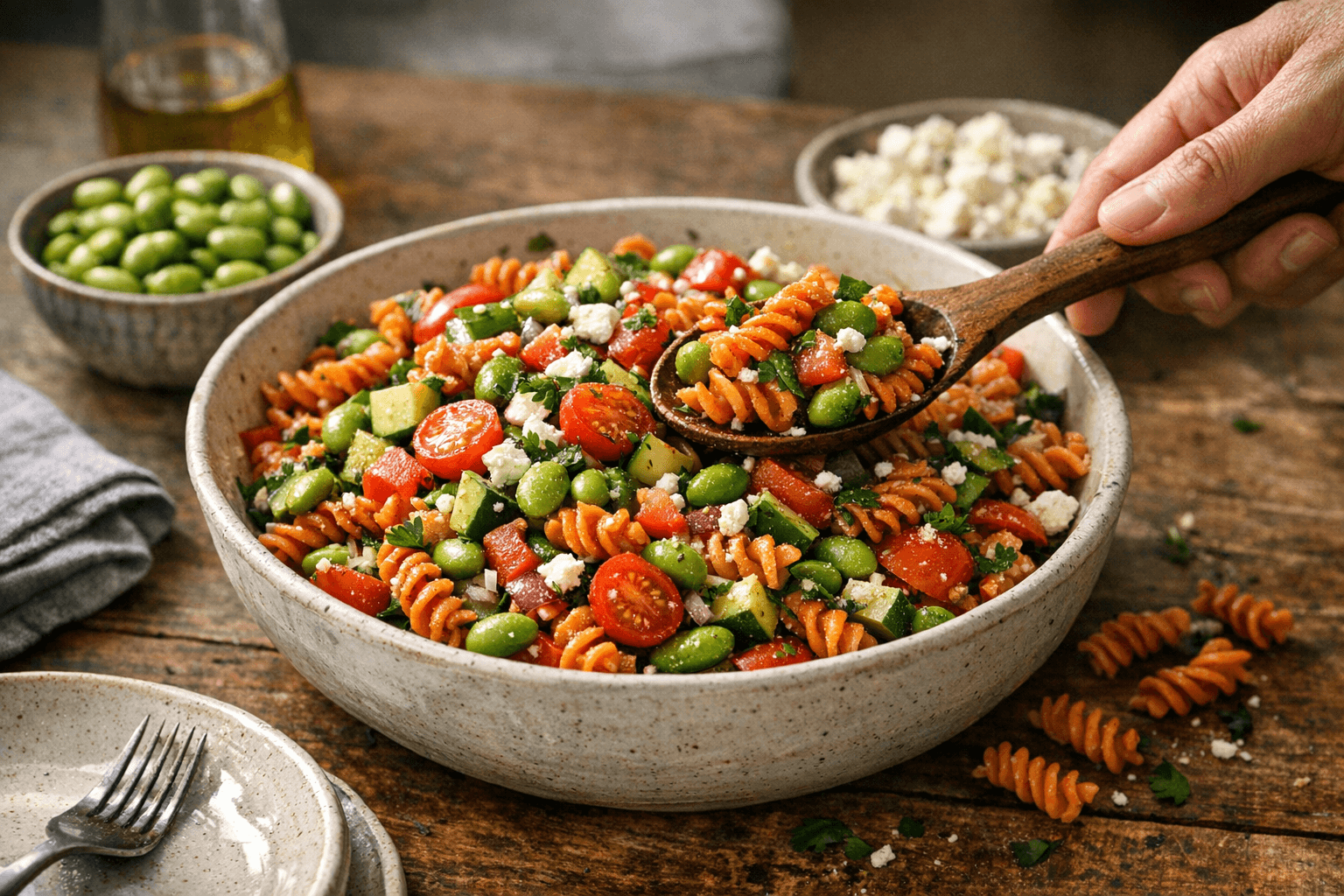
Fifty grams of protein in a cold pasta salad, no chicken breast in sight. That's the build that's been making the rounds, and once you understand the ingredient logic behind it, the number stops feeling like a gimmick and starts feeling completely obvious.
The secret is stacking protein at the base level, before you add a single topping. Most people treat pasta as the neutral filler and try to compensate with protein add-ons. This build flips that entirely: the pasta itself and the edamame are doing the heavy lifting before anything else hits the bowl.
Why Legume Pasta Changes the Math
Both red lentil and chickpea pasta have almost double the amount of protein compared to semolina pasta for a 56g serving. That's not a marginal improvement; it's a structural shift in what your base ingredient is actually delivering. Red lentil pasta supplies more protein per cup serving than white and wholegrain pasta, offering approximately 6 grams more protein per cup.
Barilla's Red Lentil Penne, for instance, advertises 25g of plant protein, made from all red lentils with no xanthan gum or additives. On the chickpea side, Banza offers over 20g of protein per serving. Either option anchors the salad's protein count well before the edamame enters the equation.
The texture difference is worth knowing upfront. Red lentil pasta is the same as any other pasta in shape and usage, but it has a slightly grainier, chewier texture than white pasta. It also has a nutty flavor of its own, which can add a nice earthy quality to pasta salads. That earthiness actually works in your favor here since the dressing has to punch through it, which keeps the overall bowl from tasting flat.
Edamame: The Supporting Protein That Carries Its Weight
Frozen edamame is the second load-bearing ingredient in this build, and it's one of the most underused proteins in the pasta-salad world. A half cup of shelled edamame delivers 8 grams of plant-based protein and 4 grams of fiber. In a full-portion salad, you're using significantly more than a half cup, which is how the numbers compound quickly toward that 50g total.
Edamame should be shelled and lightly steamed or thawed if frozen. It adds a subtle, nutty flavor and a meaningful protein boost. The convenience angle here is real: frozen edamame requires zero prep beyond thawing or a quick microwave hit. You can even add edamame to the pot during the last few minutes of the pasta's cooking time, then drain and rinse both together with cold water. That's one less dish.
How to Cook Legume Pasta Without Wrecking It
This is where most first-timers go wrong. Legume-based pastas have a much narrower window between undercooked and destroyed than wheat pasta does.
To prevent chickpea pasta from falling apart when cooking, cook it on a gentle simmer instead of a rolling boil, and avoid overcooking. The pasta should be tender, but not overly soft or mushy. The same rule applies to red lentil pasta. Chickpea pasta tends to become soft and crumble if overcooked, so start checking it a minute or two earlier than the package instructions suggest and maintain a gentle simmer rather than a rolling boil.
After draining, rinse under cold water immediately. This stops the cooking process and firms the pasta back up. It is generally not necessary to rinse red lentil pasta since it does not release significant starch during cooking. However, a quick rinse under cold water helps cool it down and removes any excess starch before assembling the salad.
Choosing Your Pasta Shape
Shape matters more than people realize in a cold salad where everything has to hold together and carry dressing. Short, twisty shapes such as fusilli and rotini, as well as cavatappi, hold up well to dressing and pair well with added veggies and legumes. Spiral pasta is particularly well-suited to pasta salads because all the curves catch the dressing, and the more complex the shape, the more dressing it retains due to increased surface area.
Rotini made from red lentil flour is a go-to option for exactly this reason. The ridges hold dressing, the shape stays intact when chilled overnight, and the cooked color blends naturally into the salad without looking jarring.
Building the Rest of the Bowl
With the pasta and edamame doing the protein work, the remaining ingredients are about texture, flavor contrast, and making sure this is actually something you want to eat four days in a row. Good additions include:
- Cucumber or red bell pepper for crunch
- Cherry tomatoes or sun-dried tomatoes for brightness and acidity
- Red onion, diced fine so it doesn't overpower
- Kalamata olives or pepperoncini for a briny, salty punch
- Fresh herbs like parsley or basil to lift the whole bowl
Optional protein boosts like chickpeas, white beans, tofu, or tempeh can enhance protein content without substantially altering the flavor profile if you want to push the count even higher or vary the texture.
The Dressing Decision
The dressing needs to do real work here because legume pasta has its own flavor. A straight-up Italian vinaigrette works. A simple version combines olive oil, lemon juice, Dijon mustard, garlic, maple syrup, salt, and pepper. A lemon-tahini dressing is another strong option, particularly with red lentil pasta, since the combination of the pasta's earthiness, tangy pickled pepperoncini, and juicy tomatoes comes together especially well.
One practical note: reserve about a quarter to half the dressing and add it to the salad right before eating rather than all at once when assembling. Legume pastas absorb dressing aggressively overnight, and a dry salad on day three is a motivation killer.
Meal Prep Reality
This protein pasta salad gets tastier as it sits and marinates in the fridge, making it ideal to prep once and eat throughout the whole week. It stays fresh in the fridge for up to 4 days. That's four lunches built in a single 20-minute cook session, each hitting a protein count that most people struggle to reach even with a full sit-down meal.
Protein promotes feelings of fullness and reduces overeating, and the fiber in lentil pasta further increases satiety. That combination is what makes this more than a numbers exercise. It's a salad that actually keeps you full past the two-hour mark, which is the real metric that matters for a workday lunch.
The 50-gram target is achievable because the foundation is built right: legume pasta that earns its place nutritionally, edamame that doesn't need any cooking fuss, and a dressing bold enough to tie it all together through day four.
This article was produced by Prism’s automated news system from verified source data, official records, and press releases, then run through automated quality and moderation checks before publishing. The system is built and supervised by the people who set the standards it runs under. Read our full AI policy.
Did this article answer your question?