Namibia sees pasta sector as export driver under AfCFTA
Namibia’s pasta makers already export US$7.38 million a year, and a new AfCFTA push could widen that into more Namibian labels on regional shelves.

Namibia’s pasta business is no longer just a domestic staple story. A new impact assessment says uncooked pasta could become one of the clearest export plays in the country’s AfCFTA push, with enough scale to move from regional shipments into a broader African and global market.
The AIDA-AfCFTA Country Impact Assessment Report was launched in Windhoek on 11 June 2026, and Namibia was the first of five pilot countries to release its report. The pilot group also includes Egypt, Ghana, Kenya and Seychelles. The wider project is being run through collaboration between AUDA-NEPAD, the AfCFTA Secretariat, the African Union Commission and JICA, and AUDA-NEPAD said the work has since been turned into a portfolio of country reports and policy briefs after its launch in Kigali in September 2023.
For Namibia, the policy runway is already in place through the National AfCFTA Implementation Strategy for 2022-2027. In February 2026, the government, the ECA and private sector partners validated a step-by-step guide for trading in goods under AfCFTA, with the Ministry of International Relations and Trade calling the agreement critical to expanding export opportunities, strengthening regional value chains and supporting MSMEs, women and youth. The ECA also flagged the practical barriers still slowing trade, including rules of origin, product classification, customs procedures, certification, documentation and border processes.
The pasta numbers are what make the case concrete. Media coverage of the report says uncooked pasta has about US$27 million in unrealised intra-African export potential and US$34 million in unrealised global export potential by 2030. The broader Namibia assessment puts the country’s unrealised export potential at about US$816 million in Africa and nearly US$3.9 billion globally, which is why pasta is being used as one of the illustrative products for value addition and diversification rather than as an isolated niche.
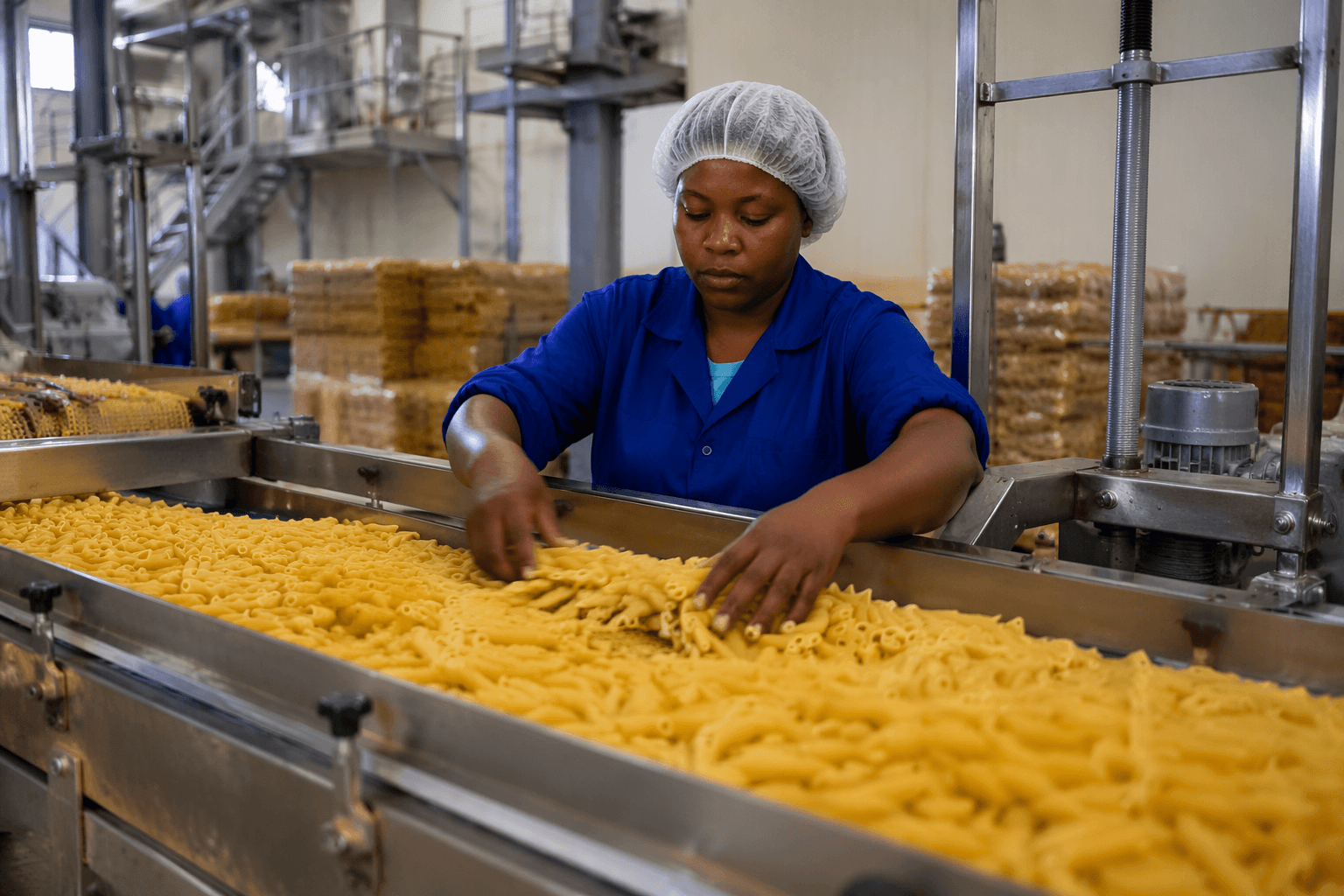
Namib Mills is already the clearest example of how far the sector has come. The company says it has manufactured pasta since 2001 and expanded its pasta plant in 2011. Earlier reporting put its output at 2,500 tonnes in 2001/2002 and said its first export sales came in the 2013/2014 production period, when it moved 80 tonnes. By 2024, World Bank WITS trade data showed Namibia exported US$7.37984 million of uncooked pasta, not containing eggs, equal to 4,527,880 kilograms.
For pasta fans, the likely payoff is not an instant price shock. It is a slow but real shift toward more Namibian-made dry pasta on shelves in South Africa, Zambia, Botswana, Zimbabwe and Angola, the main destinations listed in OEC trade data. The bigger question is whether AfCFTA turns that already-working regional base into a wider brand presence that reaches beyond one factory, one border and one market at a time.
This article was produced by Prism’s automated news system from verified source data, official records, and press releases, then run through automated quality and moderation checks before publishing. The system is built and supervised by the people who set the standards it runs under. Read our full AI policy.
Know something we missed? Have a correction or additional information?
Submit a Tip