Pasta Primavera Returns Each Spring, Celebrating Vegetables and 1970s Roots
Pasta primavera, born at Le Cirque in 1970s Manhattan, returns to spring menus every year as a vegetable-forward classic with no single recipe and endless seasonal flexibility.
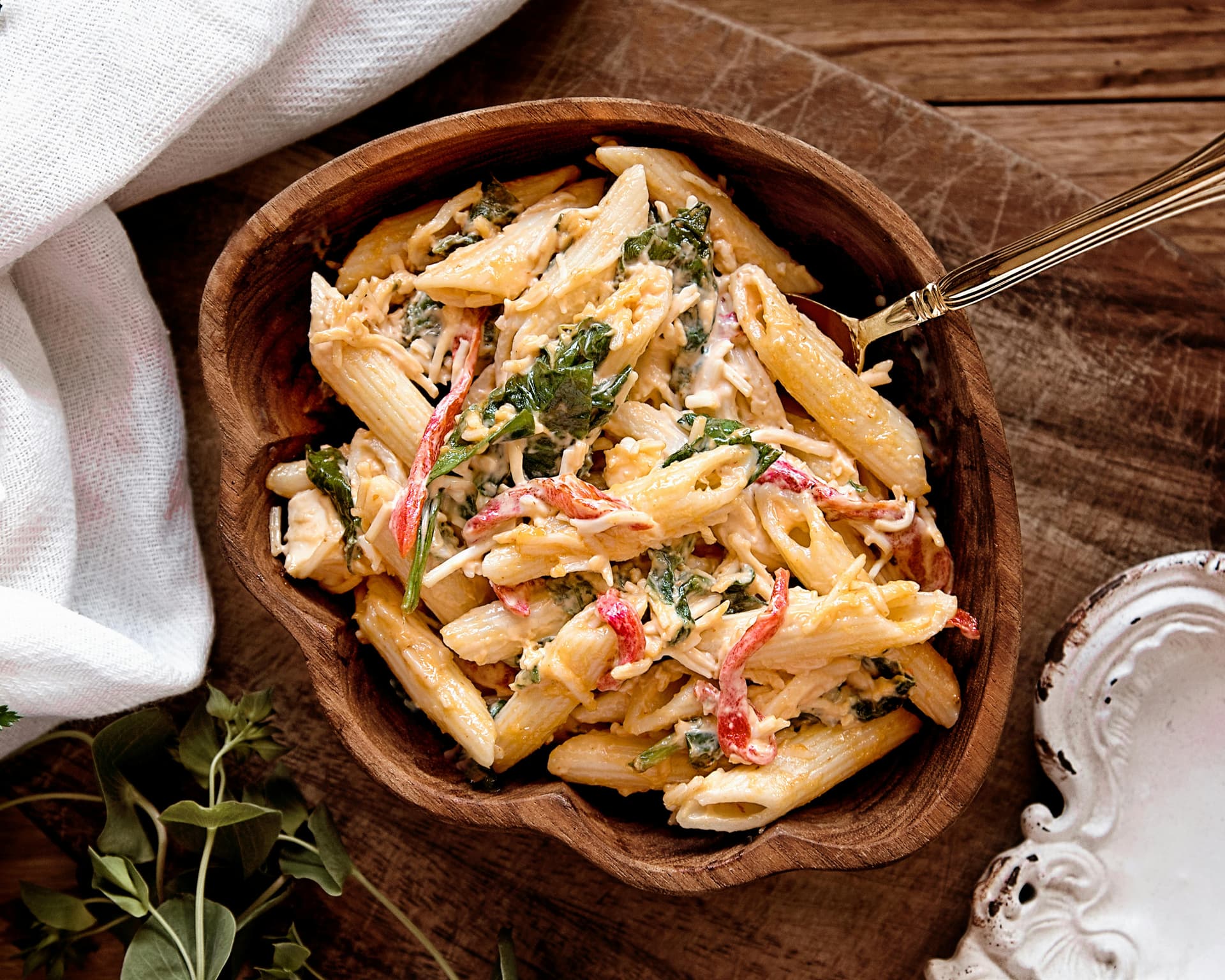
Every spring, as asparagus pushes through cold soil and peas fatten in their pods, pasta primavera quietly reappears, first on restaurant specials boards and then in home kitchens across the country. It is one of those dishes that feels inevitable in April, a calibrated reset after winter's heavier plates. Its name is right there in the Italian: *primavera* means spring, and the dish wears the season as both identity and instruction.
Born in 1970s Manhattan, Not Italy
For a dish so closely associated with Italian flavors, pasta primavera has a decidedly American birth story. In 1975, restaurateur Sirio Maccioni is credited with creating the dish while visiting the summer home of Italian Baron Carlo Amato in Nova Scotia. Mixing butter, cream, cheese, vegetables, and pasta, he introduced the recipe to his New York restaurant, Le Cirque.
What happened next is one of the more entertaining footnotes in American food history. Le Cirque's co-founder was Jean Vergnes, a classically trained French chef who was known for his obstinance, and who despised pasta because he considered it completely antithetical to his cuisine. Because of this chef resistance, the dish was prepared by waitstaff instead of kitchen chefs. It was an off-menu item, served to guests who knew to ask, and word spread with the speed that only a good secret can manage in Manhattan.
Pasta primavera came into its own in the 1970s when Le Cirque added it to its off-the-menu repertoire. The paper's restaurant critic Craig Claiborne and food columnist Pierre Franey would come to refer to pasta primavera as "by far, the most talked-about dish in Manhattan." A 1977 piece in the Times formally introduced the dish to the broader American public, and its ascent from tableside tablecloth secret to home-kitchen staple was swift.
No Canon, Just Produce
One of the most liberating truths about pasta primavera is that there is no single authoritative recipe. The Old Town Crier's April 2026 feature on the dish makes this point plainly: tradition and ingredient availability have always dictated its form, which is precisely why it has survived five decades without going stale.
The vegetables that appear most naturally in a spring primavera reflect whatever the season is actually delivering:
- Peas, fresh or briefly blanched, for sweetness and pop
- Asparagus, cut into bite-size lengths, for crunch and earthiness
- Cherry tomatoes for brightness and acidity
- Seasonal greens, such as spinach or young zucchini, for color and volume
A colorful mix of vegetables including broccoli, zucchini, asparagus, bell peppers, and peas work well, with other good options including mushrooms, yellow squash, artichoke hearts, carrots, spinach, and kale. The dish's genius is that it holds almost any combination together, as long as the vegetables are treated with care and the pasta carries a sauce light enough not to bury them.
Choosing the Right Pasta Shape
Shape matters here. Pasta primavera is not a ragù situation, where a wide, sturdy tube can absorb a thick, meaty sauce. This is a dish built around delicate emulsions, light olive oil coatings, or a restrained amount of cream. Long, thin shapes are the traditional choice for good reason.
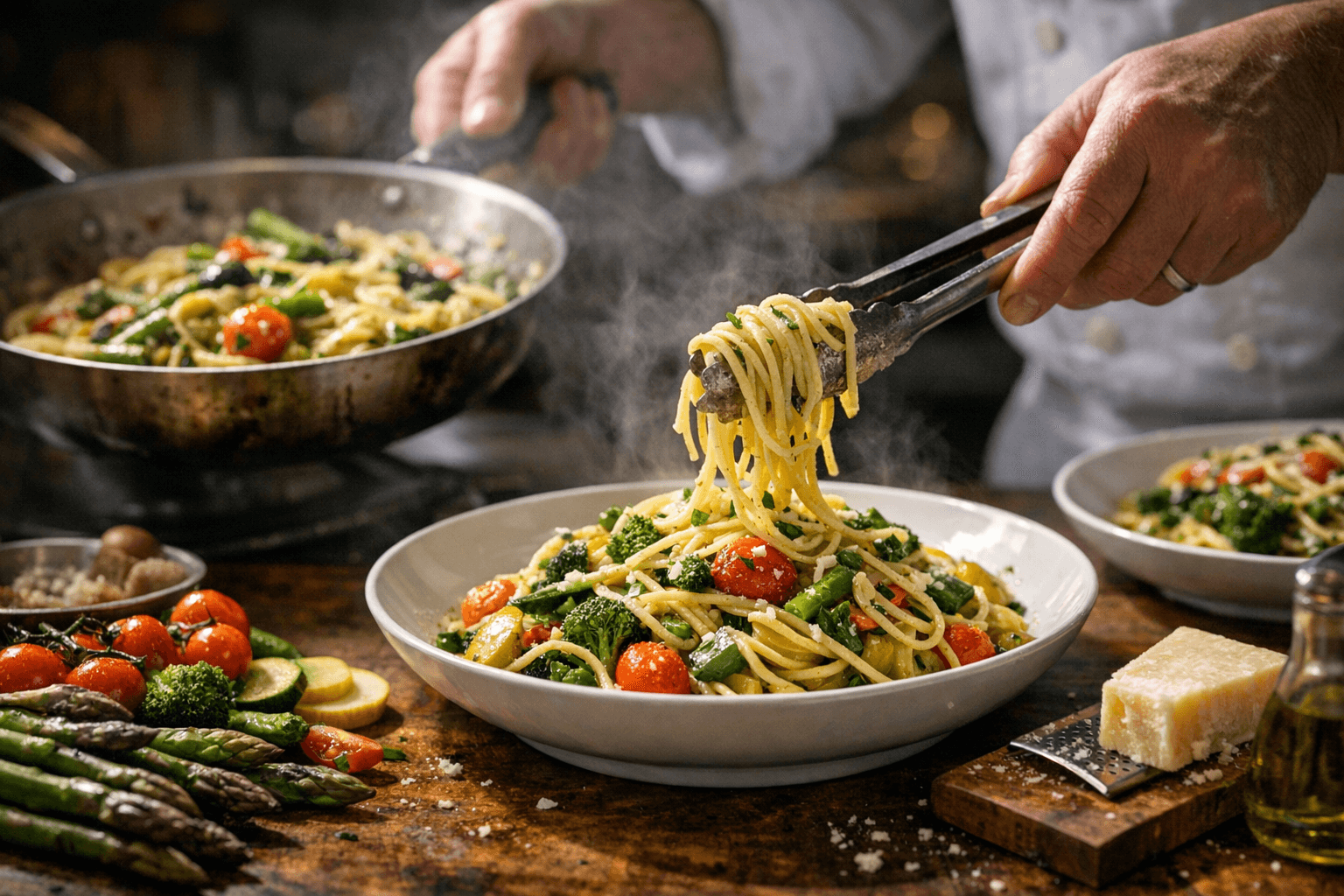
Pasta primavera recipes commonly feature angel hair pasta with fresh spring vegetables. Spaghetti is an equally classic option. Angel hair, to many, requires less "stuff" in the sauce to really work, while spaghetti offers slightly more substance for a heartier build. Thin twisted shapes also perform well, catching small pieces of vegetable without overwhelming the lightness that defines the dish.
The Old Town Crier feature recommends these thinner formats specifically because they carry light sauces without weighing the dish down. The rule of thumb: if your sauce would coat the back of a spoon heavily, reach for something sturdier. If it shimmers and slides, go thin.
Cream or No Cream: The Modern Question
Le Cirque's original version leaned into butter and cream, which was consistent with fine-dining sensibilities of the mid-1970s. The dish that Maccioni brought back from Nova Scotia was rich, indulgent, and built for a dining room where expense accounts covered dessert. That version still has devoted practitioners, and it is genuinely delicious.
The modern iteration, however, tends to pull back on cream in favor of a brighter profile. A modernized version maximizes umami and uses as many fresh vegetables as possible. Olive oil, pasta cooking water, a squeeze of lemon, and freshly grated Parmigiano can build a sauce that feels cohesive without heaviness. The Old Town Crier feature encourages cooks to prioritize fresh produce and bright seasoning over heavy cream if a lighter, more contemporary result is the goal.
Neither approach is wrong. They represent two distinct philosophies of the same dish, separated by roughly fifty years of evolving American palates.
A Natural Fit for Group Cooking and Pasta Classes
Because pasta primavera is technique-driven without being technically demanding, it occupies a useful middle ground in community cooking contexts. It is approachable enough for a beginner who has never blanched a vegetable, but nuanced enough to reward experience.
For pasta clubs and hobby groups, the dish opens up naturally into a spring-themed event structure. A group can arrive from the farmers market, divide the vegetable prep, and stage a friendly comparison between a cream-based version and an olive-oil-bright one, using the same underlying pasta and seasonal ingredients. The 1970s origin story, with its New York restaurant politics and off-menu intrigue, gives the evening a conversation anchor that goes well beyond technique.
For anyone teaching or attending pasta classes, primavera offers a structured set of intermediate challenges:
- Blanching timing: Each vegetable has a different heat tolerance. Asparagus needs less time than carrots; peas need almost none. Getting every vegetable to the same moment of tender-crisp readiness requires attention.
- Sauce balance: Deciding between a light emulsion and a modest cream addition, and adjusting with pasta water, develops an intuition that carries into dozens of other dishes.
- Plating: A primavera should look like spring. Color placement, the distribution of vegetables, and a final flourish of fresh herbs or shaved cheese are all opportunities to practice presentation.
Why It Keeps Coming Back
When Maccioni returned to New York, he brought the concept to Le Cirque, where it quickly became a sensation among the city's elite diners. By the late 1970s, Pasta Primavera was on its way to becoming one of the most famous dishes in America. What it represented at the time was a shift in American dining sensibility, an embrace of freshness, color, and produce-forward cooking at a moment when heavy French cuisine still ruled upscale tables.
That shift never fully reversed. Spring menus now routinely lean toward lighter, vegetable-led dishes because diners actively seek them after months of braises and root vegetables. Pasta primavera fits that moment structurally and symbolically. It asks for the best of what spring offers, treats it simply, and steps out of the way.
Fifty years after Sirio Maccioni assembled something remarkable in a Nova Scotia kitchen, the dish he brought back to Manhattan continues to show up every April, reliable as the season itself.
This article was produced by Prism’s automated news system from verified source data, official records, and press releases, then run through automated quality and moderation checks before publishing. The system is built and supervised by the people who set the standards it runs under. Read our full AI policy.
Did this article answer your question?