Prego’s dinner-table recorder preserves family talks, sparks privacy backlash
Prego’s puck-shaped Connection Keeper records dinner-table talk for StoryCorps and the Library of Congress, but the privacy optics are already setting off alarms.
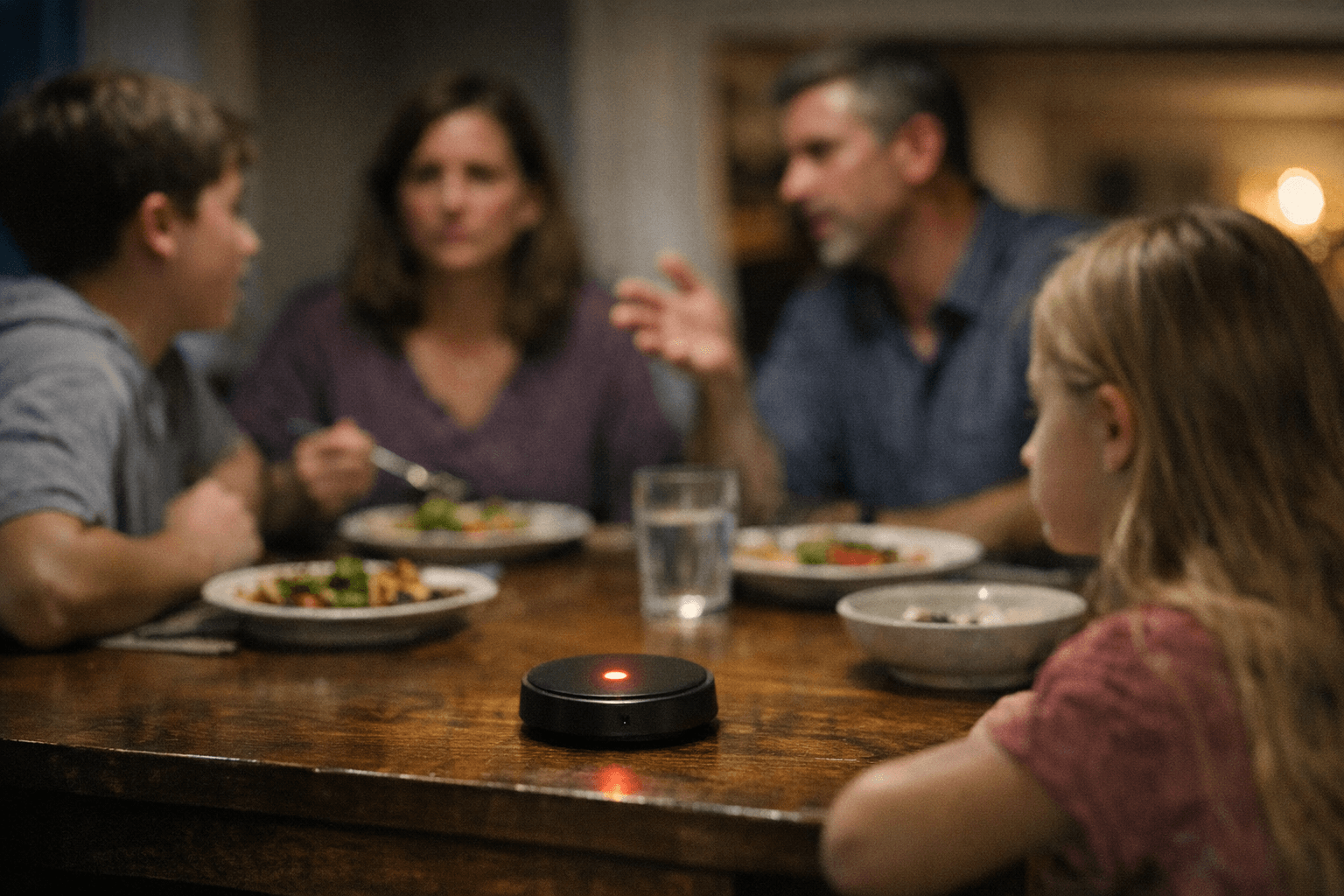
A puck-shaped recorder on the family table is being sold as nostalgia, but it reads like surveillance first. Prego unveiled the Connection Keeper from Camden, New Jersey, on April 20, 2026, in a partnership with StoryCorps that aims to turn ordinary pasta-night chatter into a preserved family archive.
Prego and StoryCorps say the point is to save the conversations that disappear into busy schedules and screens. StoryCorps described the Connection Keeper as a simple, screen-free way to capture the real talk that happens around the dinner table, positioning it less like a smart-speaker gadget and more like an oral-history keepsake. The share hook is obvious: a branded consumer device that asks families to treat their own meal-time conversation as something worth archiving.
The workflow is part of the pitch. According to the announcement, the device does not connect to the internet while it is recording; users upload the audio later through a laptop. That matters because the Connection Keeper is not being sold as an always-on assistant, but it still lands in a cultural moment when people are already nervous about where microphones listen, who owns the recordings, and how domestic life gets turned into data.
StoryCorps brings real institutional weight to that promise. Its archive contains tens of thousands of conversations and is housed at the American Folklife Center at the Library of Congress in Washington, D.C. StoryCorps says its archive is one of the first and largest born-digital collections of human voices, and the new partnership folds Prego’s product directly into that legacy. That makes the device more than a novelty bundled to a pantry brand. It is being framed as a contribution to family memory and public record.
That framing is also why the backlash has arrived so quickly. A recorder built for the dinner table can feel touching when it is presented as a memory keeper, but it can feel invasive when the same object is read as a surveillance device sitting beside the bread basket. The product’s real test is not whether it can preserve a conversation. It is whether families are comfortable trading a little privacy for the promise of legacy.
Know something we missed? Have a correction or additional information?
Submit a Tip