Rome's pasta window displays turn fresh dough into tourist theater
Rome’s pasta windows can be real craft or pure spectacle, and the difference shows in what happens beyond the glass.
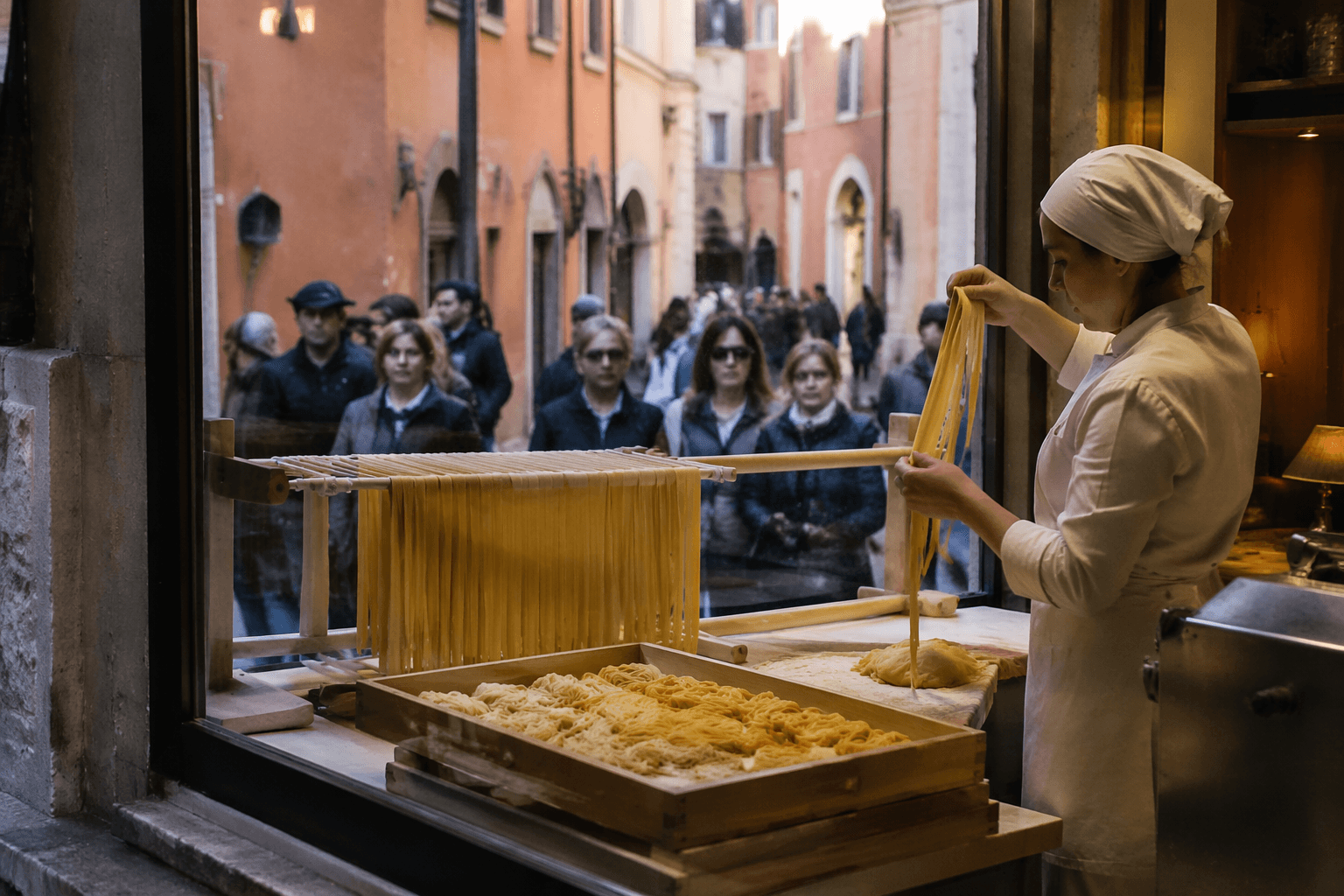
Rome has turned the humble sight of fresh pasta into a sidewalk lure. In Trastevere and Campo de' Fiori, a woman rolling dough in the window can stop passersby cold, but the scene is doing more than advertising lunch. It is selling a version of old Rome, one that feels handmade even when the performance is carefully staged.
A window that sells nostalgia
Sophie Minchilli’s walk through Rome’s historic center shows how fully the pasta window has become part of the city’s restaurant language. At one stop, the sign out front and the pasta in the window were enough to pull pedestrians in, a reminder that in this part of Rome, the visual cue can do as much work as the menu. The format has spread across neighborhoods packed with visitors and framed by famous piazzas and ancient ruins, where a glance through the glass can decide whether someone steps inside.
The most pointed example is Come 'na Vorta - Pasta e Vino, a name built on Roman dialect nostalgia. The phrase means roughly “like it used to be,” and that is exactly the promise baked into the brand: a version of the city that feels traditional, local, and reassuringly old-fashioned. In practice, the window display turns that promise into theater before a first bite ever arrives.
Why Rome is especially vulnerable to the performance
Rome’s historic center is not just a backdrop for this trend. UNESCO inscribed the whole historic center on the World Heritage List in 1980 and extended it in 1990, and the site is described as facing visitor and tourism pressure, development pressure, environmental pressures, and broader social and economic change in the city center. That combination makes the area unusually receptive to restaurants that can communicate identity instantly.
The numbers explain the pressure. Rome called 2025 a record tourism year, with 22.9 million visitors and 52.92 million overnight stays. About 12 million of those visitors came from abroad, and later reporting on the Holy Year put pilgrim numbers at about 33.5 million. In a city moving that many people through a dense historic core, a pasta window is not a minor decorative choice. It is a survival tactic, a branding device, and a shortcut to being understood in a crowded market.
The nonna in the window, and the truth behind it
The power of the display comes from the image it borrows. The woman rolling pasta in the window taps straight into the romantic idea of the Italian nonna, the kind of figure visitors expect to see when they imagine an authentic Roman kitchen. But the story on the ground is messier than the postcard version. The women in those windows are often not grandmothers at all, but prep cooks or carefully staged brand ambassadors.
That gap between image and labor is where the debate lives. Some locals see the setup as a tourist trap, a theatrical gimmick built to harvest attention from people already primed to believe in old-world charm. Owners and online reviewers, by contrast, often treat the same display as proof that the kitchen values freshness and visible craft. Both readings can be true at once: the pasta may be handmade, and the window may still be acting.
How to tell craft from bait
The easiest mistake is to treat every visible rolling pin as proof of seriousness. In Rome, the smarter test is whether the window is part of a working pasta culture or just a stage set aimed at the street. The difference usually shows up in how much the restaurant depends on the performance itself.
Look for these signals:
- The display feels like one part of a larger kitchen identity, not the entire reason to enter.
- The restaurant name and branding suggest a broader idea of Roman cooking, as Come 'na Vorta - Pasta e Vino does with its “like it used to be” nostalgia.
- The window supports a fresh-pasta claim, but the room, menu, and pace of service are not built entirely around being photographed from outside.
- The scene seems designed to be legible in seconds to people walking through Trastevere or Campo de' Fiori, which is often the mark of visual bait rather than a kitchen first, spectacle second approach.
The key is not to romanticize or dismiss the window too quickly. Fresh dough on a table by the street can be genuine labor, and it can still be arranged for maximum effect. In Rome, those two things are now closely intertwined.
What the pasta window reveals about the city
The reason this trend matters goes beyond one dish. Rome’s food scene is under the same pressures that shape its streets: tourism, gentrification, and an audience that wants authenticity on demand. A pasta window answers that demand in the fastest way possible. It turns work into image, image into trust, and trust into a table.
That is why the little scene in the glass keeps working. In a city where millions of visitors are trying to decode what feels real, the pasta window offers instant readability. Sometimes it signals real freshness. Sometimes it is carefully staged theater. In Rome, the trick is understanding that the same window can be both, and that the nonna in the glass is often less a grandmother than a sales pitch with flour on her hands.
This article was produced by Prism’s automated news system from verified source data, official records, and press releases, then run through automated quality and moderation checks before publishing. The system is built and supervised by the people who set the standards it runs under. Read our full AI policy.
Did this article answer your question?