Tatler Asia spotlights the Philippines' best Italian restaurants
Tatler’s Italian map runs from Siargao’s Tuason Beach to Cebu and Manila, showing pasta as both destination dining and everyday comfort.
Italian food in the Philippines no longer sits inside one lane. Tatler Asia’s Best Italian Restaurants in the Philippines, part of the Tatler Best Philippines Guide 2026, stretches from beachside tables on Siargao to mall restaurants, resort dining rooms, and neighborhood trattorias across Metro Manila and Cebu. The mix makes one thing clear: this is a scene where pasta can mean comfort, craft, and a reason to travel.
A map that reaches beyond Manila
Tatler Dining Philippines describes the 19 featured restaurants as showing Italian food “at its full stretch,” from homestyle pasta shops to casual pizzerias, contemporary trattorias and everything in between. That breadth is visible in the addresses alone. In Makati, the list includes A Mano at Power Plant Mall in Rockwell Center, Caruso Ristorante Italiano at LRI Design Plaza, Crosta Pizzeria in Salcedo Village, Fresca Trattoria in Legazpi Village, La Nuova Pasteleria in San Antonio Plaza, M Dining Bar at Alegria Alta Building, and PST at Ayala Triangle Gardens.
The rest of the metro spread keeps the picture just as wide. Carlos sits at Asian Century Center in BGC, Taguig City, while Prologue is in Mitsukoshi BGC. Cibo is at Estancia Mall in Ortigas Center, Pasig City, Da Gianni is at Westgate Center in Alabang, Muntinlupa City, Finestra is at Solaire Resort Entertainment City in Parañaque City, Gino’s Brick Oven Pizza is on Katipunan Avenue in Quezon City, and Lusso and Osteria Antica are both at The Podium in Mandaluyong City. Beyond the capital region, Tatler’s list reaches Lanterna Hotel on Bolabog Road in Boracay, Tavolata at SM Cebu City in Cebu City, and two Siargao entries in General Luna, La Carinderia and L’Osteria, the latter set on Tuason Beach.
That geographic spread matters because it shows Italian food surviving in multiple formats at once. The cuisine is not locked into a single kind of room, and it is not dependent on one city’s dining habits. It is working in malls, hotels, resort complexes, and island outposts, which is exactly why it has such a durable place in the Philippine dining conversation.
Where authenticity is the selling point
Some of the strongest signals in the guide are the restaurants that sell Italian-ness directly. Tatler describes L’Osteria as “a true Italian gem in Siargao island,” a label that turns the restaurant into more than a pretty stop on Tuason Beach. It is framed as a destination for diners who want the island experience and a convincing plate of Italian food in the same evening.
Osteria Antica is positioned a different way. Tatler calls it “the reimagined Italian concept from Wildflour Hospitality Group” bringing authentic Italian dining to Ortigas CBD. That phrasing matters because it suggests a bridge between group-backed polish and old-world intent, the sort of room that is selling familiarity through precision rather than novelty. Together, those two restaurants show the two poles of the category: one rooted in a travel setting, the other in a business district, both leaning on the promise of authenticity.
The same tension runs through the rest of the list even when it is less explicitly framed. Caruso Ristorante Italiano, Da Gianni, and Fresca Trattoria signal classic trattoria language, while A Mano, Cibo, Lusso, and Prologue point to the way Italian dining has been absorbed into the city’s broader upscale restaurant culture. In the Philippines, “Italian” now covers a lot of ground, from polished city dining to rooms that borrow the language of the neighborhood trattoria.
The island tables change the terms
The Siargao entries give the guide its sharpest sense of place. La Carinderia in General Luna and L’Osteria at Tuason Beach are not competing only with one another or with other Italian restaurants. They are also competing with the pull of the island itself, which makes every meal feel part of the trip rather than a standalone errand. That is why the beach setting matters so much here: the room, the view, and the menu are all working together.
Boracay plays a similar role through Lanterna Hotel on Bolabog Road. Even without a long list of descriptive copy, the address tells you this is Italian food being staged inside a destination dining market, where the meal is folded into the larger experience of being away. The guide’s reach into Siargao and Boracay shows that Italian restaurants in the Philippines are increasingly expected to perform in places where atmosphere is part of the product.
Pasta as comfort, then as luxury
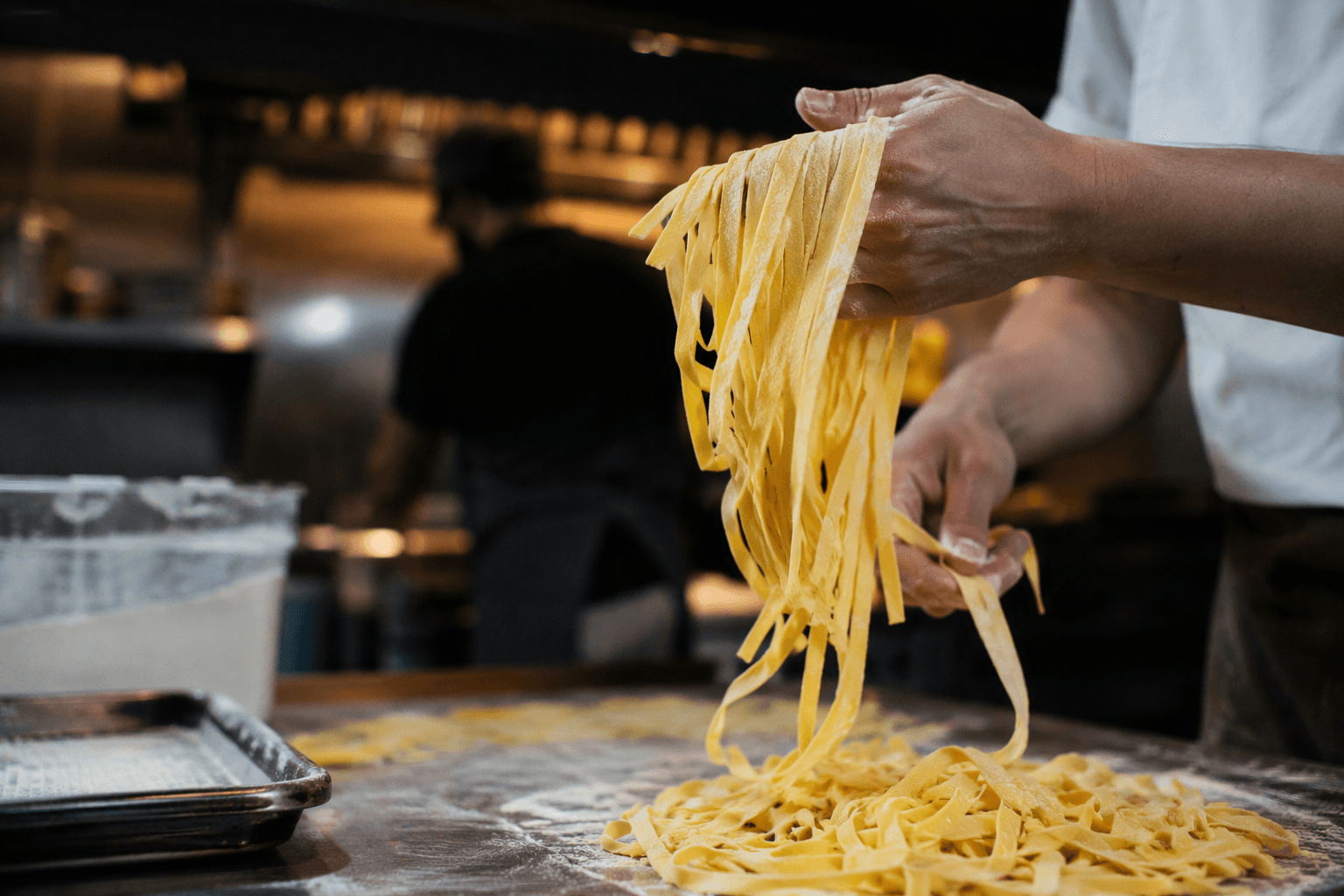
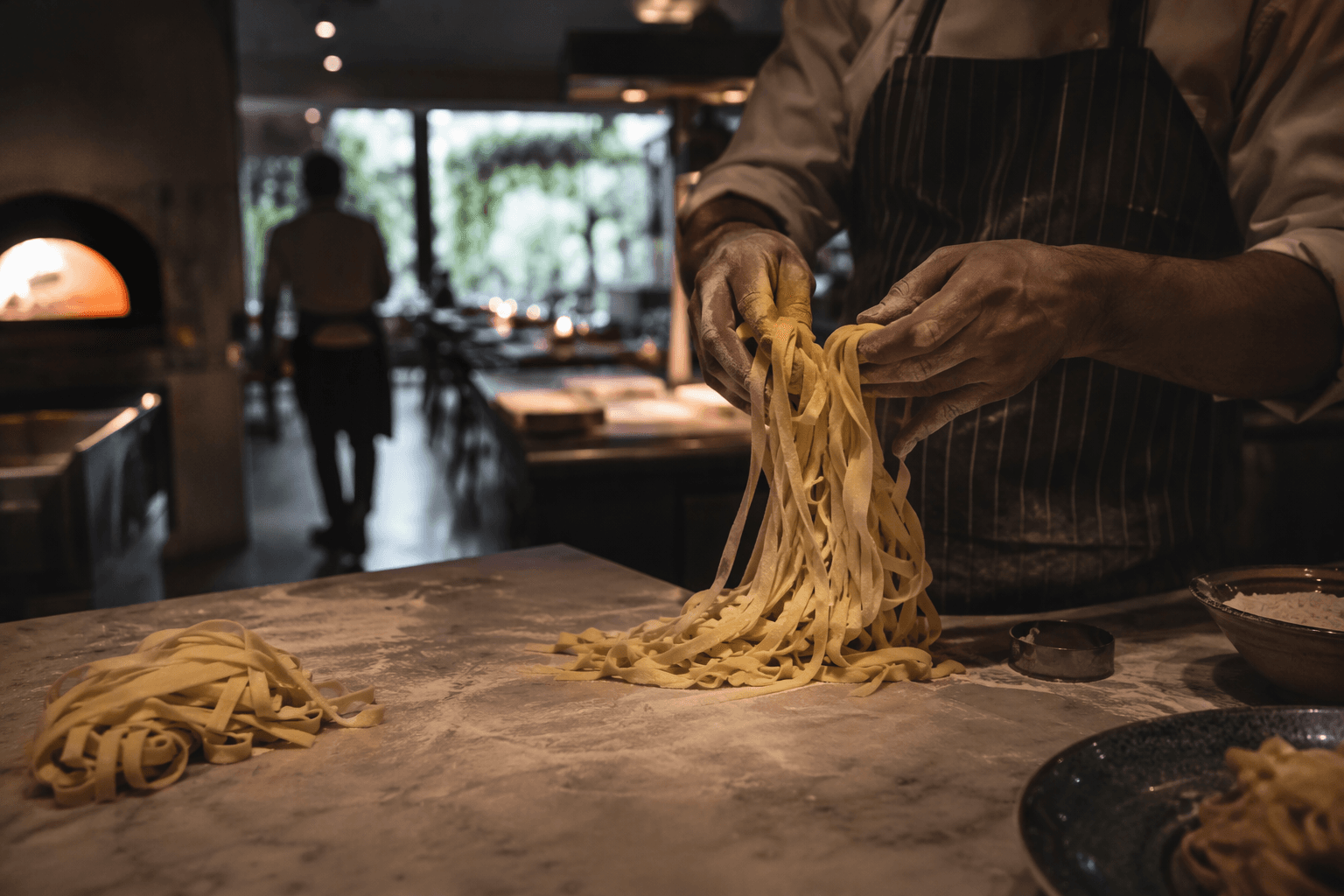
Tatler Dining Philippines draws a clean line through the pasta conversation with one of its most useful ideas: handmade pasta can be comforting, but it can also be luxurious when paired with gambero rosso, truffle, or caviar. That single contrast captures why the category travels so well. It can be an everyday bowl or a dressed-up special-occasion plate, depending on the kitchen’s ambition and the room’s price point.
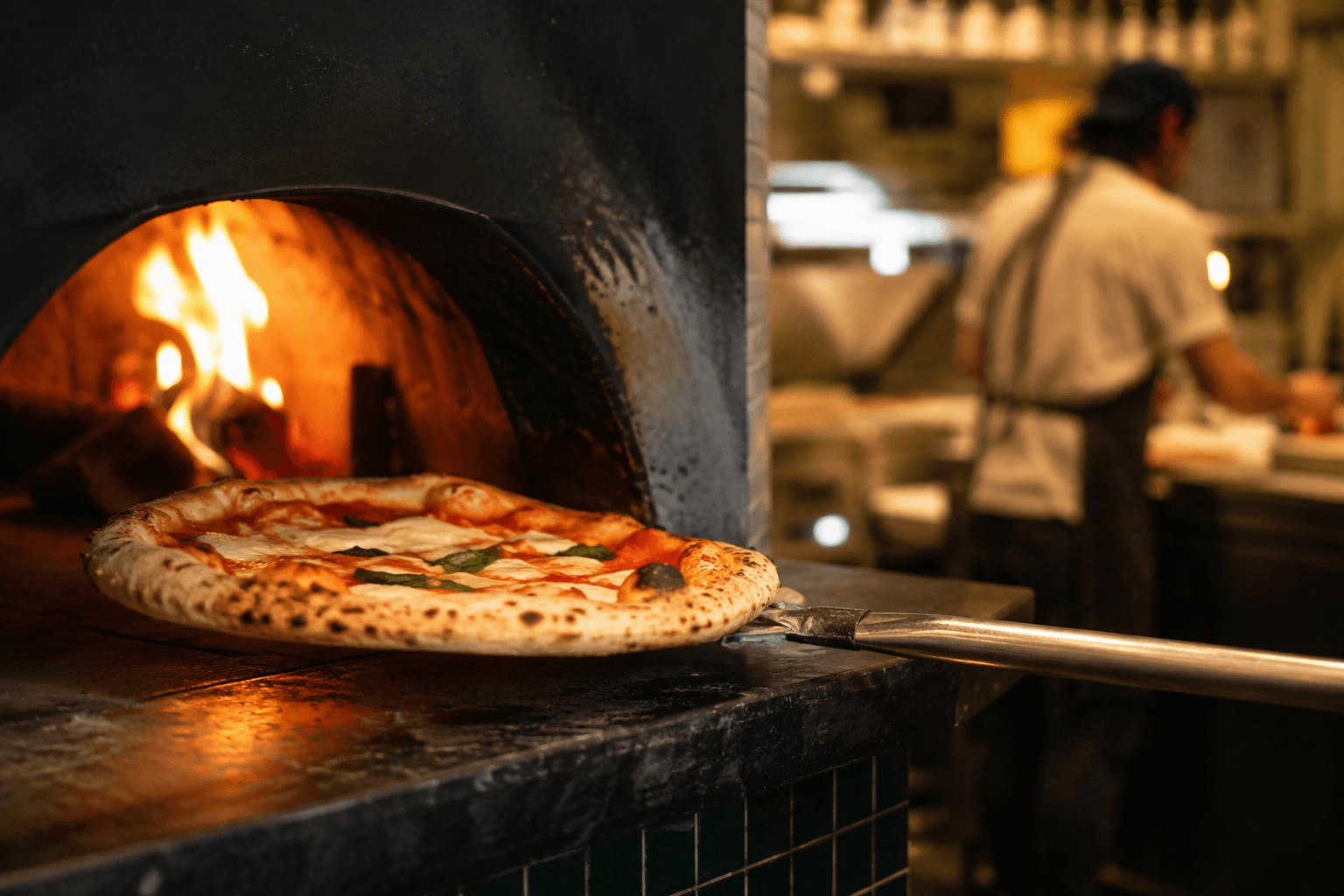
Tavolata at SM Cebu City makes that balance especially legible. Tatler describes it as offering “a charming trattoria experience in Cebu,” with homemade pasta, hand-tossed pizzas, and quality wine designed for family-style dining. That combination is less about importing a rigid Italian template than about adapting it to a familiar dining habit: sharing plates, stretching the meal, and building the table around a mix of pasta, pizza, and wine.
The same range runs through the guide’s broader structure. Tatler says the Philippine dining scene “has never felt more alive,” with strong à la carte programs anchoring neighborhood favorites while ambitious tasting-menu concepts push boundaries. Italian restaurants fit neatly into that moment because they can be both accessible and exacting. A brick-oven pizza place like Gino’s Brick Oven Pizza and a refined room like Finestra live in the same ecosystem as a homestyle pasta shop, and that is part of the category’s strength.
What the list says about Italian dining now
Taken together, the 19 restaurants show a country that has room for many versions of Italy. Some spots lean into authenticity, some into comfort, and some into destination appeal, but all of them are part of the same evolving dining culture. The real story is not that Italian food is popular in the Philippines. It is that the cuisine has become flexible enough to fit Rockwell Center, Tuason Beach, Ortigas CBD, Boracay, Cebu, and the neighborhoods in between without losing its pull.
From Tuason Beach to Power Plant Mall, the guide sketches a cuisine that knows how to travel. That is why Italian dining in the Philippines feels so durable now: it can be a bowl of pasta after a long day, a family-style dinner in Cebu, or a reservation worth crossing an island for.
This article was produced by Prism’s automated news system from verified source data, official records, and press releases, then run through automated quality and moderation checks before publishing. The system is built and supervised by the people who set the standards it runs under. Read our full AI policy.
Did this article answer your question?