UK food prices surge, pasta up 50% amid oil shock fears
Pasta night now carries the cost-of-living squeeze: pasta is up 50%, olive oil 113%, and UK food prices could be 50% higher by November 2026.
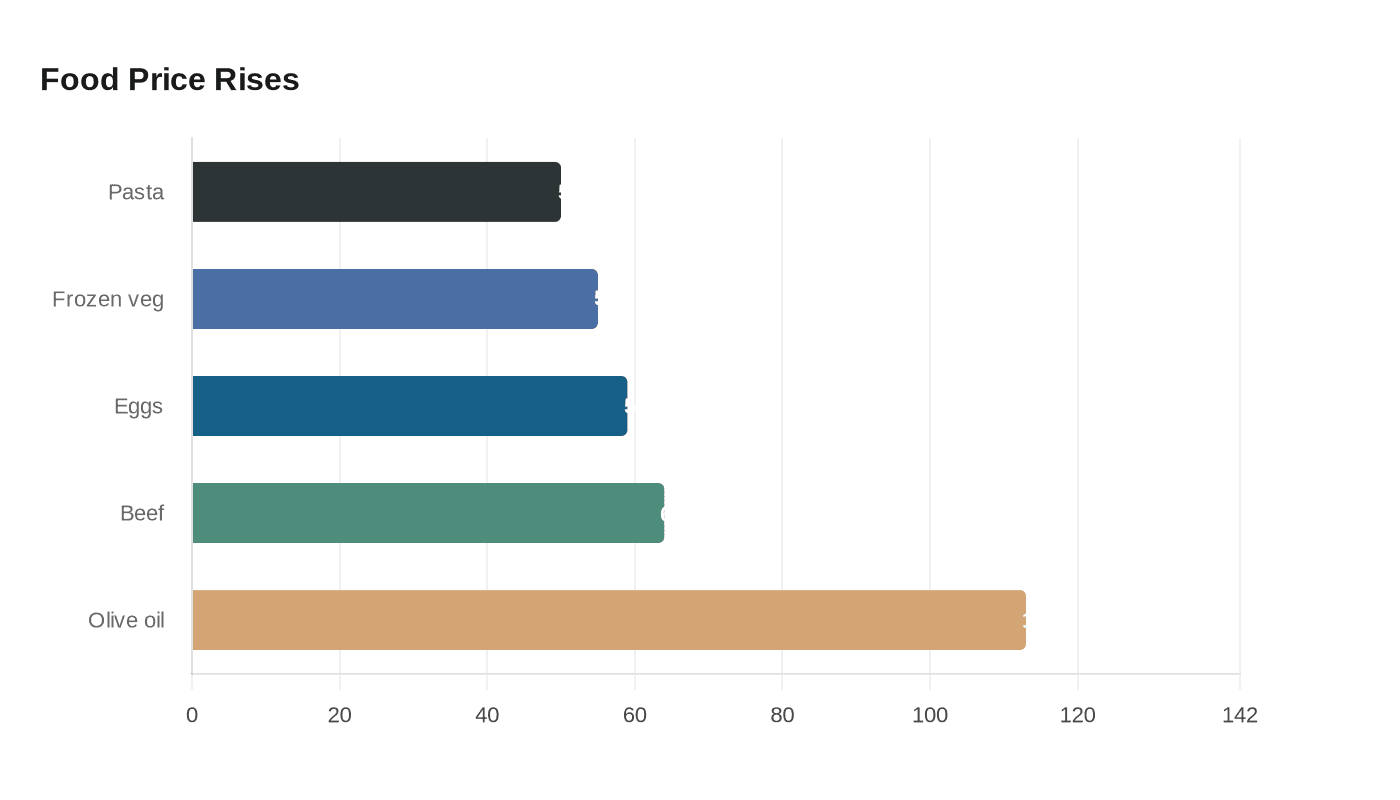
A simple bowl of pasta now reads like an inflation bill. The Energy and Climate Intelligence Unit said pasta is up 50% since mid-2021, frozen vegetables 55%, eggs 59%, beef 64% and olive oil 113%, as UK food prices head toward a grim marker: 50% higher by November 2026 than at the start of the cost-of-living crisis.
That surge lands exactly where home cooks feel it most. A weeknight plate of spaghetti with sauce, mince, vegetables and a drizzle of olive oil has been squeezed from every side, with the ingredients for the most familiar meals among the steepest risers. The ECIU said household food bills rose by an average of £605 over 2022 and 2023, including £244 linked to energy shocks, while food prices have climbed 11% since the crisis began when adjusted for average salaries. For lower-income households, the hit has been sharper because food is harder to cut back on than many other essentials.
The pressure is not coming from supermarkets alone. The House of Commons Library said the Israel and United States began military strikes against Iran on February 28, 2026, and that shipping through the Strait of Hormuz fell sharply as tensions escalated. Around 20 million barrels of oil per day were affected in mid-March, Brent crude briefly moved above $100 a barrel from around $70 before the conflict, and UK wholesale natural gas prices rose roughly 75% between late February and March 23. The same briefing warned that fertiliser prices were also vulnerable because the Persian Gulf is a major hub for fertiliser production and exports.
That is why grocers and analysts are talking about food inflation in the same breath as energy. The Institute of Grocery Distribution said on March 30 that UK food inflation could briefly rise above 8% by June 2026 in a severe energy-shock scenario, more than double its then-current 3.6% rate. Even without a Middle East conflict, IGD said its baseline forecast for 2026 was 3.8% food inflation, which would mean shoppers needing nearly £10bn more to buy the same basket of food. Retail food prices were already around 38% above pre-Covid levels.
The British Retail Consortium said four in five people feared the Middle East conflict would push up food prices, and retailers were already absorbing heavier energy and shipping costs. For anyone planning dinner, the new reality is plain: the price of pasta night is no longer set by one ingredient, but by a chain of shocks that reaches from oil fields to the family shopping basket.
Know something we missed? Have a correction or additional information?
Submit a Tip