What pasta machine should you buy for regular homemade pasta?
A hand-crank roller like the Marcato Atlas 150 is the best long-term buy for most home pasta makers, while attachments and extruders fit narrower routines.
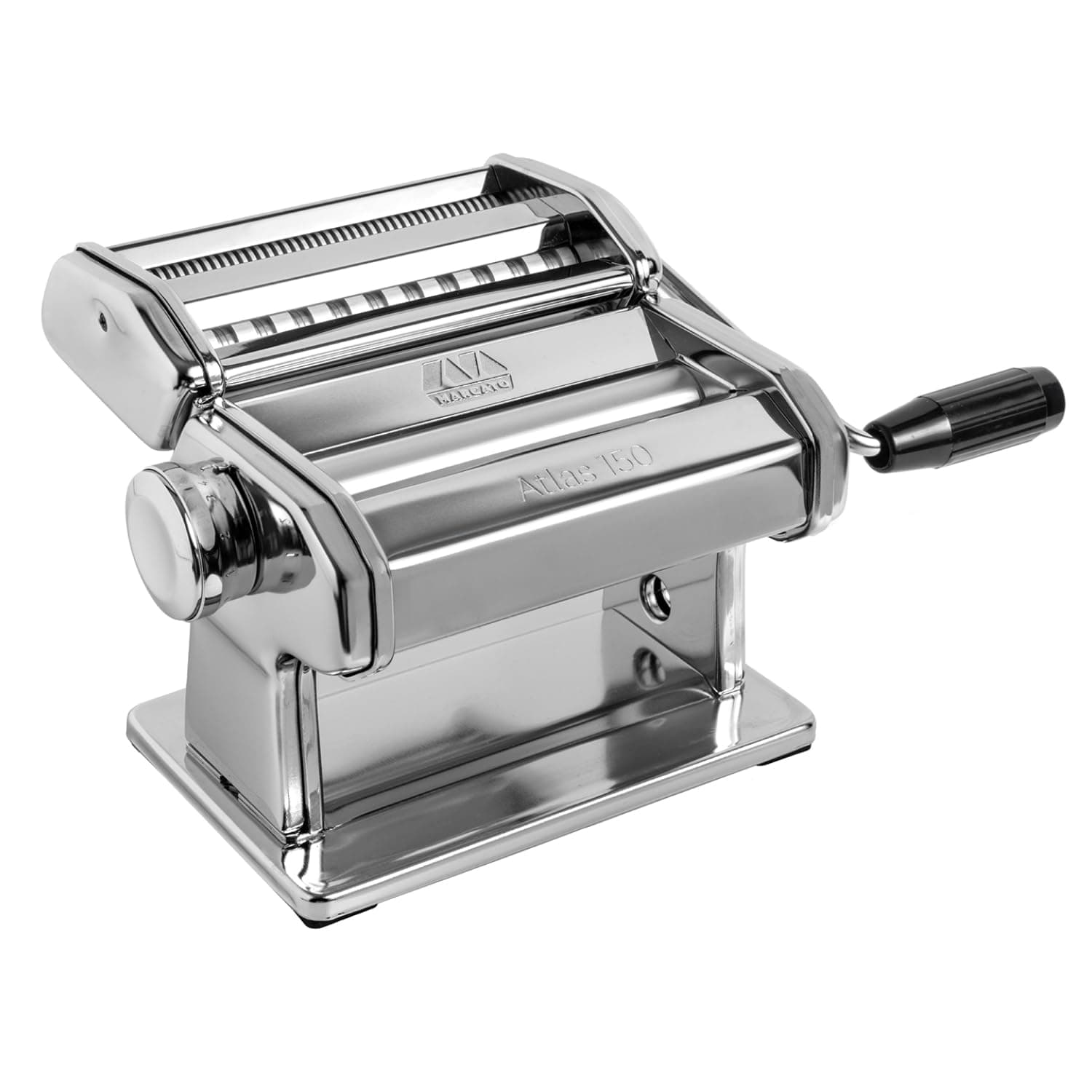
The Marcato Atlas 150, a hand-crank pasta roller, is usually the smartest purchase if you make pasta every week. It gives you control over thickness, fits small kitchens better than powered machines, and still has the durability to stay in rotation for years. Serious Eats ranked it a clear favorite manual pasta maker, and late-2024 reviews still treated it as a serious benchmark rather than a nostalgia piece.
Why a manual roller is the best default
A manual roller-cutter machine is built for long-sheet pasta, not every pasta shape under the sun. That means lasagna sheets, fettuccine, tagliatelle, and other ribbon pastas come first, which is exactly where most home pasta habits live. If you want the feel of dough under your hands and the ability to stop, adjust, and rework the sheet, a hand-crank machine gives you that feedback in a way electric gadgets often hide.
That tactile control is part of the learning curve. With a manual machine, you can feel how hydrated dough changes as it passes through the rollers, and you learn when it needs another pass instead of letting a motor decide for you. For beginners who want to get better, that matters more than convenience features.
The Atlas 150 fits that role especially well because it is adjustable for thickness and built from stainless steel and chrome.
Why the Marcato Atlas 150 keeps coming up
The Atlas 150 keeps appearing in reviews and buying guides because it sits in the sweet spot between price, durability, and control. Made in Italy, it is equipped with a dual cutter for fettuccine and tagliolini; a 2023 YouTube review focused on its durability and the 12 additional accessories available separately.
There is also a practical argument for staying with a proven manual model. In a 2021 YouTube setup-and-cleaning video, home cooks upgraded to the Atlas 150 after a budget pasta maker failed to cut properly. Cutting performance is not a side issue in real use. If the edges fray or the dough jams, the machine turns from helpful to annoying very quickly.
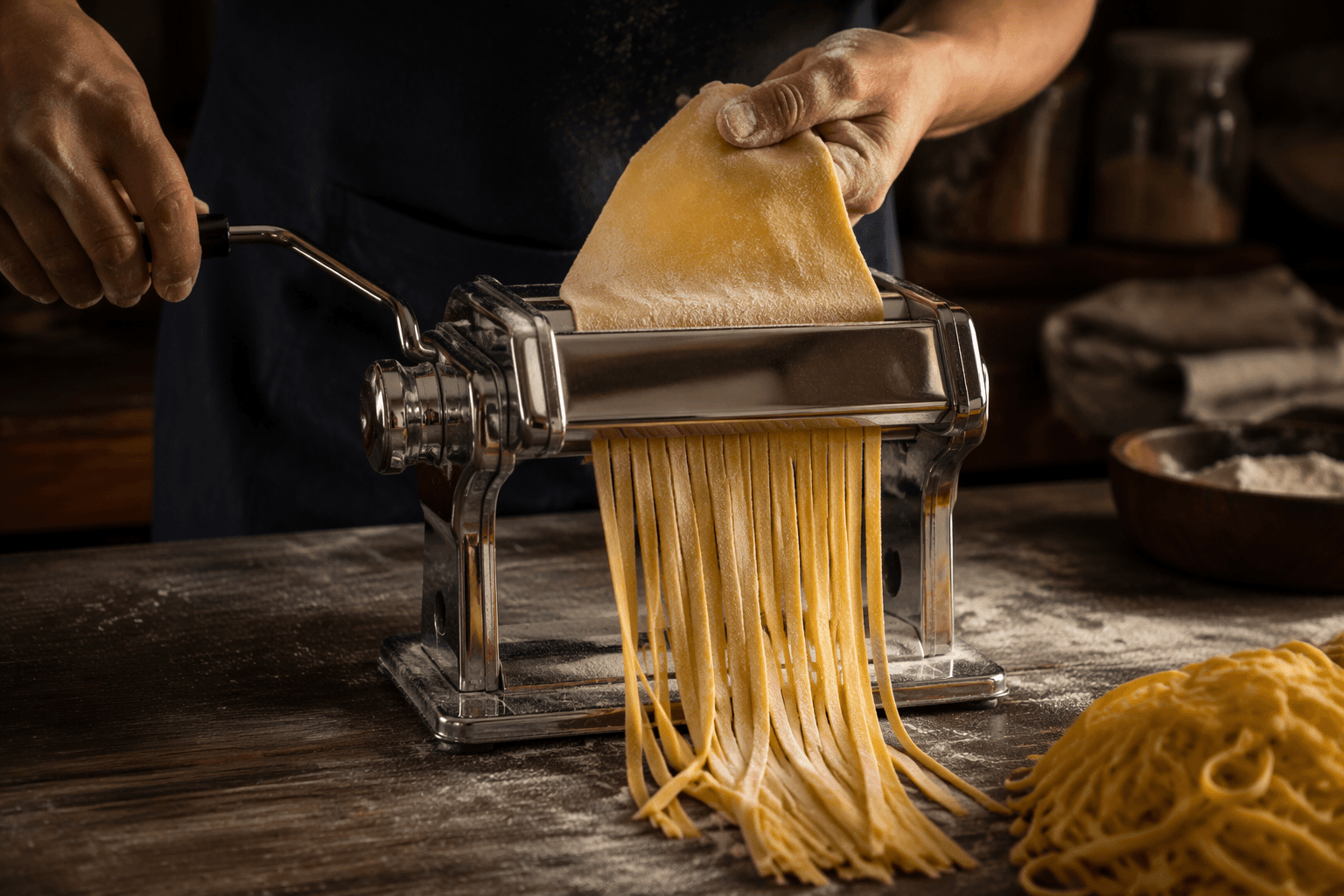
The Atlas 150 has also stayed visible in mainstream food coverage. Borough Kitchen has a Tried & Tested review page on the model, and Food & Wine published a Marcato Atlas 150 review in December 2024.
When an attachment makes sense
If you already own a stand mixer and like the idea of one motor doing more than one job, pasta attachments can be a good fit. KitchenAid pasta attachments are part of a wider accessory market, a point reflected in Serious Eats coverage, and that matters if you are trying to reduce clutter or keep one familiar base unit on the counter.
Still, attachments make the most sense for cooks who are already committed to the mixer ecosystem. They can be convenient, but they also tie your pasta routine to a single appliance and a larger footprint. If your kitchen is small, or you want something you can store in a drawer and bring out on pasta night, a standalone hand-crank machine is usually the more flexible long-term buy.
- you already own a stand mixer and use it often
- you want to keep the number of appliances down
- you make pasta often enough to justify the add-on, but not often enough to want a dedicated machine on the counter
Choose an attachment when:
When a powered machine is the better call
Powered pasta machines have their place, but their appeal is narrower than the marketing suggests. They make sense if you want volume, speed, or a more automated workflow, and they can be attractive for cooks who make pasta in larger batches on a regular schedule. That said, they are not the best first buy for most home kitchens because they add cost, take up more space, and remove some of the hands-on control that makes homemade pasta worth doing in the first place.
If your pasta habit is occasional, a powered machine is probably more machine than you need. If your goal is a weekly ritual, a manual roller is usually enough.
When an extruder is the right tool
Pasta extruders are not alternatives to roller machines so much as different tools for different shapes. They are built for short shapes and hollow forms such as rigatoni, penne, macaroni, and bucatini, where dough is pushed through dies instead of rolled into sheets.
That distinction prevents a common beginner mistake: buying the wrong machine for the pasta you actually want to make. If your kitchen dream is ribbon pasta, sheets, and classic stuffed or layered dishes, buy a roller. If you are most excited by tube shapes that trap sauce and show off ridges, an extruder is the better spend.
Extruders also make sense when you care more about a repeatable short-shape routine than about learning rolling technique. They are specialized by design.
The practical decision
For regular homemade pasta, start with the shape you will actually make most often and the space you can spare. A manual roller like the Marcato Atlas 150 is the best long-term choice for most home pasta makers because it balances control, durability, and price in a way electric machines rarely do. It is especially strong for small kitchens, weekly pasta habits, and beginners who want to improve rather than bypass the craft.
This article was produced by Prism’s automated news system from verified source data, official records, and press releases, then run through automated quality and moderation checks before publishing. The system is built and supervised by the people who set the standards it runs under. Read our full AI policy.
Did this article answer your question?