Why bucatini beats spaghetti, according to chefs and pasta lovers
Bucatini wins when sauce needs somewhere to go: its hollow center boosts cling, bite, and comfort in a way spaghetti cannot always match.
Why shape changes the whole dinner
Pasta is never just pasta. One bowl can feel like childhood comfort, another like a rescue plan for a rough night, and another like a clean, soothing reset after a long day. That emotional range is exactly why bucatini has such a strong case against spaghetti: the shape does not just hold sauce, it changes how the whole meal lands.
Why pasta shape matters at all
Pasta’s variety is not a quirk of style, it is design. Britannica notes that pasta comes in ribbons, cords, tubes, and special shapes, and that those forms were developed for specific jobs, including retaining heat and holding sauce. That logic is the backbone of the bucatini argument: the best shape is the one that makes the sauce behave the way you want it to.
Spaghetti is still the global default for a reason. Britannica says it is the most popular pasta eaten today, and that it likely arrived in Sicily through Arab influence in the 8th century. It is thin, straight, and familiar, which is part of its charm. But familiarity is not the same as best-fit, especially when the sauce has texture, weight, or a strong personality of its own.
What bucatini does differently
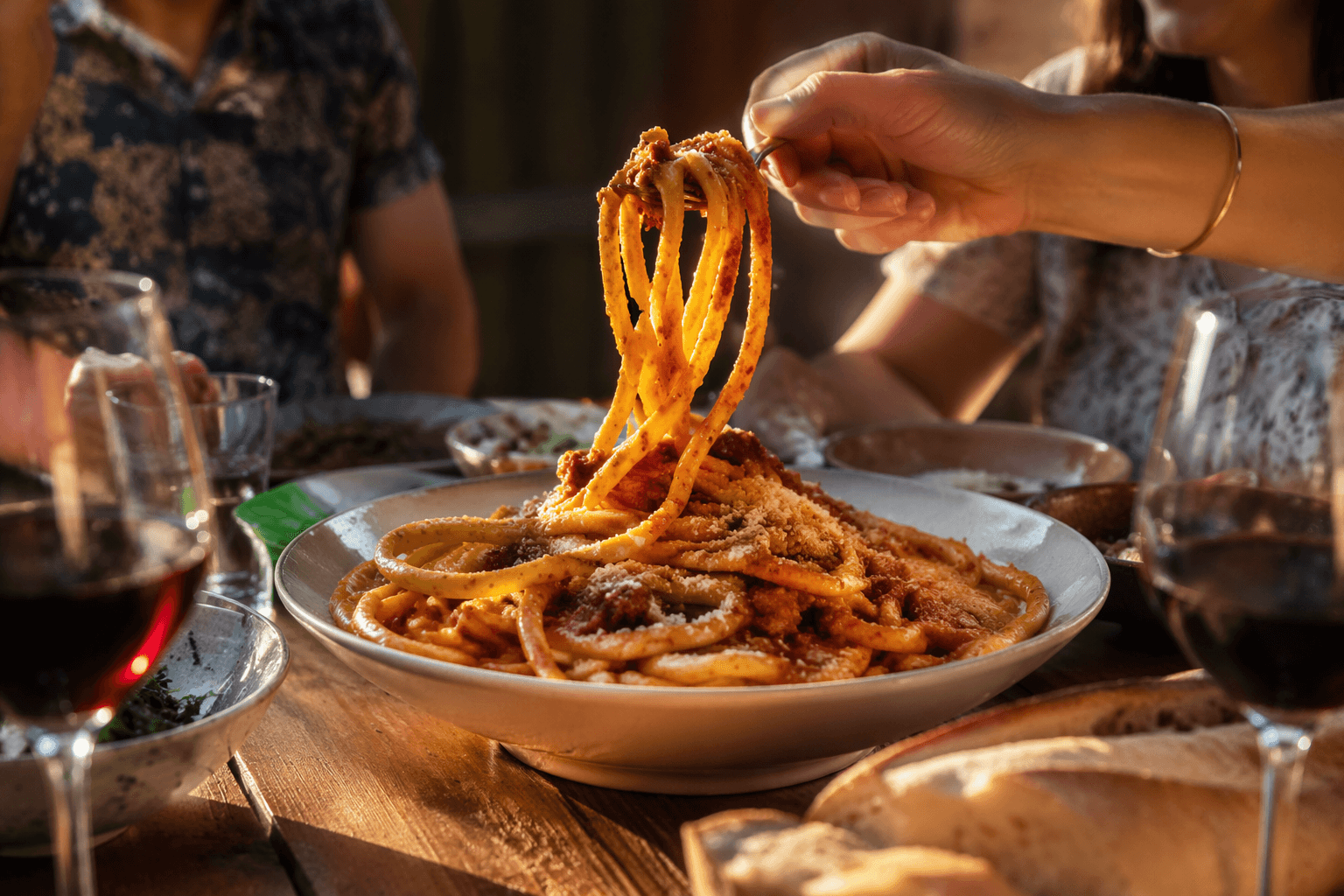
Bucatini looks like spaghetti’s more dramatic sibling, but the hollow center changes the experience in a very practical way. Chef and pasta maker Katie Leaird explains that sauce can travel through the noodle’s interior tunnel as well as cling to the outside, which gives every bite more movement and more contrast than a straight strand of spaghetti can manage.
That tunnel matters most when the sauce has enough body to grip the noodle, but is still loose enough to enter the hollow. In other words, bucatini is not a universal replacement. It is not there to make every pasta dish better by default. It is there to make the right sauce feel fuller, more complete, and a little more alive on the fork.
There is also a mouthfeel argument here. Bucatini gives you the firmness of a long noodle, but with a tiny burst of sauce inside the strand, so the bite feels layered instead of uniform. That extra dimension is part of its emotional appeal too: it feels more deliberate, more indulgent, and a little more special than the everyday straight-line simplicity of spaghetti.
The sauces that make bucatini shine
The clearest case for bucatini is amatriciana. De Cecco says bucatini all’amatriciana is famously paired with tomato sauce, pork cheek, and Pecorino Romano, and describes the shape as excellent with butter, meat, or fish sauces as well. Turismo Roma calls bucatini all’amatriciana one of the most iconic dishes in Rome’s culinary tradition, which makes sense given how naturally the pasta handles a sauce with fat, salt, and tomato intensity.
That Roman logic extends to carbonara and cacio e pepe, where the sauce needs a strand that can carry richness without collapsing under it. Publicly available Italian food sources place cacio e pepe in Rome and Lazio, and Turismo Roma says carbonara is one of the best known and loved first courses of traditional Roman cuisine, even if its origin is uncertain. Bucatini gives those sauces a little more architecture, so the cheese, pepper, or egg-based coating feels wrapped around the noodle instead of merely sitting on top of it.
Fresh tomato sauces also make a strong case. Barilla publishes bucatini recipes with tomato, red onion, and basil, and also uses the shape for brown butter and lemon with oysters. That range shows how adaptable bucatini is when the sauce is lively but not overloaded. A simple passata with garlic, olive oil, and red pepper flakes is exactly the kind of sauce that can slip into the center and cling to the outside at the same time.
When spaghetti still makes more sense
Bucatini is not the answer to everything, and that is part of the story. Spaghetti still belongs where its loose, nest-like strands help carry a meat sauce, especially in classic bolognese. The shape can gather ragù in a way that feels generous without demanding the same tunnel effect that bucatini brings to lighter, more mobile sauces.
This is where pasta culture gets interesting: the best shape is not the fanciest one, but the one that solves the problem on the plate. Spaghetti remains beloved because it is simple, versatile, and deeply woven into everyday eating. But when a sauce has enough presence to deserve more structure, bucatini gives it room to perform.
The practical takeaway for your own kitchen
If dinner is meant to feel like comfort, choose the shape that matches the sauce’s weight and mood. Bucatini works best when you want a sauce that clings outside and travels inside, especially in Roman-style dishes, tomato sauces with body, or buttered, meaty, or fish-based preparations. Spaghetti still earns its place for classic ragù and for meals where a straightforward strand is exactly the right tool.
De Cecco’s U.S. catalog identifies the shape as Bucatini no. 15, a small reminder that even the major brands treat pasta shapes as something precise, not interchangeable. That is the real lesson in the bucatini-versus-spaghetti debate: the right noodle changes the way sauce behaves, the way the bite feels, and the way dinner lands emotionally. When the shape matches the sauce, the whole bowl tastes more complete.
This article was produced by Prism’s automated news system from verified source data, official records, and press releases, then run through automated quality and moderation checks before publishing. The system is built and supervised by the people who set the standards it runs under. Read our full AI policy.
Did this article answer your question?