Why salting pasta water matters for flavor, not boiling speed
Salt the water for the noodle, not the boil: a quick taste test shows unsalted pasta stays flat while properly salted pasta carries flavor all the way through.
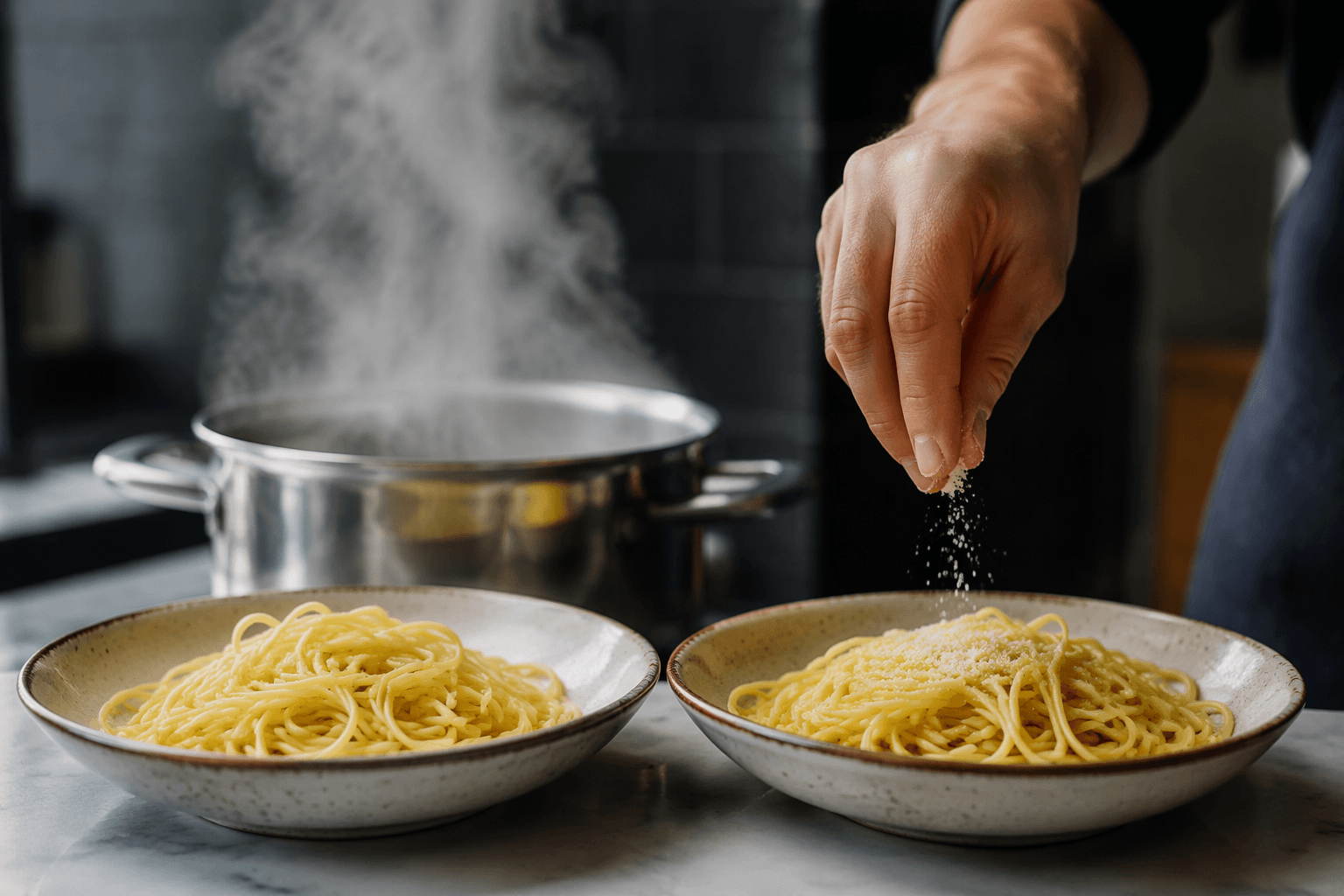
Boil one batch of pasta in plain water and another in salted water, then taste both before the sauce goes on: the salted noodles have flavor, and the unsalted ones taste flat. The noodles season as they cook, so each bite starts with flavor instead of waiting for the sauce to do all the work. The boiling-point bump from salt is real, but at kitchen scale it is a side effect, not the payoff.
The taste test that settles the argument
If you want to test it in your own kitchen, make a side-by-side test with the same shape of pasta, the same pot size, and the same cooking time. Boil one batch in plain water, salt the other once the water is already at a boil, then taste both before sauce goes on.
1. Cook one batch in unsalted water.
2. Cook a second batch in properly salted boiling water.
3. Taste each batch plain, then with the same sauce.
Salted water does not just season the outside of the noodle after the fact; it moves sodium into the pasta itself as it cooks.
Why the salt belongs in the pot
Pasta is a staple food, and al dente is a reminder that texture and taste are tied together in the final bite. Pasta is one of the few foods that can be flavored from the inside out during cooking, which is why the water matters so much. Once the noodle leaves the pot, sauce mostly coats the exterior; it cannot fully replace the baseline seasoning that should already be in the pasta.
That is why plain spaghetti with olive oil, buttered noodles, or cacio e pepe can fall short if the cooking water was left unsalted. Those dishes have nowhere to hide, and the lack of seasoning shows up fast. When the water is salted, the noodle arrives at the pan or bowl already carrying its own flavor.
When to salt, and how different pastas absorb it
The standard move is to add salt once the water is already at a boil. That keeps the process straightforward and avoids delaying the cook more than necessary. Britannica’s dictionary entry for salted gives the old kitchen rule in one instruction: “Cook the pasta in boiling salted water.”
The kind of pasta matters too. Delicate fresh pasta, thick dried shapes, and stuffed pastas all absorb seasoning differently because of thickness and cooking time. Even so, the basic principle stays the same across the board: the pot is your one chance to season the starch itself before it hits the sauce.
Why the boiling myth keeps hanging on
The science behind the boil-point argument is real, but it is small enough that it should never be the main story. Salt does raise water’s boiling point, yet not by enough to matter much in an ordinary home kitchen. ABC Science’s April 12, 2007 “Salt in the water” and Live Science’s “Does salt make water boil faster?” reach the same conclusion. The answer is yes in principle, but barely in practice.
The real question is not whether salt belongs in the pot, but how much seasoning the pasta should get. America’s Test Kitchen asked that question in its July 8, 2022 article, “How Salty Should Your Pasta Water Be?” The practical issue is flavor distribution.
Why this argument never goes away
Serious Eats, Martha Stewart, Reader’s Digest, The Kitchn, Food Republic, Cook’s Illustrated, and Ronzoni have all published their own versions of the explanation.
Pasta is about more than softness or doneness; it has flavor and texture before the sauce arrives, the same point reflected in Britannica’s broader pasta coverage and its al dente entry. Salted water sets that seasoning before the noodle leaves the pot.
This article was produced by Prism’s automated news system from verified source data, official records, and press releases, then run through automated quality and moderation checks before publishing. The system is built and supervised by the people who set the standards it runs under. Read our full AI policy.
Did this article answer your question?