Why visible pasta rooms are winning over Italian restaurant guests
Visible pasta rooms turn dinner into proof of craft, letting guests see freshness, skill, and value before the first plate lands.
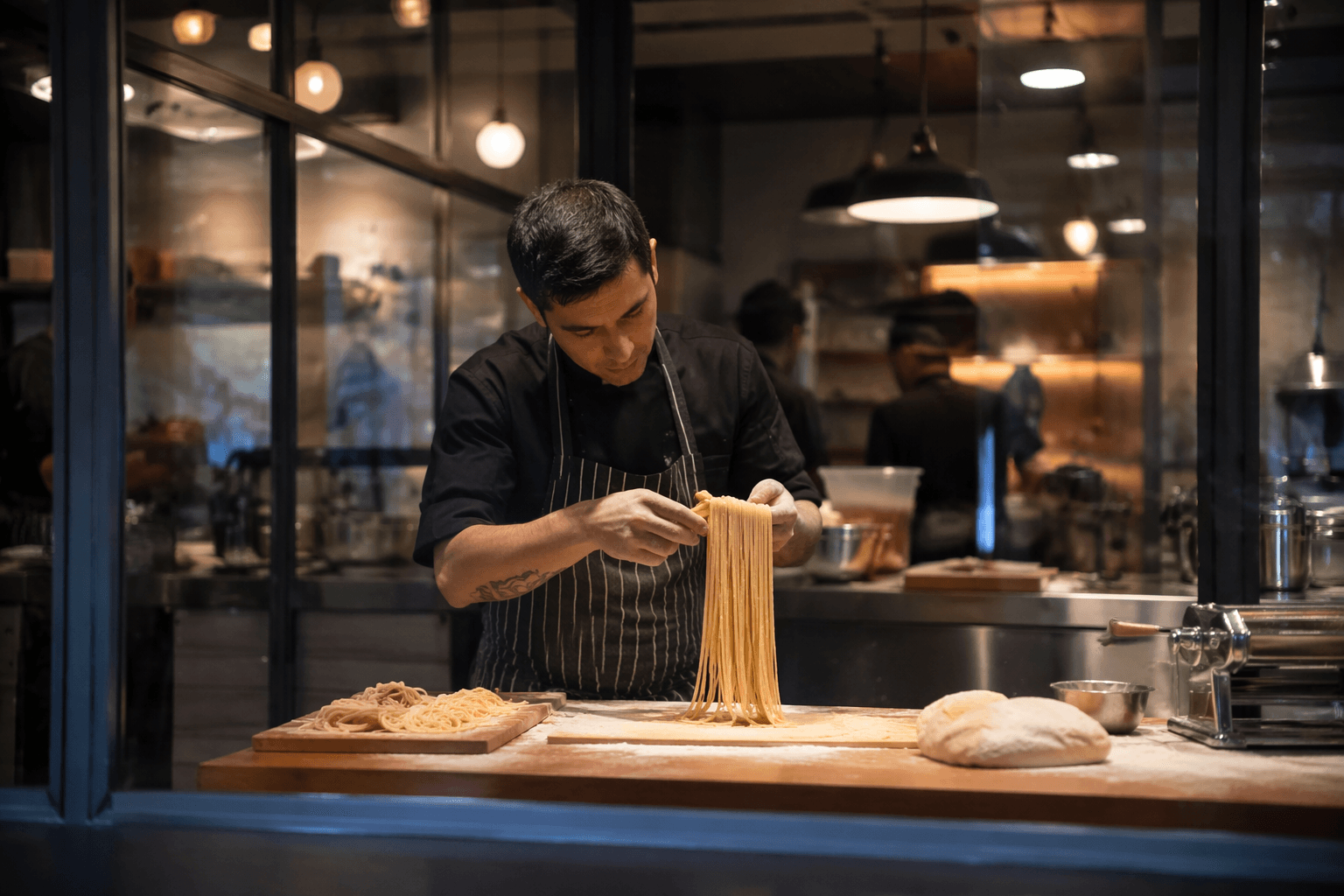
Visible pasta rooms keep winning because they do more than entertain a dining room. When guests can watch dough being kneaded, sheets being rolled, and ravioli, agnolotti, and tortellini assembled by hand, the restaurant is making a claim about freshness, craftsmanship, and value before the first bite.
That is the real appeal behind the glass. The flour dust, the sound of cutters, and the steady pace of production turn the meal into something personal, and they give new Italian restaurants a way to stand apart in markets full of pizza-and-red-sauce familiarity.
What the pasta room is really selling
A good pasta room works as both stage and proof. Diners do not just hear that the pasta is fresh, they can see the difference between extruded dried pasta and dough that has been rolled that day. That visibility makes higher pricing easier to understand, because the labor is right there in front of the table instead of hidden behind a kitchen door.
It also changes how people talk about the meal. Guests leave with a clear story: they watched a pasta maker shape the food by hand, they saw the ingredients at work, and they felt the rhythm of the room before the first plate arrived. That is a stronger memory than a generic Italian dining room can usually offer, and it gives the restaurant something concrete to photograph, describe, and recommend.
Why the format keeps spreading
The modern version of this idea fits into a larger open-kitchen movement that traces back to Wolfgang Puck’s Spago in the early 1980s, when the kitchen itself became part of the dining experience. The pasta-room version is a more focused offshoot of that shift, and it has shown up again and again in notable Italian openings.
Eater highlighted Misi in New York and Felix Trattoria in Los Angeles as early examples of restaurants using visible pasta rooms to put technique at the center of the room. More recent coverage showed the idea still has momentum: at Dario in Minneapolis’s North Loop, pasta making happens in a narrow, sunny space off the kitchen, and at Füm in Atlanta, the open kitchen lets diners watch a pastaio pull fresh noodles in view of the dining room while a DJ plays lo-fi records.
Those details matter because they turn pasta from a menu category into a scene. Diners can see the hands at work, hear the room, and understand that what they are getting is not assembly-line Italian food but a craft performance with a clear endpoint: dinner.
How the best rooms build trust
The strongest pasta rooms are not just showpieces. They connect the craft to a restaurant’s identity, often through family ownership, regional roots, or recipes that reach back to parents and grandparents. That story gives the room emotional weight, because the work behind the glass feels tied to a lineage instead of a concept board.
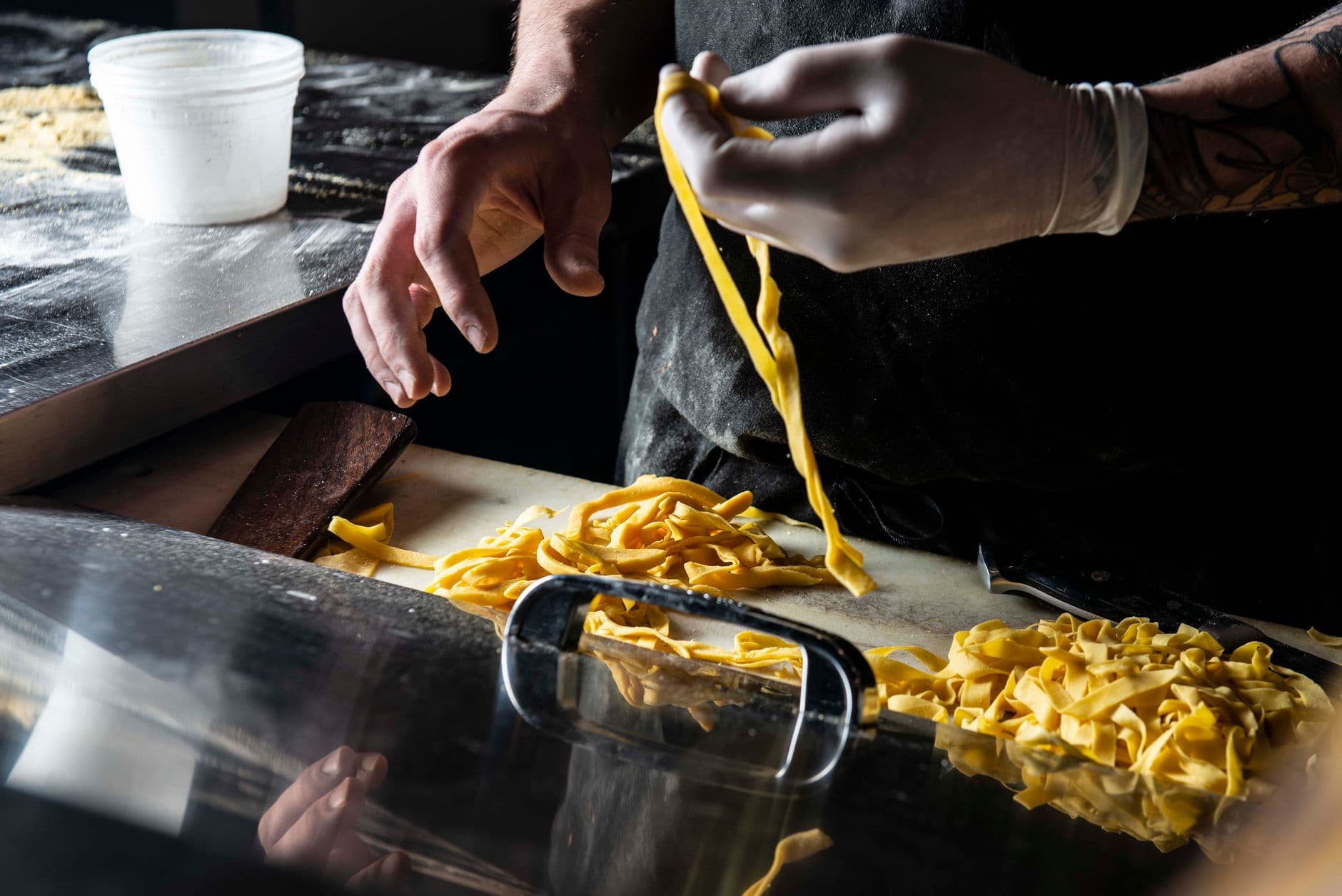
It also gives chefs room to build menus that feel disciplined rather than sprawling. In many of the strongest versions, the restaurant focuses on a few signature shapes and lets the menu move with the seasons: a lighter filled pasta in spring, richer ragù-based dishes in winter, or a bright tomato-and-seafood preparation when produce and fish are at their peak. The pasta room makes that focus visible, which helps the restaurant look intentional instead of limited.
Rezdôra is a strong example of how that can work. Eater reported that chef Stefano Secchi trained at Massimo Bottura’s Osteria Francescana in Modena and built a regional pasta tasting menu around the restaurant’s identity. That kind of regional specificity gives guests a clear reason to care, because the room is not just making pasta, it is presenting a point of view.
What diners notice first
The details that stick are usually the simplest ones. Guests notice fresh sheets of dough, the texture of the flour, the speed of the hands, and the fact that the room keeps producing shapes while the dining room fills up. They notice whether the pasta is being rolled in plain sight or whether it feels like a hidden backstage operation.
Via Locusta in Philadelphia shows how far that visibility can go. The restaurant focuses on handmade pasta with fresh-milled flour in a rotating selection of 10 to 12 options, which gives diners both specificity and variety. That combination makes the craft legible: the ingredients are obvious, the menu is restrained, and the room reinforces the idea that this is food made with care, not just listed with care.
That is also why the visual element drives buzz so reliably. People do not only eat with their eyes, they also judge whether a restaurant feels authentic, worth the price, and worth telling someone about later. A visible pasta room answers those questions immediately.
Why this keeps working now
The category itself is gaining strength. Technomic said in April 2024 that pasta was experiencing a period of growth and released its 2024 Pasta Global Menu Category Report to track consumer preferences, noodle types, toppings, and menu innovation. For restaurateurs, that is a useful signal: pasta is not a sleepy side category, it is a space where guests are actively looking for something better, fresher, and more distinctive.
Visible pasta rooms make that easier to deliver. They turn labor into theater without losing credibility, and they turn freshness into something guests can verify with their own eyes. In a crowded Italian market, that combination has a built-in advantage.
The reason these rooms keep winning is simple: they make the promise visible. By the time the first plate lands, the guest has already seen the dough, heard the cutters, and watched the craft unfold, which is exactly why the room itself becomes part of the meal.
This article was produced by Prism’s automated news system from verified source data, official records, and press releases, then run through automated quality and moderation checks before publishing. The system is built and supervised by the people who set the standards it runs under. Read our full AI policy.
Know something we missed? Have a correction or additional information?
Submit a Tip