Paizo’s Pride feature spotlights LGBTQ+ creators and community stories
Paizo's Pride blog centers creators' stories, not products, and ties that choice to a long-running promise that Pathfinder tables should feel safer and more welcoming.
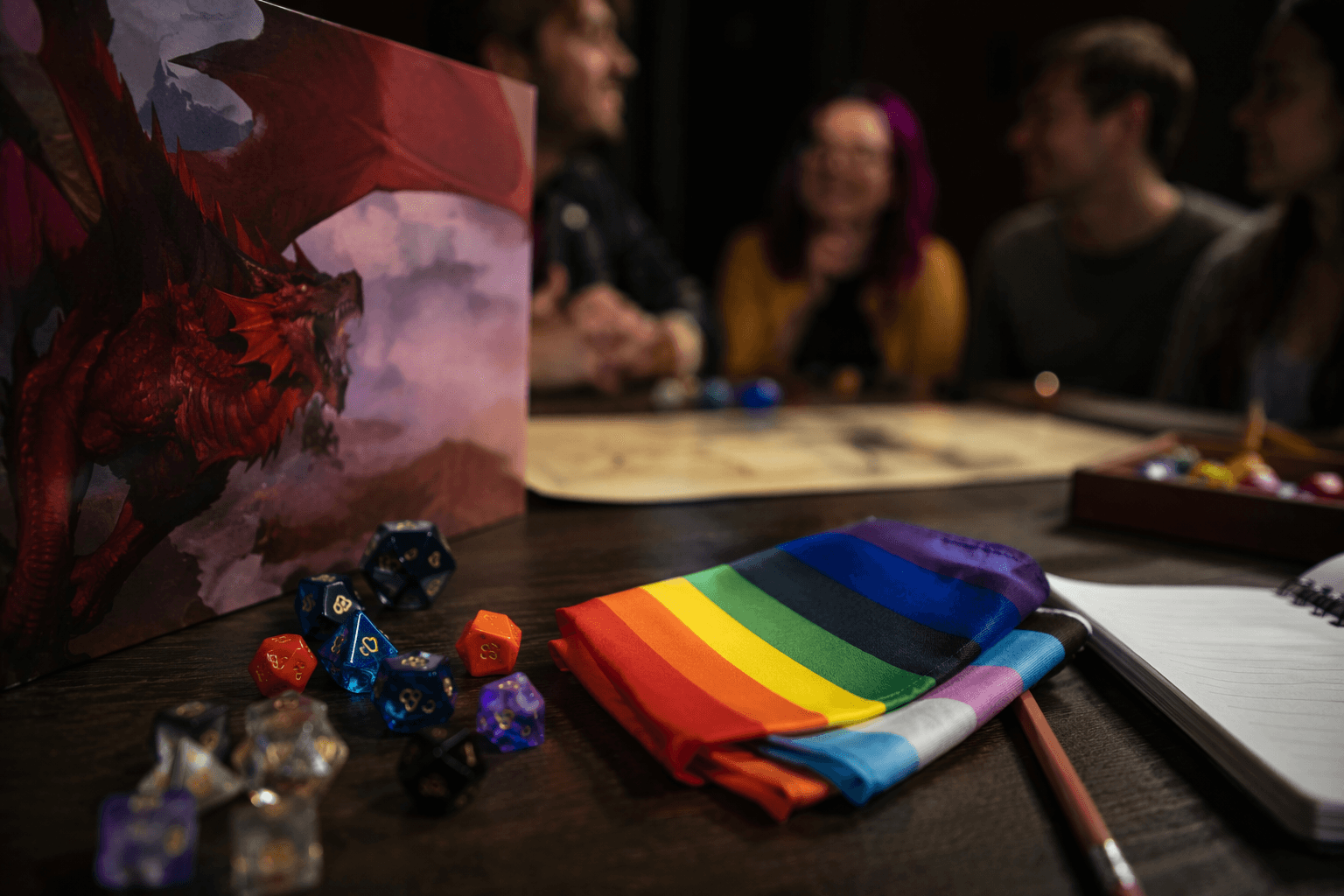
Paizo’s 2026 Pride feature reads less like a storefront and more like a scrapbook of the people who help shape Pathfinder’s culture. The post centers LGBTQ+ creators’ voices, personal histories, and creative work, then frames the whole feature around the theme “For All Of Us” and Marsha P. Johnson’s line, “There is no pride for some of us without liberation for all of us.”
Pride as a people-first message
The strongest choice Paizo makes is structural. Instead of leading with a product drop, the blog opens space for LGBTQ+ members of its community to share stories, projects, and inspiration, which makes the piece feel like a community anthology rather than a sales pitch. That matters in a hobby where corporate Pride messaging can easily drift toward seasonal branding; here, the company keeps the focus on the humans who write, design, play, and support the game.
Paizo’s language also makes the purpose plain. Pride is not presented as a decorative June marker, but as a commitment to a safer, more welcoming hobby for everyone at the table. By tying the 2026 theme to Marsha P. Johnson, the post links that commitment to Pride’s activist roots and gives the message historical weight instead of letting it float as generic inclusion language.
Alex Augunas and Dustin Knight bring the feature down to earth
The clearest emotional center of the feature comes from Alex Augunas and Dustin Knight, who write a joint section rather than separate submissions. That choice gives their piece the feel of a shared life instead of two isolated bios, and it fits the way the post wants to present Pride: as something lived in relationship, not just declared in public.
Their story is rooted in a concrete Paizo memory. They met in person for the first time at PaizoCon 2019, and the blog treats that meeting as part of a larger arc that joined professional collaboration, personal affection, and self-understanding. Augunas says he previously came out in an earlier Paizo Pride blog as ace and hetero, then later came to understand himself as gay and demisexual. Knight, meanwhile, says Paizo Pride helped him realize he was worthy of pride and love.
That combination gives the feature real texture. It is not only about visibility in the abstract; it is about how seeing yourself reflected in a community space can alter the way you understand your own life. For Pathfinder readers, that lands because the game has always been built by people whose names and relationships matter to the worlds they make, whether that is Golarion, Starfinder, or the wider network of freelancers around the line.
A recurring Pride tradition, not a one-off campaign
Paizo’s Pride coverage has become an annual habit, and the archive shows Pride-tagged posts in 2022, 2023, 2024, 2025, and 2026. That matters because recurring messaging says more than a single polished campaign ever can. It shows the company making the same kind of public commitment year after year, with each Pride post adding to a visible record.
The themes themselves show an increasingly explicit line. In 2025, the contributor blog was themed “Queer Joy as Resistance.” In 2024, Paizo said Pride is a protest and pointed back to Stonewall in New York City. In 2023, the company again framed Pride as protest and named anti-LGBTQ+ laws and political backlash. By 2026, the message has not softened into safe branding; it has widened into a more direct statement about community, liberation, and belonging.
That progression is what gives the 2026 feature its force. Paizo is not simply acknowledging Pride as a calendar event. It is building a public memory of what it wants its culture to stand for, and it is doing so in a way that keeps LGBTQ+ creators at the center rather than at the margins.

More voices, broader trust
James Beck appears among the contributors in the 2026 Pride blog, and his presence helps underline the same editorial instinct. The feature makes room for multiple perspectives instead of asking one representative voice to stand in for everyone. That matters in a community as broad as Pathfinder’s, where players, GMs, freelancers, and publishers often overlap, and where no single story can carry the whole picture.
The post also reinforces how Paizo understands its public identity. Its writers and designers are part of the reason readers connect with Pathfinder in the first place, so a Pride feature that foregrounds those people doubles as a statement about the company’s values. It says the work behind the game and the culture around the game are inseparable.
That message is amplified by Paizo’s June publishing rhythm. The Pride post appeared on June 23, 2026, close to a Juneteenth post on June 19 and a Free RPG Day post on June 20. Seen together, those posts make June feel like a month of community-facing identity work, not a single promotional beat. The company is using the calendar to talk about inclusion, celebration, and the social life of the hobby in a sustained way.
Paizo’s Pride feature works because it trusts the people inside the hobby to carry the message. The result is not a sales page with a rainbow overlay, but a record of who gets centered when the company wants to talk about belonging, and that is exactly the kind of signal Pathfinder readers know how to read.
This article was produced by Prism’s automated news system from verified source data, official records, and press releases, then run through automated quality and moderation checks before publishing. The system is built and supervised by the people who set the standards it runs under. Read our full AI policy.
Know something we missed? Have a correction or additional information?
Submit a Tip