Pathbuilder 2e remains Pathfinder’s most practical character-building tool
Pathbuilder still solves the first Pathfinder headache fastest: building a legal PF2e character without book-flipping, then exporting it cleanly for the table.
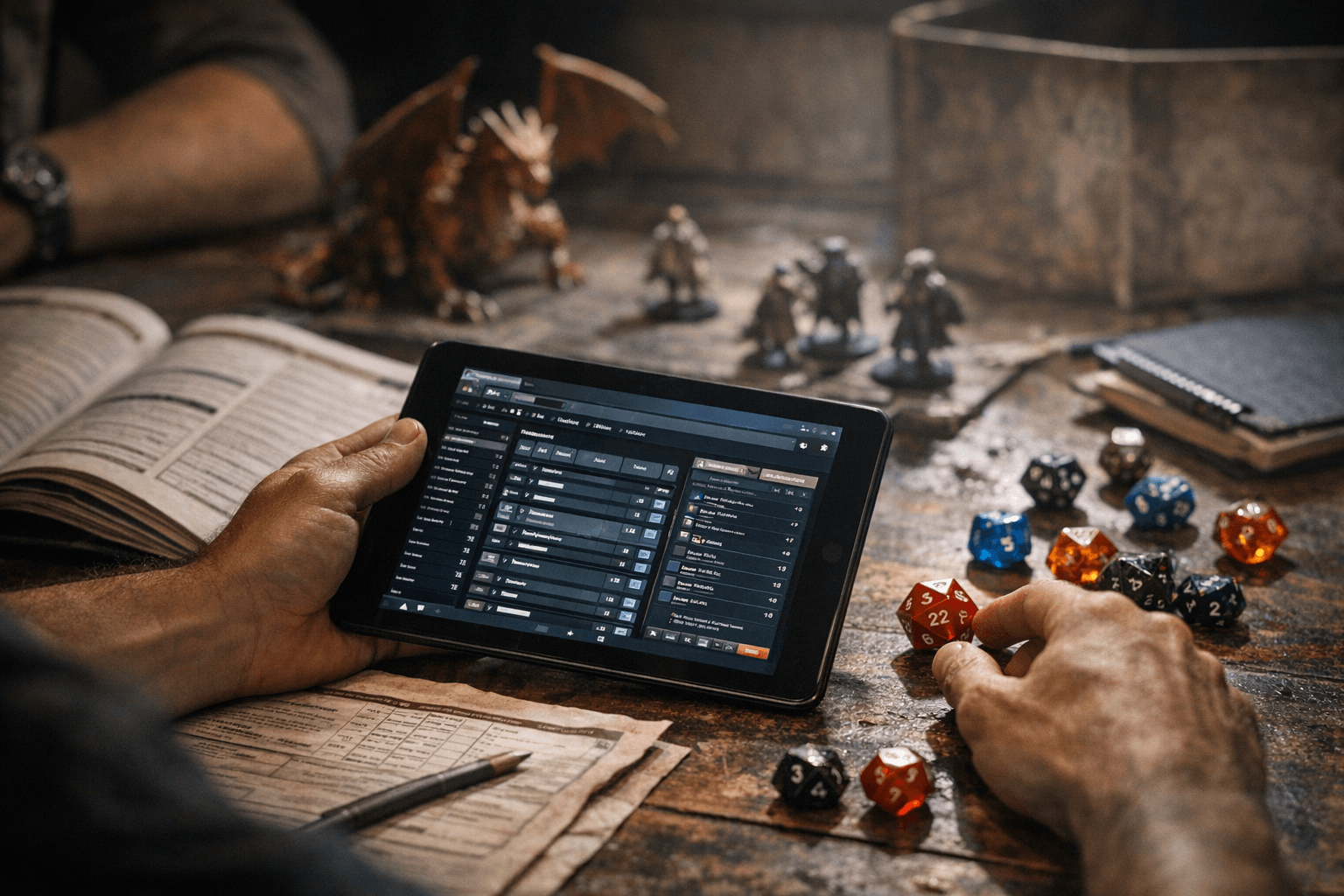
The real Pathfinder bottleneck is not the encounter map or the initiative tracker. It is the hour you can lose before session one, when ancestry, heritage, class feats, equipment, and rule interactions all pile up at once. Pathbuilder 2e still earns its place because it tackles that exact mess with less friction than anything else I have used in the PF2e ecosystem.
Why Pathbuilder still gets the first click
Pathbuilder 2e describes itself as a character planner and sheet for PF2E, and that narrow focus is the reason it works. It is built around the part of the game you touch first and most often: making a character, leveling that character, and checking that the build still hangs together when the rules start to stack.
That matters at every experience level. New players get a cleaner path through the class-and-feat maze, while veteran players get a fast digital checklist for rebuilding, testing alternate options, or advancing a character between sessions. Pathfinder 2e rewards customization, but customization comes with information overload. Pathbuilder trims the overhead enough that you spend more time making choices and less time hunting for them.
The strongest argument for it in 2026 is simple: it still does one job extremely well. It is not trying to replace your whole table stack, your VTT, or your rulebook library. It is the shortest route from concept to a usable PF2e character.
The buy-in is split, and that matters
One detail is worth knowing before you hand over money: the web and Android versions are separate products, and each requires its own purchase to fully unlock. That is not a minor footnote. It means Pathbuilder is not a single synced account service where one payment follows you everywhere.
If you prep on a laptop and play from a phone or tablet, that split affects your buying decision immediately. The upside is that each version is still designed for the same practical workflow, but you should go in expecting to choose the platform you will actually use instead of assuming one purchase covers everything.
The Android app is especially clear about the use case. Google Play says you can plan out your characters and then either export a PDF character sheet or use the app itself as the sheet. That is the sort of detail that makes a table night smoother, because you are not forced to bounce between a browser, a PDF, and a paper copy just to answer one rules question.
What the current builds actually give you
The current web build identifies itself as Pathbuilder 2e Web Version 107, and it is packed with tools that matter in day-to-day PF2e play. The list is not flashy, but it is practical: GM Mode, PDF export, JSON export, backup and restore, campaign management, a feat browser, remaster information, and remaster conversion. That is the kind of feature set that tells you the tool has kept pace with the Remaster era instead of freezing in the pre-Remaster version of the game.
A few of those tools deserve special attention:
- PDF export is still the cleanest way to hand a character to a GM or archive a build.
- JSON export is the bridge you want if you are moving data between tools or storing character info in a more structured way.
- Backup and restore matter the moment you are testing builds aggressively and do not want to lose work.
- GM Mode and campaign management make the web version more useful on the table side, not just for solo character prep.
The Android listing says something else important about maintenance. On April 22, 2026, the app notes bug fixes and a weapon range-stat change. That kind of update sounds small until you have a table argument over reach, increment, or how a specific weapon should be displayed. Pathbuilder is still being adjusted where the rules actually hit the sheet.
Why GMs still keep it open
Even if you never build a character in Pathbuilder yourself, the tool still earns a place in GM prep because it reduces the back-and-forth around legal character options. Pathfinder character creation is a rules-heavy process, and that has always made it easy for players to overlook a prerequisite, misread a feat chain, or forget how one choice affects another later.
Pathbuilder helps cut that risk down by organizing the moving parts in one place. For GMs, that means fewer pre-session corrections and less time spent recalculating someone’s build on the fly. The official Pathfinder NEXUS beta announcement from Paizo makes the same broader point about digital character tools: they are meant to facilitate and accelerate character creation, automate calculations and modifiers, and reduce the need to search rulebooks during play. Pathbuilder already lives in that lane, and it does so in a form a huge chunk of the community already knows how to use.
That is also why the tool is useful alongside VTT workflows instead of being replaced by them. Virtual tabletop software handles the encounter and the map. Pathbuilder handles the build math and the character logic before the session starts. In practice, that separation is often the fastest route to a clean game night, because you are not asking one tool to do everything badly.
The recent disruption says as much as the feature list
Pathbuilder is popular enough that its infrastructure problems became their own story. A March 17, 2026 update on Google Play said the app had been targeted by a DDoS attack for two months and that Cloudflare defenses were now in place. That is not a small community app problem. That is what happens when a tool becomes part of the default workflow for a large slice of a game system.
The numbers behind it underline the same point. Google Play shows 500K+ downloads and a 4.8-star rating, which is a strong signal for a tool that lives or dies on trust. It also notes ads and in-app purchases, so this is still a commercial product with the usual tradeoffs, not a free, frictionless universal layer. Even so, the scale and rating explain why so many Pathfinder tables keep returning to it instead of starting over with something newer.
The practical verdict
If you want the fastest route from character idea to playable PF2e sheet, Pathbuilder 2e is still the tool I would put in front of almost any Pathfinder table. It is not winning because it is trendy. It is winning because it solves a concrete problem better than broader tools do: character creation speed, rules implementation, export and sharing, and the simple sanity of keeping all the build pieces in one place.
Pathfinder NEXUS may grow into a stronger official option, and VTT ecosystems will keep improving around it. But right now, Pathbuilder remains the blunt instrument that gets the job done fastest. For most players and GMs, that still makes it the default build tool that matters.
This article was produced by Prism’s automated news system from verified source data, official records, and press releases, then run through automated quality and moderation checks before publishing. The system is built and supervised by the people who set the standards it runs under. Read our full AI policy.
Did this article answer your question?