Pathfinder Lost Omens: High Seas sails into pirates and open water
High Seas looks like the right buy for GMs who need Inner Sea nautical lore, but it reads more like a reference book than a swashbuckling showcase.
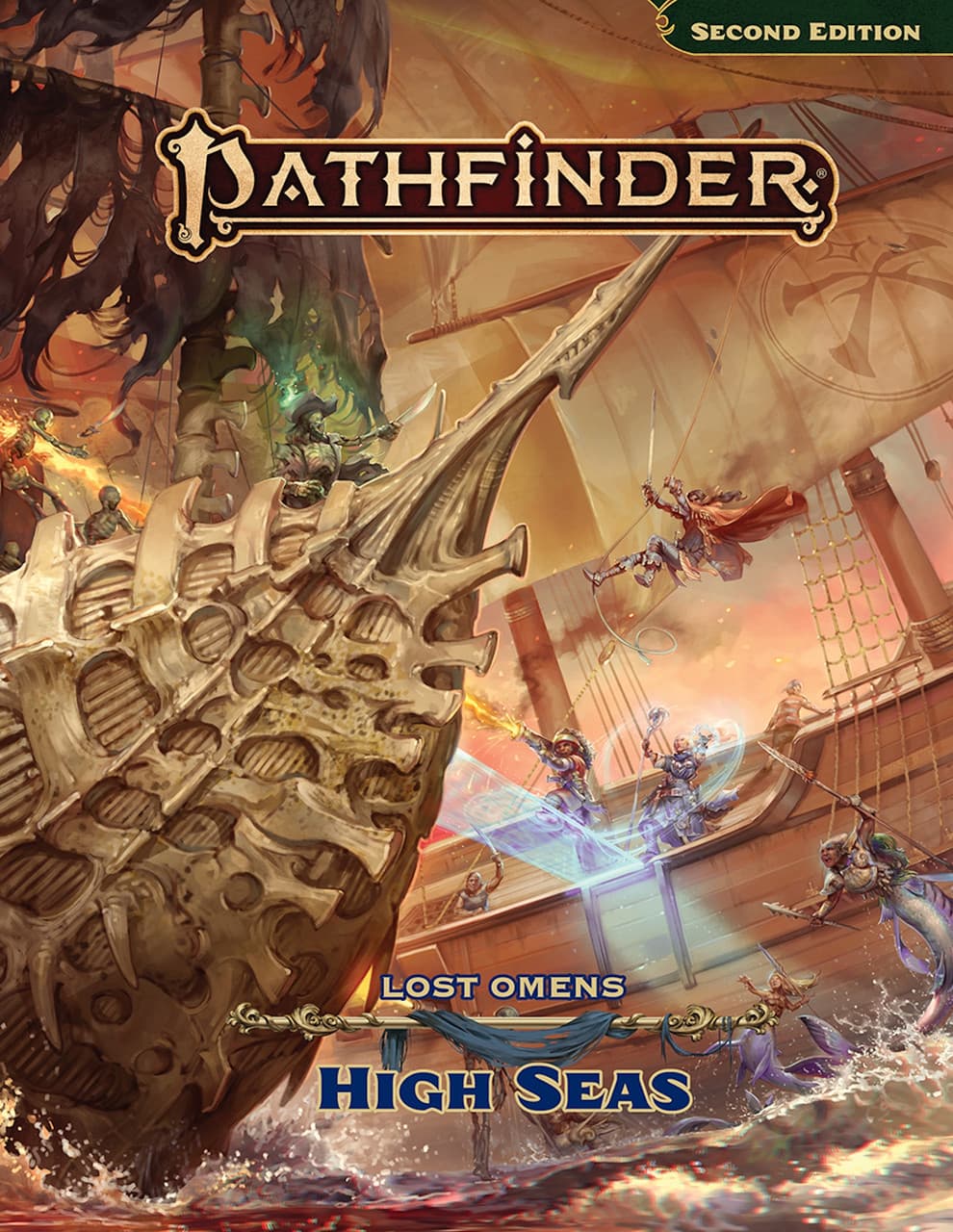
Pathfinders who have been waiting for a real pirate-and-open-water setting book are looking at the right shelf. Pathfinder Lost Omens: High Seas promises Hermea, the Shackles, underwater regions, and the wider Inner Sea in one 127-page hardcover, which is exactly the kind of package that sounds like an easy yes for a nautical campaign. The catch is that the book’s strongest selling point is also the thing you need to judge most carefully: it looks loaded with useful material, but the review suggests it lands more as a practical reference than as a thrilling read.
What High Seas actually gives you
Paizo’s hardcover is set up as a broad setting tool, not a narrow pirate splatbook. It is priced at $44.99 in print and $29.99 as a PDF, with a July 1, 2026 release date listed for retail, and there is also a special edition with faux leather, metallic deboss cover elements, and a bound-in ribbon bookmark. The book is written by a large team headed by Logan Bonner, Luis Castro, Carlos Cisco, Amber M. Davies, Alice Grizzle, Laura Lynn Horst, Aaron Lascano, Monte Lin, Stephanie Lundeen, Derry Luttrell, Jacob W. Michaels, Jaime Reyes Mondragon, Zac Moran, Daniel "Drakoniques" Oleh, Jessica Redekop, and Erin Tierney.
The content spread is what makes the purchase case interesting. Paizo says the book covers Hermea, Mediogalti Island, the Mordant Spire, the Shackles, and underwater regions, and each region entry includes history, culture, current events, and a major city to use in adventures. It also adds new character options and a fold-out poster map, which immediately makes it feel more like a table tool than a lore-only coffee-table book.
- If your campaign is built around ship travel, sea lanes, lost islands, coastlines, and underwater detours, this is the sort of book that can actually save prep time.
- If you want one purchase that gives you geography, factions, and player-facing options without juggling five different supplements, High Seas is aimed right at you.
- If your game lives far from the ocean, the book still has setting value, but it is clearly doing its best work when water is part of the core loop.
Why the setting matters more than the cover promises
This is not just random nautical dressing. Paizo previously described the High Seas as the largest meta-region in the Lost Omens World Guide, covering all of Golarion’s seas and oceans. That matters because it tells you what kind of book this is: a big regional framework for the part of the setting that connects everything else, from pirate havens to isolated islands to deep-water mysteries.
That scope is why a dedicated hardcover can be worth it for Pathfinder groups that want their sea campaign to feel anchored in Golarion instead of borrowed from a generic fantasy ocean. Hermea, the Shackles, the Mordant Spire, and Mediogalti Island each suggest a different campaign tone, from failed utopia to pirate politics to dangerous frontier waters. In other words, the book is not selling one adventure path idea. It is selling a play space.
Where the promise and the delivery split
The review’s main warning is not that the book lacks useful material. It is that the presentation does not always match the excitement of the concept. High Seas forgoes an in-world framing device and opens with fiction instead, which makes the book feel more like a dense reference document than a lively lore chapter. The writing is described as organized and orderly, but also textbook-like, especially when compared with earlier Lost Omens books that felt more vivid on the page.
That distinction matters if you are buying for mood as much as utility. A sea book should sell you spray, danger, and the sense that the map has edges. Instead, this one seems to lean hard into information density, which makes it more dependable at the table than it is sparkling in your hands. The review also calls out some clunky or repetitive prose and weaker editing, even while noting that the rules text itself is clear.
The practical buy-or-skip read
If you run or plan to run a campaign in the Shackles, around the open waters of the Inner Sea, or through a route that needs islands, ports, and sea-bound factions stitched together, High Seas looks like a strong buy. The region entries, character options, and fold-out map make it sound built for GMs who want one sourcebook to do real work.
If what you want is a book that feels like a swashbuckling read from cover to cover, the review suggests tempering expectations. High Seas seems best understood as a campaign scaffold, not a pure mood piece. For Pathfinder tables that need naval geography and Golarion-specific texture, that is probably enough to justify the purchase, but the book’s real value is in what it helps you run, not how dazzlingly it reads.
This article was produced by Prism’s automated news system from verified source data, official records, and press releases, then run through automated quality and moderation checks before publishing. The system is built and supervised by the people who set the standards it runs under. Read our full AI policy.
Know something we missed? Have a correction or additional information?
Submit a Tip