Pathfinder: Troubles in Grayce expands low-level play with six linked adventures
Troubles in Grayce is built like a real low-level toolkit, not a filler booklet. Six linked adventures, a gazetteer, and a toolbox make it easy to run now or strip for parts.
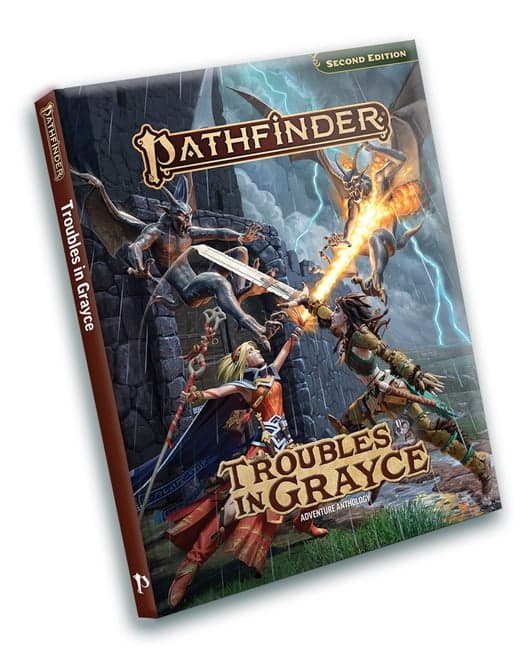
What Troubles in Grayce actually is
Pathfinder: Troubles in Grayce is a 128-page Pathfinder Second Edition Remastered supplement built for characters from 2nd to 5th level, and that alone tells you it is aiming for real table use rather than shelf decoration. It was released on May 6 and is being sold through local game stores, Paizo, and Amazon, which puts it squarely in the current Pathfinder buying cycle instead of the usual long-tail adventure backlog.
That matters because the book is not framed as a one-off scenario packet. The review positions it as a substantial follow-up product, the kind of anthology that gives a group somewhere to go after the opening stretch of a campaign. If you are looking for a low-level expansion that can carry a party through multiple sessions without feeling like a stopgap, Grayce is clearly trying to be that book.
How the anthology is built for active tables
The core structure is simple but unusually useful: six adventures, a Grayce Gazetteer, and an Adventure Toolbox. That combination gives a Game Master three different ways to use the book. You can run the adventures straight through, pick individual pieces for a lighter commitment, or mine the support material for your own campaign in and around Grayce.
Six linked adventures, with flexibility baked in
The review makes a point of saying the adventures are independent but connectable. That is the sweet spot for a lot of Pathfinder groups right now, especially tables that do not want every session tied to a hard campaign path but still like the feeling of momentum. One week you can run a self-contained story, and the next you can decide to stitch it into a longer arc without having to rewrite the whole book.
The adventure mix also helps. The anthology includes monster hunts, investigations, local problems, and horror-leaning threats, which gives it a wider tonal range than a straight dungeon crawl or a string of political scenes. That variety makes Grayce easier to slot into different party styles, whether your table leans toward tactical combat, mystery solving, or a more eerie, small-town sort of tension.
The Grayce Gazetteer and Adventure Toolbox do the heavy lifting
The Gazetteer matters because a place only becomes a repeat destination if it has enough texture to support return visits. By packing in locations and NPCs, Grayce gives the town a usable identity, not just a name on the map. That is a big reason this book feels more like a campaign hub than a loose anthology.
The Adventure Toolbox is the other half of the value proposition. Treasure, monster stat blocks, random encounters, and guidance for linking the book into the upcoming Bastion of Blasphemies campaign all point to a product designed for reuse. Even if you never run every adventure in sequence, the support material can be lifted into another low-level game and still do work.
Who gets the most mileage from it
Grayce looks most useful for groups that are already moving past the Beginner Box and want a next step that still feels approachable. The review’s larger takeaway is that Paizo is treating Grayce as a bridge between introductory play and the next phase of Pathfinder, which means this is the kind of book that can keep a new party together instead of forcing an immediate jump into a much larger campaign structure.
That makes it especially strong for these tables:
- Groups that want a follow-up after the Beginner Box without committing to a huge adventure path right away.
- Game Masters who like the idea of a recurring home base town with enough NPCs and locations to revisit.
- Parties that enjoy a mix of local threats, mystery, and horror-tinged trouble rather than one single tone.
- Tables that want one-shots with the option to turn them into a longer arc later.
If your current campaign slot needs something that can breathe for several sessions, Grayce is built for that. If your group only wants a single towering narrative with very little downtime, the anthology format may feel looser than you want. But for active tables that need a reliable low-level bridge, that looseness is part of the appeal.
Prep burden, replay value, and what makes it more than filler
The strongest practical argument for Grayce is that it reduces prep without flattening the experience. Six adventures mean a GM can choose the amount of work that fits the week, and the independent-but-connectable design lets you decide how much structure to impose on top of the book. That is very different from a thin add-on that only provides a single idea and leaves you to assemble the rest.
Replay value is high for the same reason. A Grayce campaign can change shape depending on which adventures you select, how much of the Gazetteer you surface, and whether you lean on the Toolbox for extra encounters and treasure. Because the book gives you material for both standalone and linked play, it can support more than one table mood without losing its identity.
The comparison that really matters is not between Grayce and a giant campaign book, but between Grayce and the kind of low-level support products that vanish once the party outgrows them. This one is being positioned as a living campaign hub, which makes it more durable than filler and more adaptable than a single-track module. The fact that it also points toward Bastion of Blasphemies only strengthens that role, since it suggests Grayce is part of a broader low-level path rather than a detached side project.
Why it stands out in Pathfinder’s current adventure lane
For Pathfinder groups, the important question is not just whether an anthology is well-made. It is whether the book gives your table a real place to land. Troubles in Grayce does that by pairing six low-level adventures with the kind of gazetteer-and-toolbox support that lets a town become a campaign engine instead of a disposable backdrop.
That is why it reads as more than a filler release. It is a practical bridge book, a reusable prep resource, and a flexible sequel for groups that are done with beginner play but not ready to vanish into a sprawling campaign hook. If your table needs the next low-level step to feel like an actual step, Grayce is built for that job.
This article was produced by Prism’s automated news system from verified source data, official records, and press releases, then run through automated quality and moderation checks before publishing. The system is built and supervised by the people who set the standards it runs under. Read our full AI policy.
Did this article answer your question?