7Artisans 135mm f/1.8 impresses in field tests across Spain
A $689 135mm f/1.8 is forcing a real value check in Z-mount, but its size and workflow compromises decide whether it’s a steal or a trap.

A bargain telephoto that has to earn its place
The 7Artisans AF 135mm f/1.8 is the kind of lens that makes photographers stop scrolling and start doing the math. At roughly $650, and listed at $689 for Nikon Z, it undercuts the established 135mm f/1.8 conversation hard enough to trigger the same question every value lens must answer: is this a cheap thrill, or a tool you can actually trust when the assignment matters?
That pressure is exactly why the Spain field test matters. Andrei Dima’s footage took the lens through Seville, Granada, and Oviedo, so this was not a lab-style victory lap. It was a real-world look at how a fast telephoto behaves where buyers would actually use it, in portraits, street scenes, travel, low light, and performance work.
Why this lens changes the buying conversation
7Artisans officially announced the AF 135mm f/1.8 on May 20, 2026, and positioned it as a full-frame autofocus telephoto prime for portraits, documentary, stage, and low-light shooting. It is launching for Nikon Z first, with Sony E and L-mount versions also in the mix, which makes the lens more than a one-off curiosity for one mount family.
The price is what gives it real market tension. PetaPixel pegged the Nikon Z version at $689 and called it the most affordable autofocus 135mm f/1.8 option in that mount, while B&H listed the same version at $689.00 as a preorder item. That puts it in direct comparison with Nikon’s own NIKKOR Z 135mm f/1.8 S Plena and the Viltrox AF 135mm f/1.8 LAB Z, which is exactly the kind of gap that can redirect a purchase before a photographer ever hits checkout.
Built like a lens that wants to be taken seriously
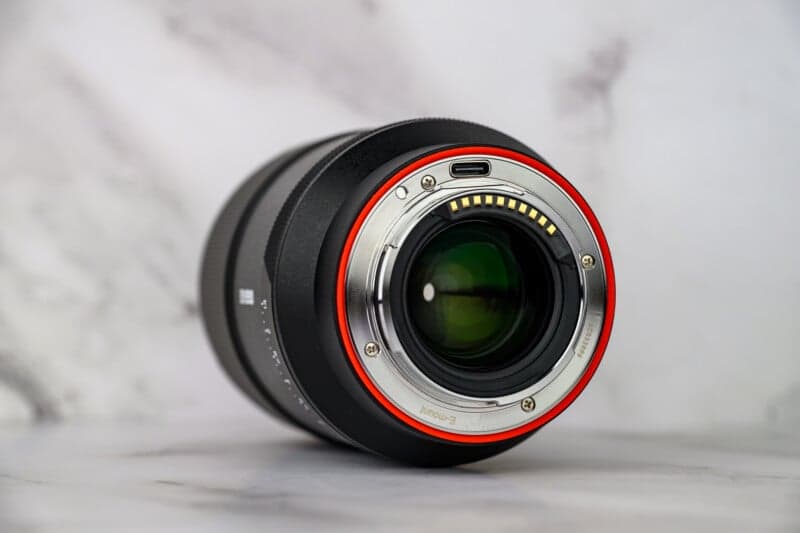
The first surprise, according to the review and launch coverage, is that the lens does not feel like a cut-rate compromise. The body is all metal, the focus ring is smooth and well damped, and there is weather sealing with a rubber gasket at the mount, plus an anti-smudge coating on the front element.
The control set is unusually complete for the money. Coverage describes a clicked aperture ring with an Auto position, a second multifunction control ring, dual customizable function buttons, an AF/MF switch in retail specs, and a USB-C port for firmware updates. That mix matters in the field because it gives the lens a more professional operating feel than the price suggests, especially for photographers who want quick, tactile control without constantly diving into menus.
The optics are aiming higher than the price tag
Under the hood, the design is ambitious: 16 elements in 13 groups, including six extra-low-dispersion elements and five high-refractive-index elements. 7Artisans says the layout is meant to reduce chromatic aberration and preserve sharpness on high-resolution sensors up to 60 megapixels, which is the sort of claim that sounds marketing-heavy until a lens has to hold up on modern bodies with dense sensors.
The lens also uses 7Artisans’ IMC coating to help control flare and ghosting, and it carries a 12-blade diaphragm. Those are not throwaway specs in a 135mm portrait prime, because the rendering character is a huge part of the buying decision at this focal length. If the optics are soft, busy, or badly controlled wide open, the whole value proposition collapses fast.

Autofocus is where the bargain stops feeling theoretical
This is the section where budget telephotos usually give themselves away, but the 7Artisans appears to hold together better than expected. The lens uses an STM stepping motor, and the review described autofocus as fast and silent in both single and continuous modes.
The most useful detail is not that it focused well in ideal conditions, but that it only missed two shots during the trip, both in very low light. That tells you where the margin of error lives, and it matters for anyone planning to use this as a portrait or event lens where focus speed and confidence are part of the job, not extras.
The Phoblographer also noted that it works with Nikon’s scene detection and feels comfortable on the Nikon Zf without a grip. That combination is important because a lens this class of telephoto is not just a spec-sheet object, it has to balance well, lock onto subjects reliably, and stay manageable when you are carrying it for more than a few frames at a time.
How it renders in actual use
On the optical side, the field impressions are strong enough to make people re-evaluate the usual “cheap but good enough” label. Wide open at f/1.8, the center is sharp and contrast is solid, while the corners perform better than expected for a lens in this price range. By f/2.8, the image tightens up noticeably and corner-to-corner performance becomes especially impressive, with little visible chromatic aberration on the Nikon Zf used in the review.
That balance is what makes the lens interesting for more than portraits. The close focusing distance is around 0.68 m, or 2.23 ft, which opens the door to near-macro framing and tighter detail work. Add good flare control, smooth bokeh transitions, and clean sun stars at f/11, and you get a lens that can move beyond the obvious headshot use case into stage, travel compression, and selective landscape framing.
Size, weight, and the real compromise
There is still a catch, and it is not subtle. B&H lists the Nikon Z version at 82mm front filter size, about 136 mm in length, and 1,014 g in weight. That makes it a substantial telephoto prime, not a compact walkaround option, and the physical heft is part of the price you pay for a fast 135mm with this much glass.
That is the real buying pressure point. The 7Artisans AF 135mm f/1.8 does not win by being tiny or quirky; it wins by looking and behaving like a serious portrait lens at a price that is hard to ignore. The Spain test suggests the performance is real enough to force the question, but the bulk and handling still demand that buyers decide whether they want a budget breakthrough or a lens they will happily carry when the day gets long.
What makes this release disruptive is not just that it is cheap and impressive on paper. It is that, in the field, it looks close enough to the real thing to make flagship 135mm buyers justify every extra dollar.
This article was produced by Prism’s automated news system from verified source data, official records, and press releases, then run through automated quality and moderation checks before publishing. The system is built and supervised by the people who set the standards it runs under. Read our full AI policy.
Did this article answer your question?