Meike Mix 24mm f/1.4 proves a fast prime can replace a zoom
A $589 24mm f/1.4 is light enough to carry all day and serious enough to make a one-lens city kit feel intentional.
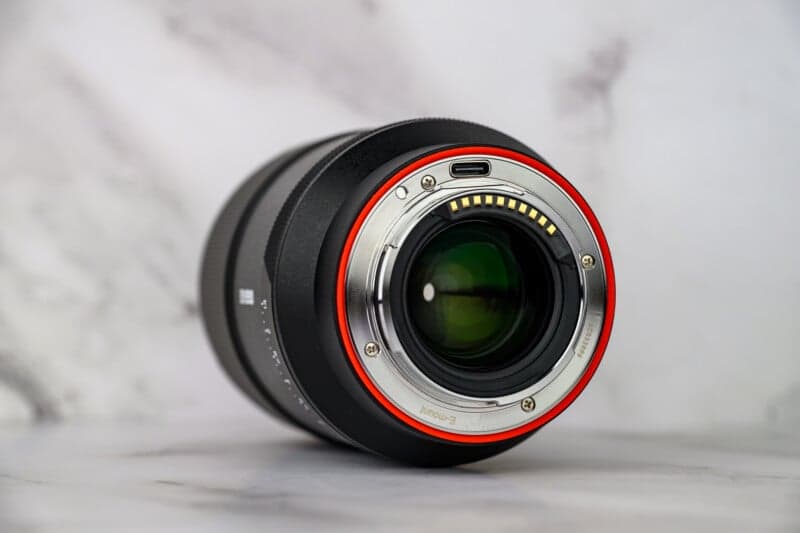
The Meike Mix 24mm f/1.4 makes a simple, appealing argument: if you want one wide prime that can follow you through a city, it needs to be fast, light enough to stay on the camera, and cheap enough to take seriously. A Toronto walk with only this lens shows why that pitch lands with hobbyists who shoot travel, street, interiors, and environmental portraits from the same bag.
A one-lens city test
A 24mm f/1.4 sits in a very useful place for everyday shooting. It is wide enough to handle architecture, street scenes, cramped interiors, and portraits that keep the background in the conversation, but bright enough to help in low light and create separation when the scene is messy. That combination is exactly what makes a lens like this feel less like a specialty tool and more like a possible replacement for a zoom that stays at the wrong focal length all day.
The other part of the appeal is physical. PetaPixel’s Toronto test put the lens at $589 and 19.6 ounces, or 556 grams, which is not tiny but is still reasonable for a day of walking. That matters in practice: a lens that is too heavy quickly becomes the one you leave at home, and a lens that is too slow stops feeling like a creative choice.
What Meike is selling here
Meike positions the Mix 24mm f/1.4 as a full-frame autofocus STM lens for Sony E, Leica L, and Nikon Z mounts. Meike Global lists the lens at $589.00 to $619.99 depending on bundle, which keeps it squarely in the “serious but reachable” category for people building a travel or street kit without stepping into premium first-party pricing.
The handling details help the lens feel more like a creator tool than a stripped-down budget prime. It includes an AF/MF switch, an aperture ring, a focus-hold button, and a USB-C port for firmware updates. That combination will matter most to photographers who care about working quickly, changing settings by feel, and keeping the lens current without treating it as disposable gear.
The specs that actually affect day-to-day shooting
Independent specifications paint the rest of the picture. The lens uses a 15-element, 12-group optical design, has 11 aperture blades, focuses as close as 0.28 meters, or 11 inches, and uses a 72mm filter thread. It is about 105mm long, which puts it in a compact-but-not-pocketable zone that still makes sense on a mirrorless body.

Those numbers are not just spec-sheet decoration. A close focus distance of 0.28 meters gives you some flexibility for food, objects, and tighter foreground compositions in travel work. The 11-blade diaphragm also signals an intent to keep out-of-focus areas looking smooth rather than nervous, which is part of the premium feel buyers expect from a fast prime even when the price says “budget.”
Why this lens exists at all
The broader market context explains why the Meike stands out. When the lens launched in August 2025, it entered a surprisingly sparse category: full-frame 24mm f/1.4 primes for E, L, and Z mounts are not common, and that scarcity is part of what made a sub-$600 option noteworthy. For shooters who want a native-feeling fast wide-angle prime, the choice has often meant paying a lot more or settling for a slower lens.
Sony’s FE 24mm f/1.4 GM sits as the premium E-mount benchmark. Sigma’s 24mm f/1.4 DG DN Art is another major competitor in the same general class. Nikon Z users have had to lean on the 24mm f/1.8 S or the 24-120mm f/4 S zoom instead of a Nikon-branded 24mm f/1.4, which makes the Meike’s arrival especially interesting for that system.
Where the value really shows up
This is not a lens that wins by being the smallest thing in the bag or the most prestigious badge on the barrel. It wins if you care about how a lens changes the way you shoot: one focal length, one bright aperture, one compact enough package that you keep moving through the city instead of constantly swapping glass. That is where the budget price starts to feel meaningful, because it lowers the barrier to using a fast prime as an everyday tool rather than an occasional specialty lens.
The tradeoff is the same one that always comes with affordable fast glass. You are not buying the easiest path to a tiny kit, and you are not buying a premium flagship from Sony, Sigma, or Nikon. What you are getting is a lens that makes a one-lens walk plausible, with enough physical controls and enough mount support to feel like it belongs in a real working bag.
That is why the Toronto test matters. A fast 24mm prime only proves itself when you stop thinking about it as a spec and start using it like your entire kit for the day. In that role, the Meike Mix 24mm f/1.4 looks less like a compromise and more like a practical answer to the question of whether one affordable wide lens can carry the whole outing.
This article was produced by Prism’s automated news system from verified source data, official records, and press releases, then run through automated quality and moderation checks before publishing. The system is built and supervised by the people who set the standards it runs under. Read our full AI policy.
Did this article answer your question?