Andrew McCarthy captures Boeing 737 crossing the Sun after six-day wait
Andrew McCarthy spent six days and 1.7 million frames chasing a Boeing 737 across the Sun, turning a near-impossible transit into one of his best solar images.
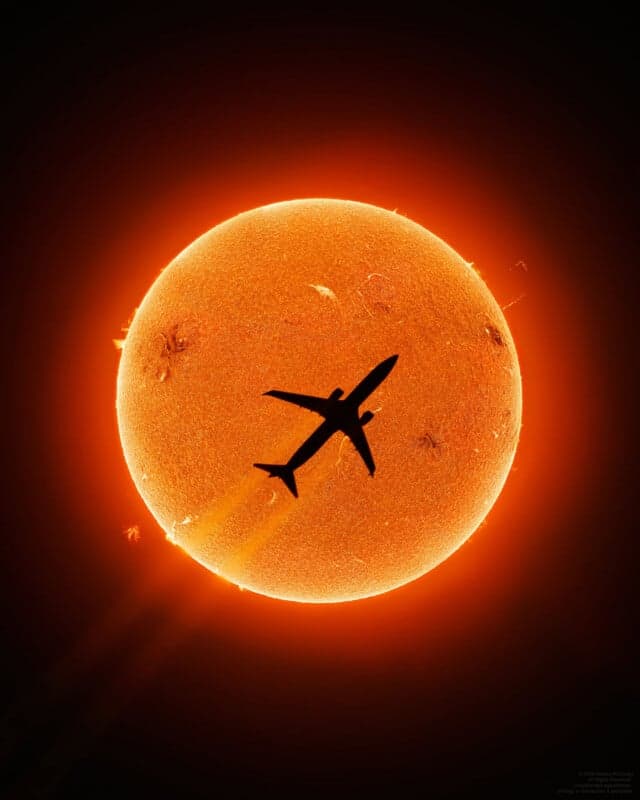
What looks like a lucky split-second was really six days of timing, tracking, and hard repetition. Andrew McCarthy spent those days shooting at 10 frames per second and pushed through about 1.7 million frames before a United Airlines Boeing 737, flying from Houston to Los Angeles, finally cut across the solar disk and gave him the image he calls The Traveler.
The picture mattered because McCarthy did not treat it like a solar-imaging accident. After earlier airplane-in-front-of-the-Sun captures happened more by chance than design, he rebuilt the approach around the aircraft itself. Those older frames had been limited by motion blur, weak framing, and soft focus, in part because his setup had been optimized for solar work first and transit work second. This time, he went in with two telescopes and a plan built around one simple problem: the Sun may be fixed, but an airliner is not.
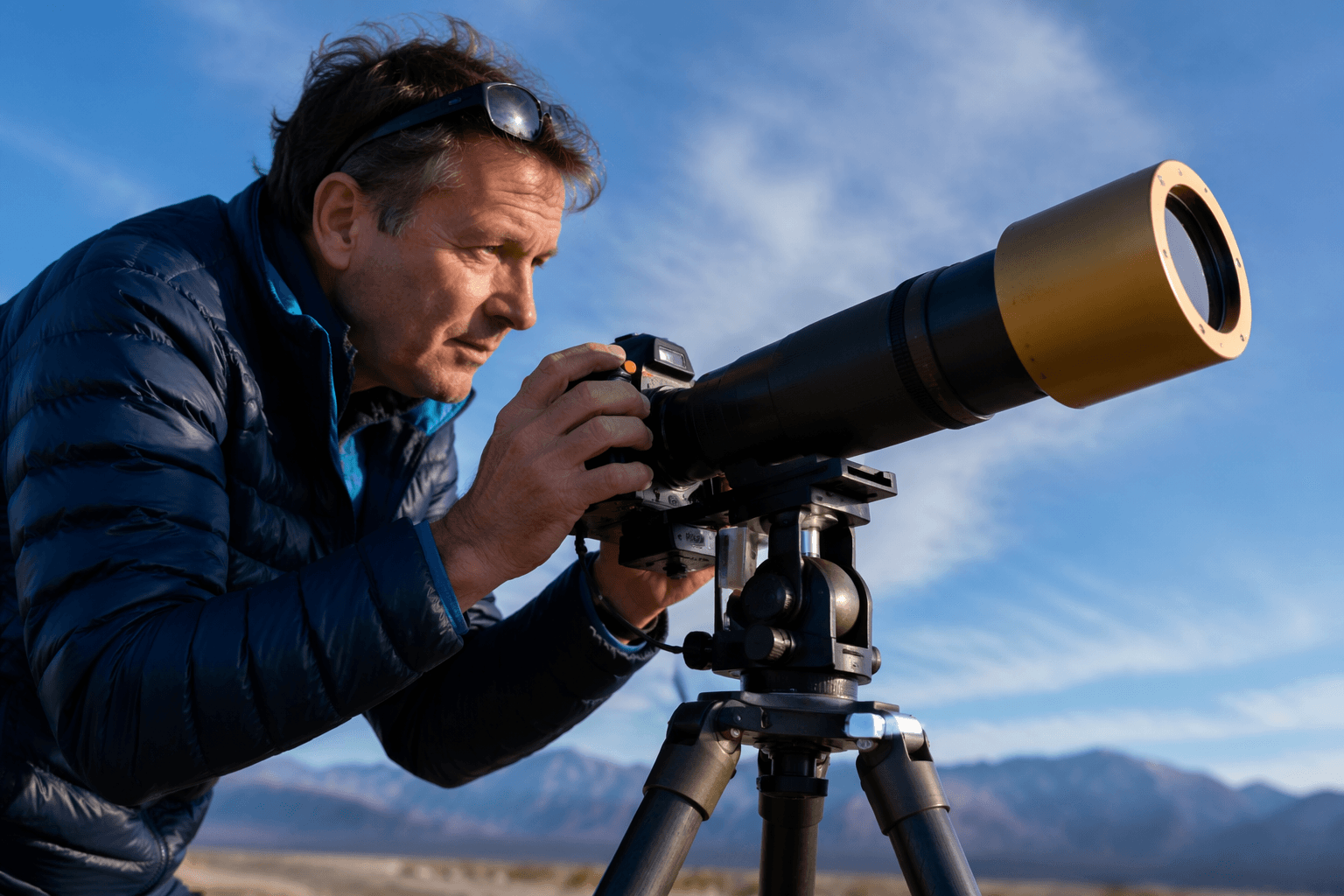
That unpredictability is exactly what makes the image so hard to pull off. Unlike the ISS, which can be forecast with far greater precision, a commercial flight path is still a moving target. McCarthy had to keep shooting through long stretches of near misses, trusting that one of the plane’s possible paths would eventually line up with the Sun at the right instant. He nearly gave up before the transit finally happened.
When it did, the frame delivered more than just the jet crossing the Sun. McCarthy also captured two solar prominences in the same session, adding detail that lifted the finished image well beyond a novelty shot. He later said The Traveler ranks among the best images of his career, and the final photograph had another quiet payoff: he showed it to the flight crew who had been onboard the aircraft.
The image fits cleanly into McCarthy’s larger body of work. He previously captured an ISS transit across the Sun in 2020 and a skydiver crossing the Sun in 2025, both projects defined by the same mix of planning and persistence. McCarthy’s background as an editor-at-large with National Geographic Traveler for a dozen years, and his writing for The New York Times, The Wall Street Journal, The Los Angeles Times, The Guardian, The Atlantic, Time, and Travel + Leisure, helps explain the instinct behind the work: the best “lucky” astrophotographs are usually built frame by frame long before the sky cooperates.
This article was produced by Prism’s automated news system from verified source data, official records, and press releases, then run through automated quality and moderation checks before publishing. The system is built and supervised by the people who set the standards it runs under. Read our full AI policy.
Did this article answer your question?