Antigravity uses drone imaging to preserve fragile historic sites
A 249-gram drone is being used to build 3D records of Pompeii and Civita di Bagnoregio before age and erosion change them beyond recognition.
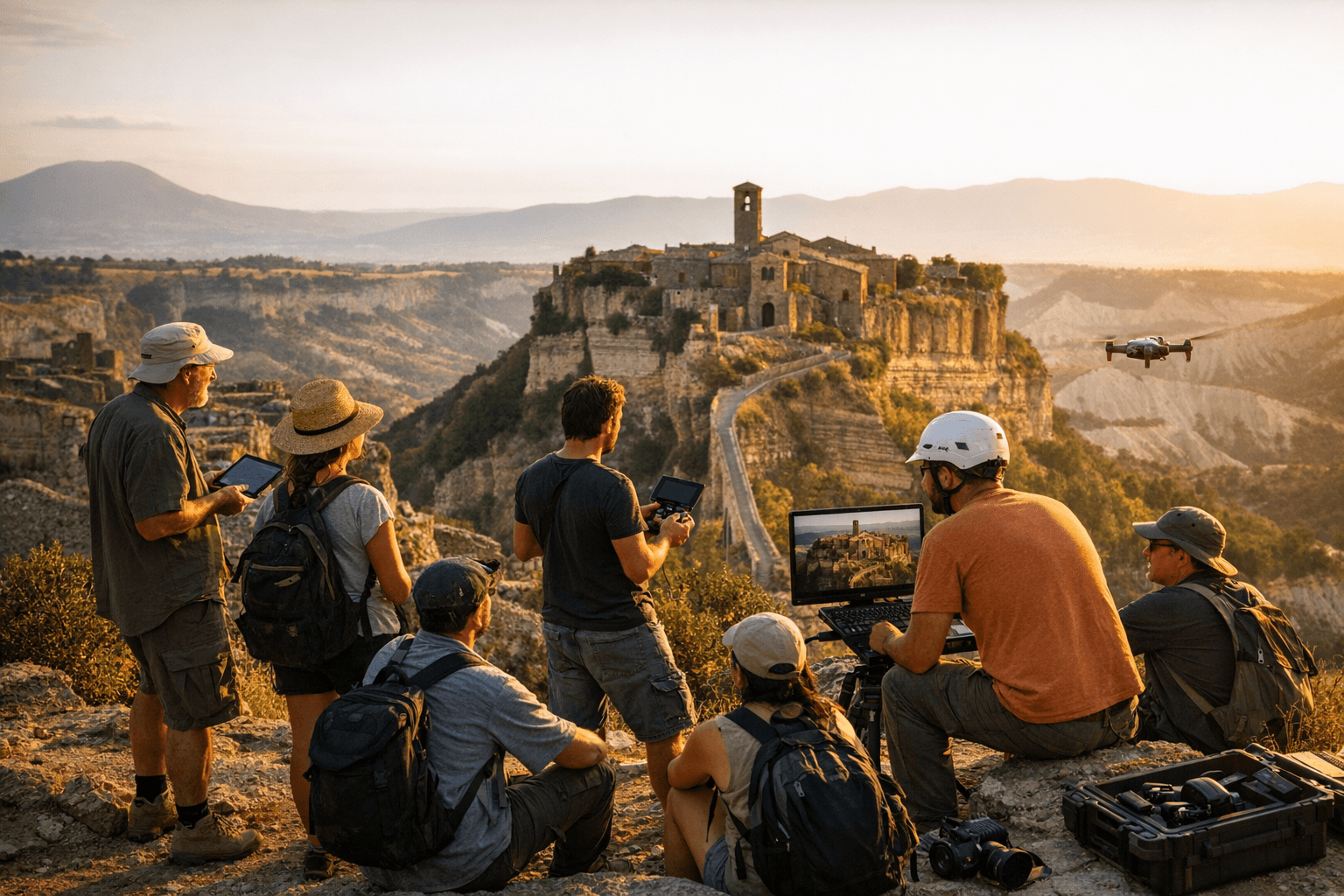
A 249-gram drone is being asked to do more than make dramatic footage. Antigravity’s Project Eternal is using lightweight aerial capture, panoramic imaging and 3D reconstruction to preserve Pompeii and Civita di Bagnoregio before erosion, decay and time take more away.
The timing fits the message. The project was unveiled after the International Day for Monuments and Sites, observed every year on April 18 under the direction of ICOMOS, which used the 2026 theme to spotlight emergency response for living heritage in contexts of conflict and disasters. Antigravity’s pitch lands squarely in that space: preserve first, photograph second.
Project Eternal is being built with Insta360 and, for the pilot heritage work, with CyArk. The first two sites named for the effort are Pompeii and Civita di Bagnoregio, both in Italy. CyArk describes Civita di Bagnoregio as the fragile, eroding “Dying City,” a label that makes the stakes plain. These are not places that can absorb heavy crews, bulky rigs or repeated physical intrusion without risk.
That is where Antigravity’s A1 drone matters. The company lists the aircraft at 249 grams with the standard flight battery, a weight that keeps the platform unusually light for this kind of work. Antigravity says the drone can fly for up to 24 minutes on the standard battery and up to 39 minutes on the high-capacity battery, giving crews enough time to collect the dense image sets that 3D workflows demand.

Splatica is also part of the push. Its Project Eternal page offers free 3D scene creation to the first 1,000 participants and says creators can turn 360 footage into a photorealistic 3D world. That is the real shift here. The output is not just a gallery of views from above, but a navigable record that can be revisited, measured and compared as the site changes over time.
Antigravity’s materials also name John Ristevski, chief executive of CyArk, and Andrey Shelomentsev, co-founder of Splatica, as judges, signaling that the project is being framed as more than a marketing exercise. A 2026 peer-reviewed study added further support to the idea, finding that 3D Gaussian Splatting has become promising for cultural-heritage documentation, even as capture quality and alignment remain difficult in dynamic environments.
For photographers, the implication is bigger than drones or heritage alone. Advanced imaging is moving toward documentation that can outlast the scene itself, where a flight is not just about what looked beautiful in the moment, but about building a lasting digital substitute for places that may not survive intact.
This article was produced by Prism’s automated news system from verified source data, official records, and press releases, then run through automated quality and moderation checks before publishing. The system is built and supervised by the people who set the standards it runs under. Read our full AI policy.
Did this article answer your question?