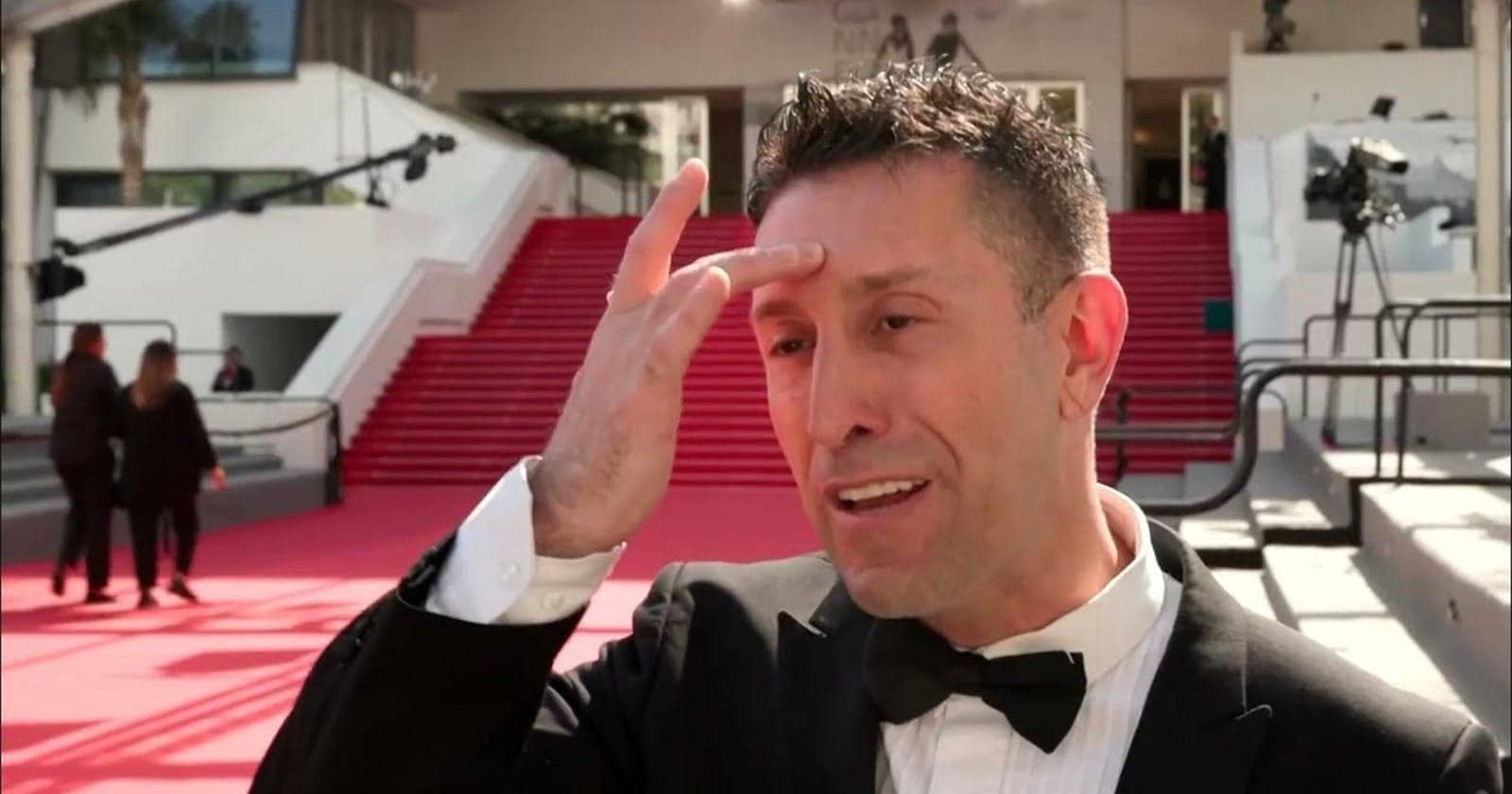
At Cannes, photographer Matthew Baron uses eye contact to nail celebrity shots
Matthew Baron’s Cannes move is simple: make the subject look at the lens before the window closes. In a 24-step, 60-meter frenzy, that split-second connection is the shot.
The shot starts before the shutter
Matthew Baron’s Cannes routine is a reminder that the hardest part of red-carpet photography is often not exposure, focus, or gear. It is getting a celebrity to look at the lens at the exact moment the frame opens, while the crowd presses in and the arrivals line keeps moving. At Cannes, where the press machinery is built around the “steps,” that tiny bit of eye contact can decide whether a frame feels like a throwaway or a keeper.
Baron’s trick is almost disarmingly low-tech. He balances the camera with one hand and points toward the lens from underneath, hoping the subject will react with a wave, a laugh, or at least a curious glance. When that fails, he falls back on one of the oldest red-carpet tactics in the book: calling out names until he gets the face-to-camera moment he needs. The method works because it is not really about volume or theatrics. It is about quickly creating a human response in a place where everyone is trying to control the image.
Why Cannes makes every second count
Cannes is one of the most tightly staged environments in photography. The festival’s own materials describe the red-carpet walk as the “steps,” and that ritual now runs along 60 meters of carpet and 24 steps at the Palais des Festivals. Accredited photographers and television channels can request access for gala screenings through the audiovisual press department, but places are limited, which is part of why the image economy there feels so compressed and competitive.
That scarcity is not an accident. Cannes only became an official red-carpet staple in 1984, even though the carpet itself goes back much farther in the festival’s visual history. From 1946 through 1949, the carpet was blue, then it turned red in 1984, and in 2020 it briefly became black to honor victims of the Notre-Dame basilica attack in Nice. The carpet is also refreshed once a day now, a practical change that saves 1,400 kilos compared with earlier practice. All of that ritual, maintenance, and symbolism explains why the carpet is more than a walkway. It is the stage where the festival decides how it wants to be seen.
Baron’s method, broken down
What Baron is doing is not magic. It is a fast piece of directing, designed for environments where you do not get a second take. His approach relies on one simple idea: if the subject’s attention is on you, the frame becomes usable far more often. If the subject is looking past you, into the crowd or toward the next set of cameras, the image can still work, but the emotional hit is usually weaker.
The method is practical enough to borrow anywhere you are photographing people under pressure. Baron’s version is useful because it gives the subject a cue that feels playful rather than commanding, and it takes only a moment to try before the arrival disappears into the machinery of the event.
A simple version of the workflow looks like this:
- Stabilize the camera first, so your hand signal does not turn into a missed focus moment.
- Use a clear, readable gesture, like pointing at the lens, not a vague wave in the air.
- Keep the cue brief, because the window at a red carpet is short and the subject is already moving.
- If the person does not respond, switch immediately to verbal direction.
- Keep your voice decisive, not frantic, so the subject knows exactly where to look.
That sequence matters because it respects the pace of the room. You are not trying to stop the event. You are trying to borrow one second from it.
The psychology behind the frame
The Cannes setting makes Baron’s trick especially revealing, because the story is really about psychology as much as photography. When you are working in the first section at Cannes, you have access to arrivals, but only for a very short time before the subject disappears into the festival flow. That means you are not just hunting for flattering light or a clean backdrop. You are trying to pull a usable expression out of someone who is being watched by dozens of other people doing the same thing.
That is where eye contact becomes the currency. A direct look into the lens turns a standard fashion shot into something that feels alive. It can make a portrait seem intentional rather than incidental, and at Cannes, where the visual record is built from hundreds of hurried frames, that difference is everything. Baron’s emphasis on solo fashion shots and the emotional payoff of landing the look reflects the reality of the job: the best frame is often the one that feels briefly personal in a totally public space.
Staying visible without becoming the story
Cannes also makes another part of the job impossible to ignore: the photographer has to remain effective without becoming disruptive. The festival’s press infrastructure includes press screenings, press conferences, photocalls, and official events, all of which depend on order, timing, and access discipline. In that environment, the best shooters are visible enough to direct attention, but controlled enough not to contaminate the moment.
That balance is especially important at Cannes because the red carpet is already loaded with tension. Last year’s widely reported exchange between Denzel Washington and a photographer during the premiere of Highest 2 Lowest showed how quickly a red-carpet interaction can escalate. A photographer’s attempt to win eye contact is part of the performance, but it is also a negotiation. Push too hard and the image can collapse into conflict. Miss the moment and the subject is gone.
For event shooters, the lesson is straightforward: direct boldly, but keep the interaction legible and brief. You want the subject to notice you, not to fixate on you. The difference is subtle, but it is what separates a clean frame from a messy confrontation.
What the Cannes setup teaches beyond Cannes
Baron’s technique works at Cannes because the festival concentrates every pressure point of celebrity photography into one narrow lane. The crowd is dense, the access is limited, the turnover is fast, and the expectations are high. That makes the red carpet feel like a laboratory for anyone who shoots events, portraits, or candid celebrity-style setups.
The bigger lesson is that getting the shot is not only about what is on the camera body. It is about reading the room quickly, deciding whether a gesture or a shouted name will work better, and knowing exactly how much presence to project before the subject moves on. Cannes rewards photographers who can control attention in seconds, because the festival itself is built around moments that disappear almost as soon as they happen.
That is why Baron’s little point toward the lens matters so much. In a place where 60 meters of carpet and 24 steps can turn into a blur of flash, motion, and noise, eye contact is not a flourish. It is the difference between documenting the arrival and shaping the image that people remember.
This article was produced by Prism’s automated news system from verified source data, official records, and press releases, then run through automated quality and moderation checks before publishing. The system is built and supervised by the people who set the standards it runs under. Read our full AI policy.
Did this article answer your question?