Atlas Lens Co. Builds Custom Spherical IMAX Lenses for Dune: Part Three
Cinematographer Linus Sandgren commissioned Atlas Lens Co. to hand-build spherical IMAX lenses from scratch for Dune: Part Three, covering an image circle up to 100mm x 100mm.
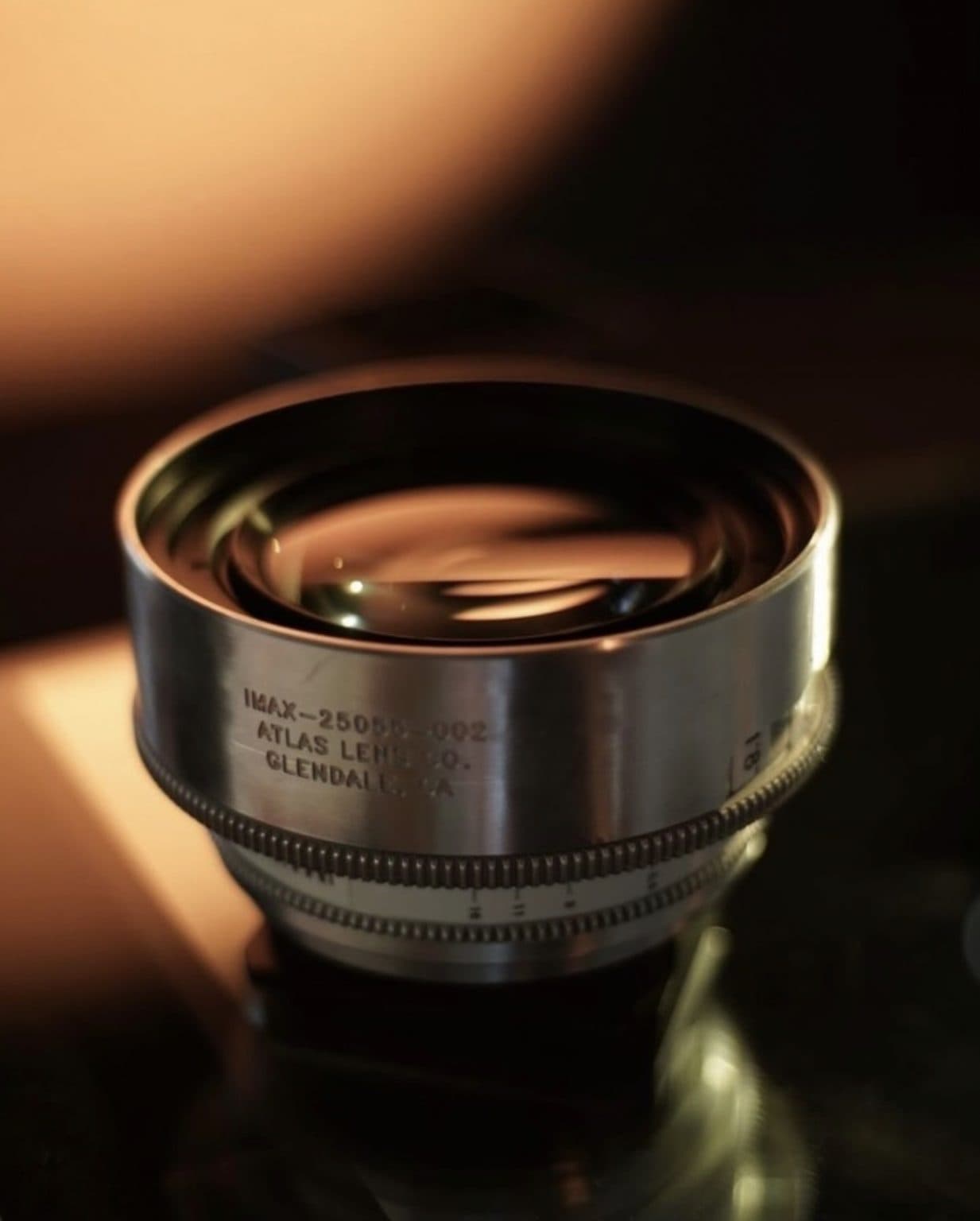
Dune: Part Three is the first film in Denis Villeneuve's trilogy to shoot natively on IMAX 70mm film, and that single commitment immediately created a problem nobody had a stock solution for. The lenses had to meet very specific requirements for capturing film on the IMAX 70mm format, and the existing inventory simply wasn't up to the task. So cinematographer Linus Sandgren went looking for someone who could build them from nothing.
Atlas Lens Co. hand-crafted a set of custom spherical IMAX lenses for the film, developed in close collaboration with Villeneuve and Sandgren. The lenses were designed specifically to eliminate the vignetting issues common in current IMAX lens inventories when stopped down and to provide a visual quality that existing IMAX 70mm glass could not. For a company whose name is synonymous with boutique anamorphic optics, it was a significant departure. These lenses are spherical rather than anamorphic, and they were built to serve a creative brief as much as a technical one.
That brief came directly from Sandgren. Sandgren drove the commission, wanting optics tailored specifically to the visual identity of the franchise. "I envisioned lenses that could create specific optical characteristics, particularly the flares, that would be unique to this film," he said. He later said Atlas "rose to an incredible challenge, designing and hand-crafting these IMAX lenses in remarkable time," adding that their team "worked around the clock to bring our vision to life."
Forrest Schultz and Dan Kanes designed and hand-built four focal lengths for the IMAX 15-perf cameras, plus four color-matching focal lengths for the Panavision System65 5-perf cameras, all from the ground up. The four IMAX focal lengths are 55mm T3.5, 80mm, 105mm, and 150mm. Additional focal lengths are still under development. The 80mm was the most used of the focal lengths on Dune: Part Three, designed specifically to offer a unique character in the corners.
The coverage specs push well past anything in conventional cinema rental houses. Some of the lenses will cover a 100mm x 100mm image circle, which far exceeds traditional IMAX 70mm film standards. Because of that large image circle, Atlas also needed to build a custom projector to be able to test them.
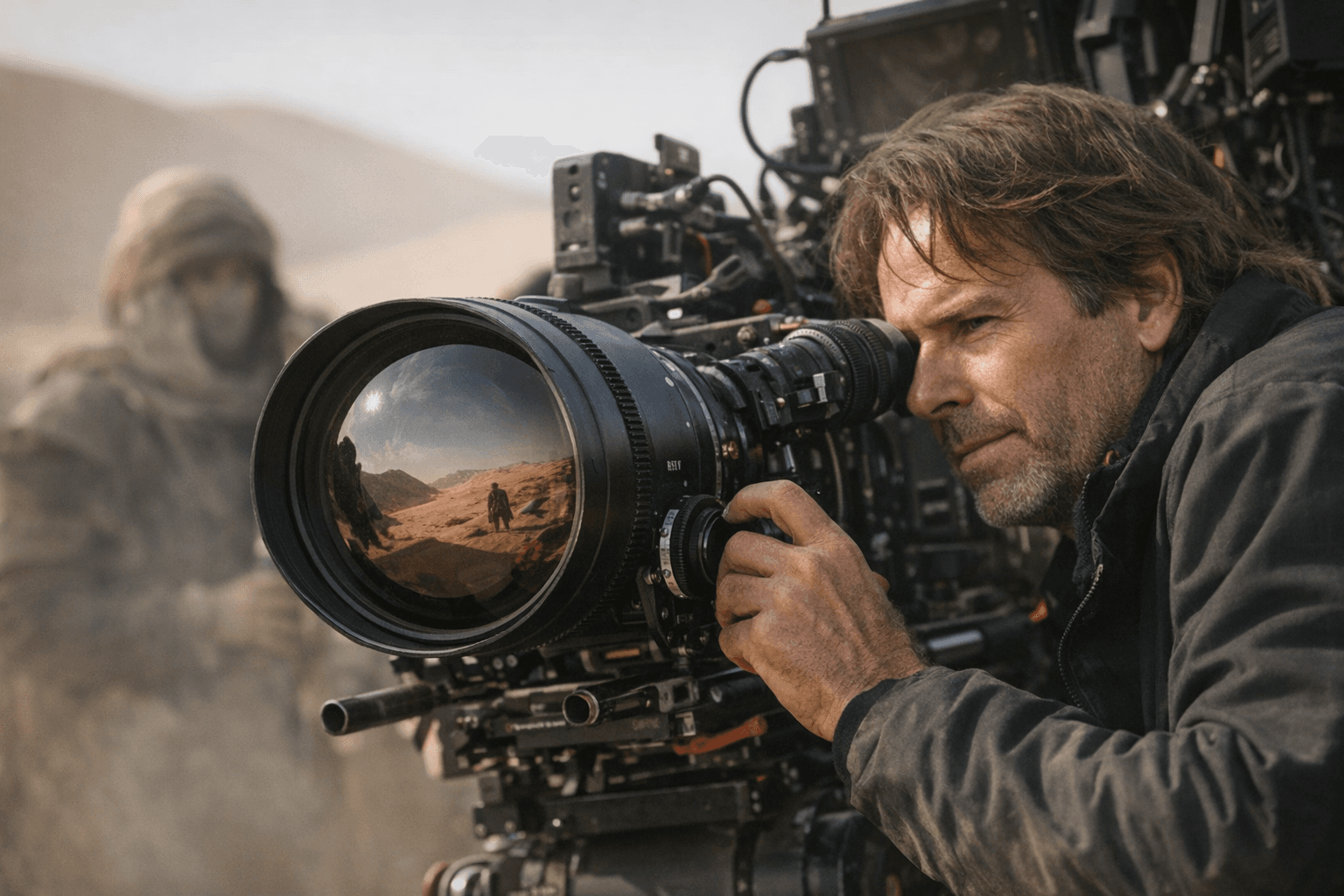
Manufacturing the lenses required Atlas to essentially grow as a company to meet the job. Based on Sandgren and Villeneuve's vision, Atlas used "new design techniques and coating methods to cater specifically to the IMAX format," said Schultz, who added: "Our team met the challenge by expanding our machining capabilities, developing in-house coating equipment, and refining our build and calibration processes to meet the demands of the IMAX experience."
Villeneuve said the lenses "allowed us to capture the essence of Arrakis in a way that was unique to this movie."
The Dune trilogy's lens history reads like a master class in escalating optical ambition. The first Dune, in 2021, won six Oscars including best cinematography for Greig Fraser, who used a combination of Panavision spherical and anamorphic lenses alongside Zeiss Super Speeds for specific dream sequences. For Part Two, Fraser used only spherical lenses, augmenting the package with vintage and specialized glass including a rehoused Soviet-era Helios 44 and 1980s Moviecams. For Part Three, with Sandgren stepping in and native IMAX film capture on the slate, the logical next move was to commission glass that had never existed before.
Atlas will showcase the new lenses at the Pacific Northwest Lens Summit in Portland, running March 20 to 21. All three Dune films have been made under the Filmed for IMAX program, an exclusive partnership giving select directors access to IMAX's proprietary technology throughout production. For Atlas Lens Co., a Burbank-based company that built its reputation on accessible anamorphic primes, the Dune commission represents something else: proof that boutique lens makers can operate at the very top of the format pyramid.
Know something we missed? Have a correction or additional information?
Submit a Tip

