Blackmagic camera captures rocket launch in Apple immersive video first
A Blackmagic immersive camera went to the Jiuquan launch site and may have recorded the first rocket launch in Apple Immersive Video. The test pushed 8K, 3D capture into spaceflight.
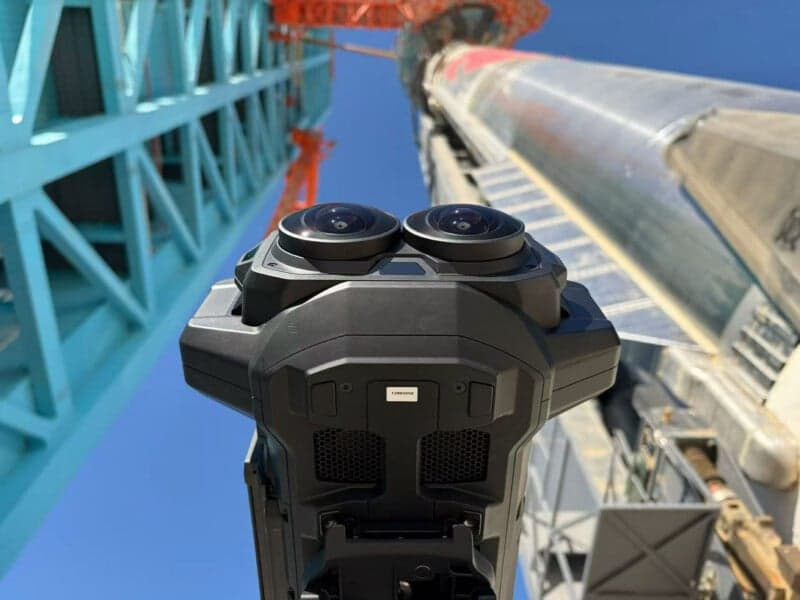
A rocket launch in the Gobi Desert is an unforgiving test for any camera system, and that is exactly where Blackmagic’s immersive rig was pointed. Chengdu Qiongjie Yingchuang Culture and Entertainment used the URSA Cine Immersive to capture LandSpace’s reusable Zhuque-3 launch at the Jiuquan Satellite Launch Center in China, in a production that may be the first rocket launch ever shot for Apple Immersive Video.
Apple defines Apple Immersive Video as a 180-degree, 3D 8K recording format with Spatial Audio, built to pull viewers into the middle of the scene rather than leave them outside it. Blackmagic positions the URSA Cine Immersive as the world’s first camera system for that format, with dual 8160 x 7200 sensors per eye and 16 stops of dynamic range. On paper, that is a specialty system. In a launch environment, it becomes a stress test for capture reliability, rigging, and whether the format can hold up outside a controlled studio.

The footage was edited in DaVinci Resolve Studio and prepared for playback on Apple Vision Pro, tying together Blackmagic’s camera and software pipeline with Apple’s viewing platform. Blackmagic says Resolve Studio handles editing, color, VFX, audio post and delivery for Apple Immersive Video, including stereoscopic 8K 90fps Blackmagic RAW workflows for Vision Pro playback. That end-to-end chain matters here as much as the camera itself, because immersive work only lands if acquisition, edit, and headset playback all stay in step.
The filmmakers, Tang Yisu, Gan Yujie, and Lu Linxuan, also showed how immersive shooting changes the set. Wide, static tripod setups make more sense than aggressive pans or pushes when the viewer is supposed to look around inside the frame. That discipline turns a launch into a place, not just a shot, and it shows why this format is starting to move from novelty into actual production planning.

LandSpace’s Zhuque-3 adds another layer of weight to the footage. The company describes it as a reusable liquid methane rocket aimed at low-cost, high-frequency launch operations, and its official Chinese materials later said the rocket’s first orbital launch on December 3, 2025 reached orbit even though the first-stage landing attempt failed. Seen through Blackmagic’s immersive system, the launch was not just a dramatic moment in the sky. It was proof that the tools, workflow, and storytelling grammar of immersive capture are now being tested where the stakes are highest.
This article was produced by Prism’s automated news system from verified source data, official records, and press releases, then run through automated quality and moderation checks before publishing. The system is built and supervised by the people who set the standards it runs under. Read our full AI policy.
Did this article answer your question?