Camera Makers Accused of Chasing Influencers While Neglecting Stills Photographers
Stills photographers are pushing back as camera makers strip viewfinders and ergonomic controls from new bodies to court social media creators.
The Panasonic Lumix S9 arrived without a viewfinder, a hot shoe, a mechanical shutter, or a second command dial. None of those omissions were oversights. They were deliberate engineering choices, each one calibrated to keep the full-frame, L-mount body from undercutting the stills-oriented S5 II sitting above it in the lineup. The S9's design brief, as Panasonic framed it, was a "stylish companion for content creators on the go." That phrase, and what it implies about who camera makers now consider their primary customer, has lit a slow fuse across the photography community.
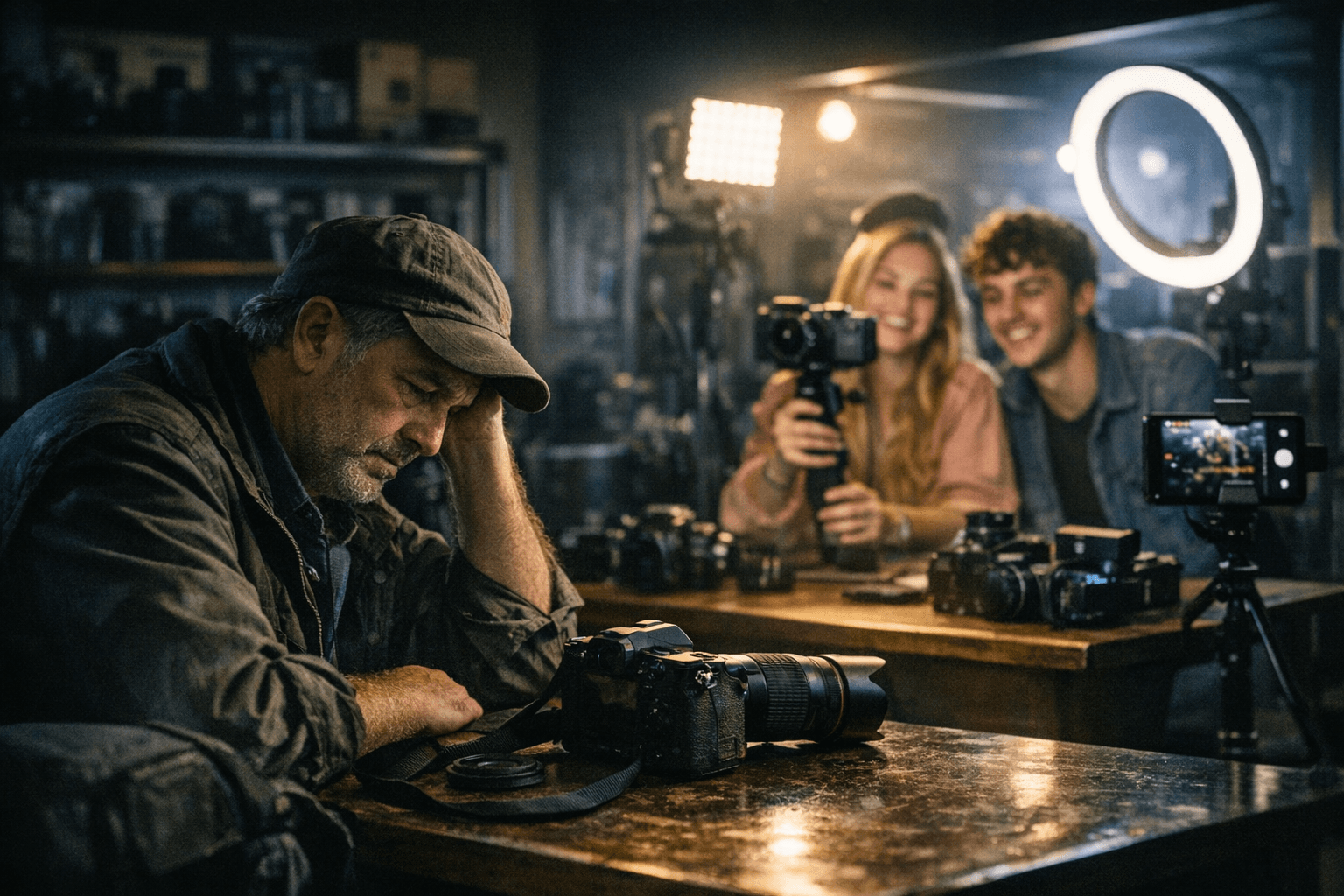
The frustration has crystallized into a pointed question circulating across major photography publications: are manufacturers building cameras for photographers, or for people who point cameras at themselves?
The answer, increasingly, looks like the latter. Nikon's booth at CP+ featured a dedicated zone branded "Nikon Creators," staffed by employees in sweatshirts carrying the same slogan. The area, packed with younger attendees, was among the most trafficked sections of the show. Sony has embedded its ZV vlogging line into schools in some markets, hoping to convert beginners into lifelong Alpha system users. Canon's PowerShot V1 is explicitly pitched at vlogging and videography, with a separate V3 model reportedly in development for photographers who want the same 1.4-inch sensor but with stills-first priorities.
The shift is market-driven. Camera shipments have been contracting for years as smartphones absorb the casual shooter. The creator economy, meanwhile, keeps expanding: the number of people uploading regularly to YouTube, TikTok, and Instagram represents a growth pool that traditional stills photography no longer provides. Manufacturers are chasing new entrants, not servicing the base they already have.
For working photographers, the consequences land in the details. Viewfinders get dropped to slim down bodies. Ergonomic command dials disappear in favor of touch-screen menus optimized for video workflows. Articulating screens, invaluable for self-recording but often awkward for single-handed stills shooting, now appear on bodies that would have shipped without them five years ago. The complaint isn't that video capability exists; it's that the physical design language of the camera is being reorganized around it.
The Panasonic S9 sits at the sharpest edge of this tension precisely because it is full-frame and L-mount, two specifications that carry weight in serious photography circles, housed in a body stripped of the tools those photographers reach for automatically. It is a capable camera offered to an audience that does not have the camera industry's most loyal customers at its center. Whether that trade is the right one for the long-term health of the market remains the open question.
This article was produced by Prism’s automated news system from verified source data, official records, and press releases, then run through automated quality and moderation checks before publishing. The system is built and supervised by the people who set the standards it runs under. Read our full AI policy.
Did this article answer your question?