Stock Library Wins Lawsuit Over Stolen Pork Chop Photo, Collects Minimal Damages
A jury handed stock photo firm Prepared Food Photos just $200 for a stolen pork chop image, then a court rejected its $69,000 attorney fee claim.

A floor manager at Villard Foodtown, a small family-owned grocery store in Milwaukee, typed "fresh pork chops" into a search engine on September 28, 2020, saved the first decent-looking result to his phone, and posted it to the store's Facebook page to push a one-week sale to roughly 1,000 followers. That 30-second decision ended up producing a federal copyright trial, a jury verdict, and a ruling that has rattled the stock photo enforcement industry far more than any single damages number would suggest.
Prepared Food Photos, Inc. (PFP), a stock food image archive holding around 18,000 photographs, sued Sharif Jaber, owner of NOFAL, LLC, the company that operated the store. The image in question, a photo of raw pork chops, was taken in 1997 but not registered with the U.S. Copyright Office until 2017. According to court documents, the image stayed live on the store's Facebook page from September 2020 through at least November 2021.
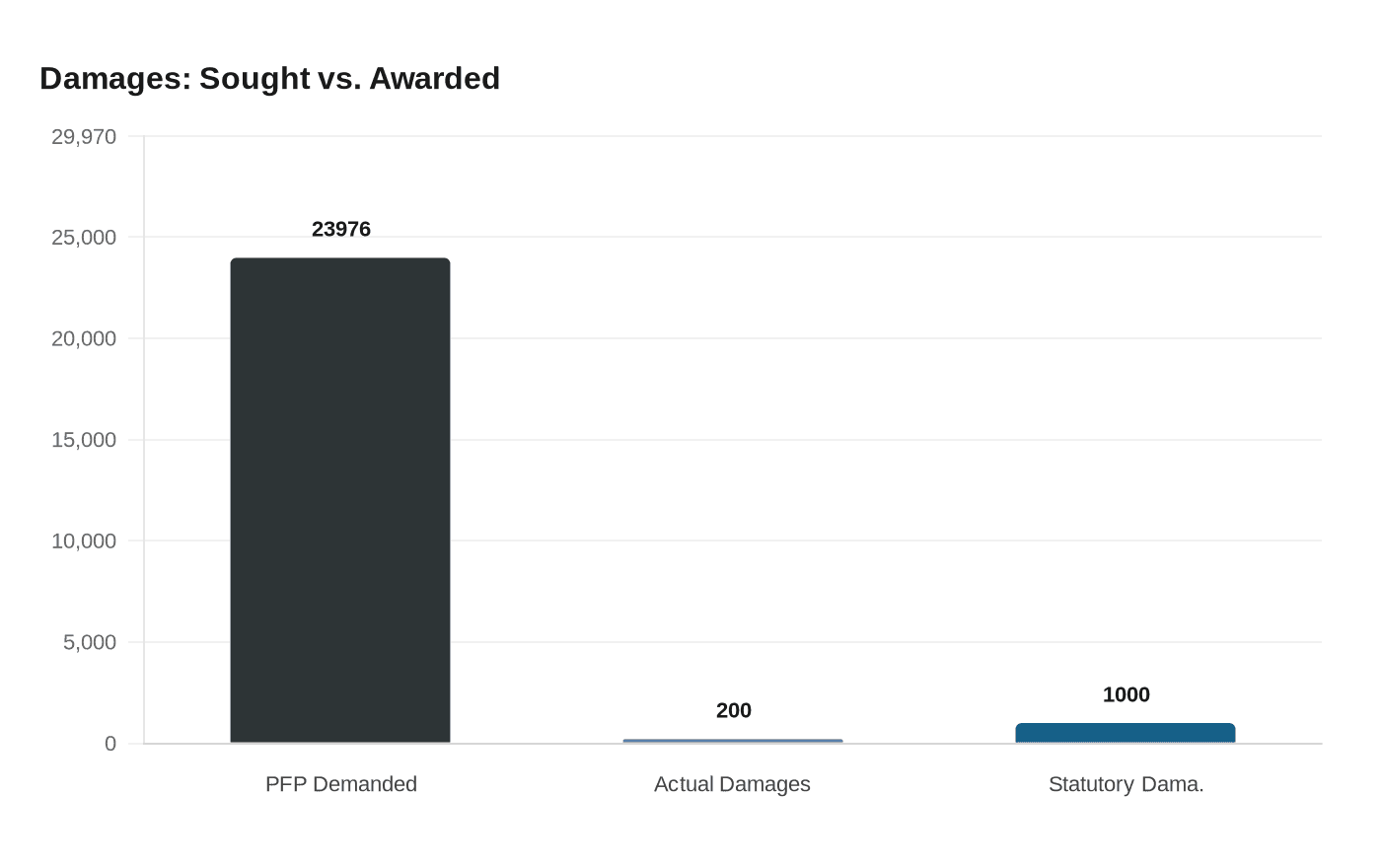
PFP's damages argument leaned on its subscription pricing model. The company argued that the duration of the infringement required two annual subscriptions under its licensing structure, and asked the jury to award $23,976. The jury disagreed sharply, awarding just $200 in actual damages and $1,000 in statutory damages. PFP then asked for $69,000 in attorney fees. It went poorly.
The court denied the fee request, finding there was no clear prevailing party. While the jury found that NOFAL had infringed the copyright, PFP did not prevail on a separate vicarious liability claim against Jaber personally. The two-day trial in October 2024 had produced a verdict that, on paper, was a win for PFP; in practice, collecting $200 on a case that burned through years of litigation costs made that win largely theoretical.
The case sits inside a wider pattern that has drawn increasing scrutiny. PFP has filed hundreds of copyright infringement lawsuits against small businesses, seeking damages based on a claimed subscription fee of $999 per month. Evidence disclosed during recent litigation revealed that around 95% of PFP's revenue comes from enforcement actions rather than licensing, and the company has not produced new photographs in recent years.
On March 18, 2026, U.S. District Judge J.P. Stadtmueller of the Eastern District of Wisconsin issued a ruling that has drawn attention well beyond the Milwaukee case, dealing what observers described as a significant blow to copyright trolling operations.
For photographers who license their work through third-party archives, the Jaber verdict is a useful data point about what juries actually award when a sophisticated enforcement machine runs up against a sympathetic defendant: a family grocer, 1,000 Facebook followers, and a one-week pork chop sale. The gap between $23,976 demanded and $200 collected is not just a number; it's a signal about how courts are beginning to weigh proportionality when stock photo litigation starts looking less like rights protection and more like a revenue strategy.
This article was produced by Prism’s automated news system from verified source data, official records, and press releases, then run through automated quality and moderation checks before publishing. The system is built and supervised by the people who set the standards it runs under. Read our full AI policy.
Did this article answer your question?