Canon Executives Reveal Plans for Smarter, More Accessible Compact Cameras
Canon's Go Tokura says compact buyers are "totally new customers," and the next compact will be built around new technologies to meet their needs.
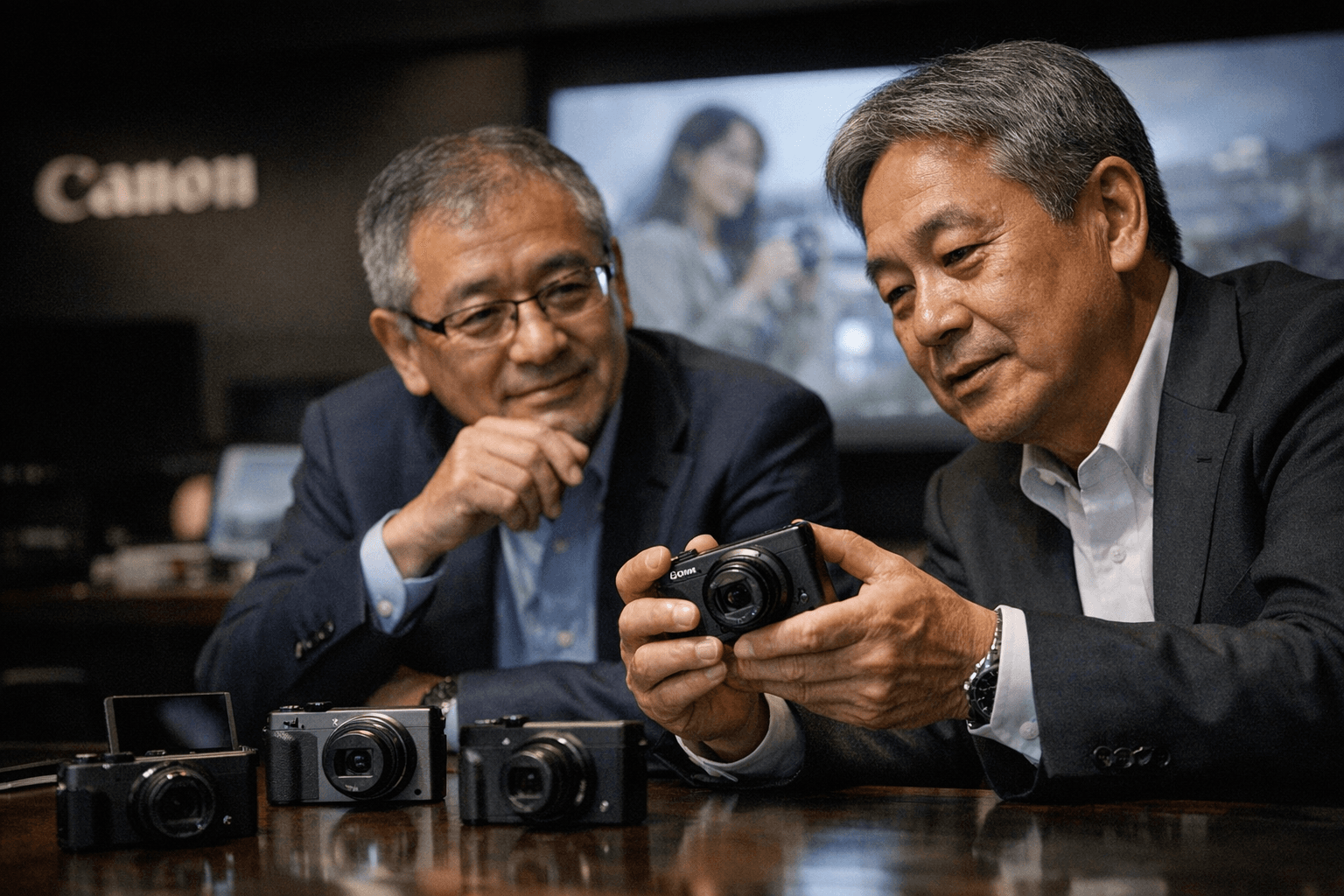
The PowerShot G7 X III is nearly seven years old and Canon keeps selling it. That tells you something about where the compact camera market stands right now, and it was the unmistakable backdrop for a candid exchange with Canon's senior leadership at CP+ 2026 in Yokohama, where executives sketched out what comes next for the category.
Go Tokura, Canon's Executive Vice President and Head of the Imaging Group, framed the company's position with unusual directness: "The current customers of compact cameras are not really our past customers. These are totally new customers. So it is going to be the role of the next camera we release that can offer new technologies or a new use case. That's the new role of the next compact camera."
Rather than treating today's compact buyers as lapsed DSLR or mirrorless users who've downsized for travel, Canon sees an entirely different demographic behind current sales. Tokura and Manabu Kato, Canon's Executive Officer for Imaging Business Operations, described buyers who want a genuinely simple shooting experience: a camera that fits in a pocket and doesn't demand a manual's worth of reading before a trip. In many cases, these are people who have never owned a dedicated camera before.
Simplicity, they stressed, does not mean stagnation. Canon identified autofocus performance and video features as prime candidates for meaningful upgrades in the next compact. The goal, as Tokura and Kato framed it, is purposeful integration of technology rather than a spec-sheet competition. Affordability and form factor remain non-negotiable; the intent is to raise capability without raising the barrier to entry.
The conversation also turned to Canon's RF mount and the persistent question of third-party lens licensing. Pressed on whether anything had shifted since his 2025 remarks on the subject, Tokura offered a measured but telling response: "My answer is the same as last year. But you know, we have released so many lenses last year, and now we have like 60, almost 70 kinds of lenses. So this is part of the change of the environment you mentioned. So we will carefully watch and listen to the customers' feedback and make the strategic decision."
For travel and street photographers who rely on a jacket-pocket camera for the moments a mirrorless system can't follow them into, the direction Canon is signaling carries real weight. The G7 X III's long shelf life is a quiet proof of concept that demand for a pocketable, no-fuss shooter remains alive. Whether a new model built around modern AF and video performance can convert an entirely new generation of buyers into long-term Canon users is the larger bet the company appears ready to make.
This article was produced by Prism’s automated news system from verified source data, official records, and press releases, then run through automated quality and moderation checks before publishing. The system is built and supervised by the people who set the standards it runs under. Read our full AI policy.
Did this article answer your question?