Wildlife Photography Tech Advances Help, But Patience and Skill Still Win
High-fps burst modes and AI subject tracking are genuinely useful, but a Wildlife Photographer of the Year winner's first-hand account proves it's fieldcraft that separates memorable shots from technically perfect ones.
The camera on your strap today would have seemed like witchcraft to wildlife photographers working just fifteen years ago. Subject-recognition autofocus that locks onto a bird's eye mid-flight, stacked sensors pushing 30 to 60 frames per second, high-ISO performance that opens up golden-hour low light without penalty — these are real, substantive advances, and dismissing them out of hand is its own kind of snobbery. But something important gets lost when photographers treat those tools as the destination rather than the vehicle.
In the modern age of wildlife photography, the balance between technological advancement and genuine photographic skill is one of the most pressing questions practitioners face. With AI autofocus, high-speed burst rates, and powerful editing software now within reach of anyone with a mid-range mirrorless body, many photographers can produce technically sound images with relatively minimal effort — which raises a harder question: has the heart of wildlife photography shifted as a result, and are we losing something essential in the process?
When the Gear Does the Heavy Lifting
Tools such as animal-eye tracking, subject recognition, and AI-driven autofocus allow even beginners to produce sharp, well-exposed images. Post-processing platforms such as Lightroom and Photoshop can correct exposure, refine composition, and enhance colour in ways that were simply impossible two decades ago. These aren't marginal improvements — they are structural changes to what's achievable on a first outing.
Today's high frame rates, running from 30 to 60 fps, and pre-buffering features allow photographers to capture moments that might otherwise be missed. Large sensors also encourage cropping, meaning many compositional decisions are postponed to the editing stage rather than resolved deliberately in the field. That last point is worth sitting with. Resolving composition in the field — before the shutter fires — is a discipline. Delegating it to a crop tool is a habit that atrophies an important muscle.
What Technology Cannot Replicate
Truly outstanding wildlife photography still depends on qualities technology cannot replicate: patience, anticipation, deep behavioural understanding, and field awareness. These remain the decisive factors separating technically competent images from truly memorable ones.
The clearest illustration of this comes from a career built before the mirrorless era. Working extensively with the Canon EOS-1D Mark II — an 8-megapixel camera capable of 8 frames per second with a limited ISO range — the author produced internationally recognised images, demonstrating that skill, timing, and understanding remain the foundation of compelling wildlife photography regardless of the equipment available. His major achievements include category wins in both the UK Natural History Museum's Wildlife Photographer of the Year competition and Nature's Best Photography in the USA, as well as being named South African Wildlife Photographer of the Year, with work exhibited at the Natural History Museum in London and the Smithsonian Institution in Washington.
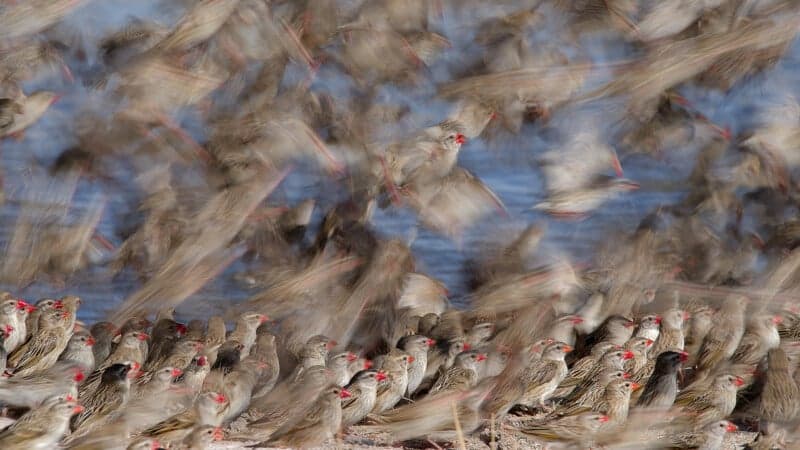
The pattern that emerged from that body of work is instructive. Images captured with a 600mm lens and 2x converter, cropped approximately 30% with minimal processing, won the Animal Behaviour Category at the Shell/BBC/Natural History Museum Wildlife Photographer of the Year in 2007. In later years, thousands of similar jackal-chasing-dove and sandgrouse images were captured at Kgalagadi Transfrontier Park using modern equipment — yet many lacked the originality, timing, and precision that gave those earlier images their distinction. Better gear, but not better pictures. The gap was fieldcraft, not firmware.
Field Skills Are the Force Multiplier
The counterintuitive truth about today's technology is that it rewards experienced photographers most. Field skills developed during the era of slower, less forgiving equipment translate directly into more effective use of modern mirrorless systems. Photographers who learned their craft when autofocus was inconsistent, frame rates were limited, and exposure had to be judged mentally often find themselves uniquely positioned to use today's advances to their fullest.
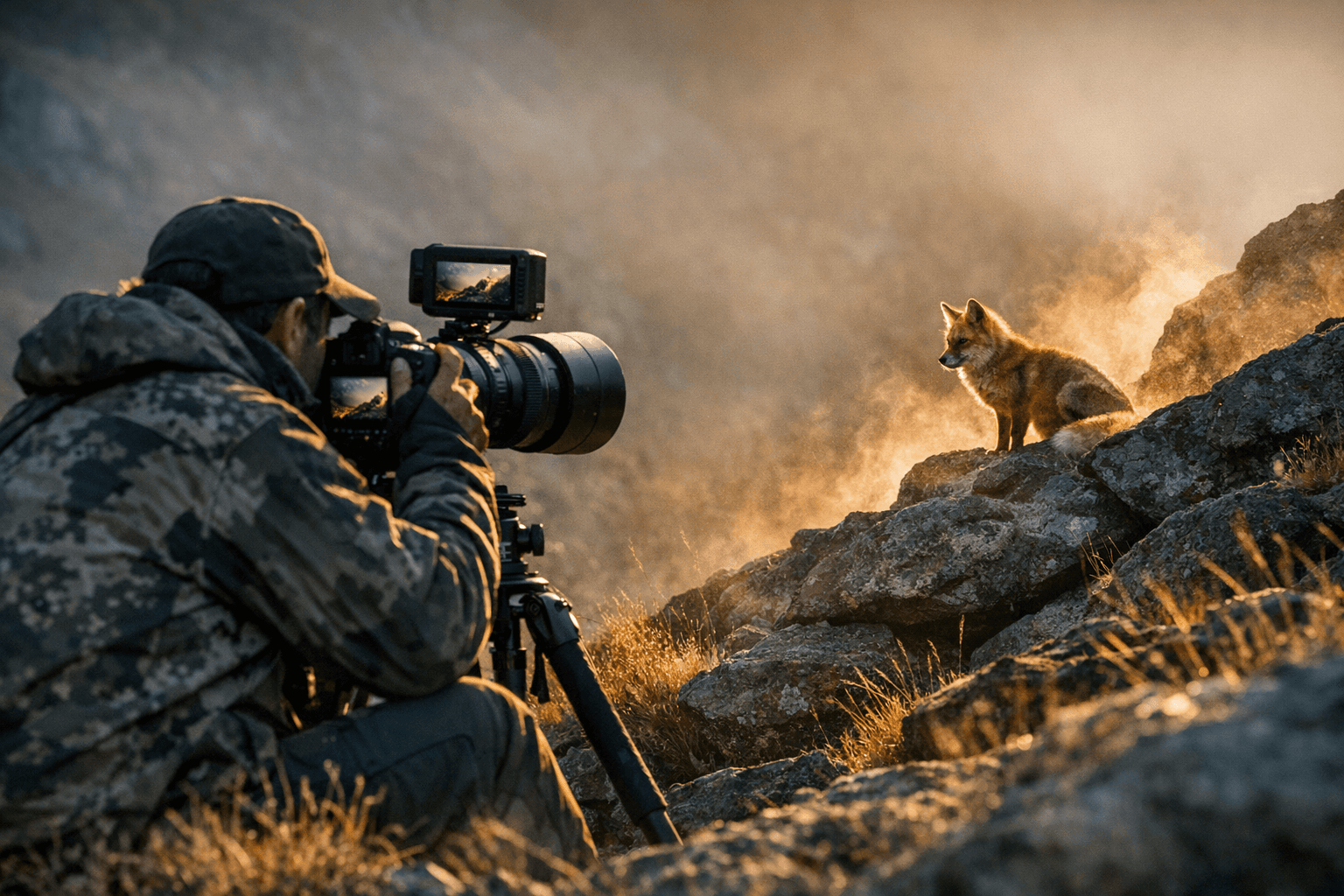
The mechanism is precision. A strong grounding in fieldcraft allows photographers to use subject-recognition autofocus selectively and intelligently. Experience transforms high frame rates from a spray-and-pray safety net into a precision tool applied at decisive moments. Large 45-megapixel sensors become instruments of refinement rather than rescue. Pre-capture features extend anticipation rather than replace it.
In short, photographers with strong field skills gain the greatest advantage from modern technology — not because they rely on it more, but because they use it more intelligently. Automation amplifies competence; it cannot conjure it from nothing.
What to Prioritise and What to Watch
The practical framework here is not anti-technology. It is sequenced correctly. For those beginning their wildlife photographic journey, the first investment should not be the latest gear or editing software. Mastering the fundamentals comes first: aperture, shutter speed, ISO, focal length, distance, and light, alongside a genuine study of animal behaviour, patience, and awareness.
Once that foundation is in place, the case for specific technology becomes much clearer. Optics and stabilisation deliver returns that body upgrades often cannot. AI subject detection is genuinely useful when you already know which subject matters and why. High frame rates serve you best when you know the precise moment you're trying to capture, rather than treating the buffer as a lottery.
The ethical dimension of fieldcraft matters here too. Disturbance is one of the most underacknowledged costs of pursuing a shot at any price. Skittish species that flush before you raise the camera are not failures of autofocus — they are failures of approach, of reading body language, of giving the animal enough respect and time. No firmware update addresses that. And in post-processing, resisting the temptation to use AI to fabricate reality is a line worth holding — minor corrections and noise reduction are acceptable, but altering backgrounds or adding animals that weren't there crosses ethical boundaries that no amount of technical justification can walk back.
The Bigger Picture for Manufacturers and Educators
The conversation around technology versus skill carries implications beyond the individual photographer. Manufacturers currently packing hybrid AF, stacked sensors, and computational features into every new body would do well to think about whether their tools are designed to complement fieldcraft or circumvent it. Features that reward anticipation and knowledge — like pre-capture buffers that extend a photographer's read of animal behaviour — push the craft forward. Features that replace judgment with automation flatten it.
For educators, the implication is equally direct: technical literacy and fieldcraft belong in the same curriculum. Knowing how to configure a camera is table stakes. Knowing when to hold your position for forty minutes in the cold because the light and the animal behaviour are converging on something extraordinary — that is the lesson that separates good photographers from exceptional ones.
Technology will continue to evolve, perhaps faster than ever before. But the foundation of outstanding wildlife photography will remain unchanged: field skills, behavioural knowledge, anticipation, and deep camera understanding form the bedrock of success. The photographers who build that foundation first, and then layer modern tools on top of it, are the ones whose work will still feel distinctive a decade from now.
This article was produced by Prism’s automated news system from verified source data, official records, and press releases, then run through automated quality and moderation checks before publishing. The system is built and supervised by the people who set the standards it runs under. Read our full AI policy.
Did this article answer your question?