Canon's compact RF 20-50mm zoom charms still photographers, too
Canon's tiny 20-50mm L zoom looks like a video tool, but its wide range, f/4 aperture, and power zoom could make it a smart stills walkaround.
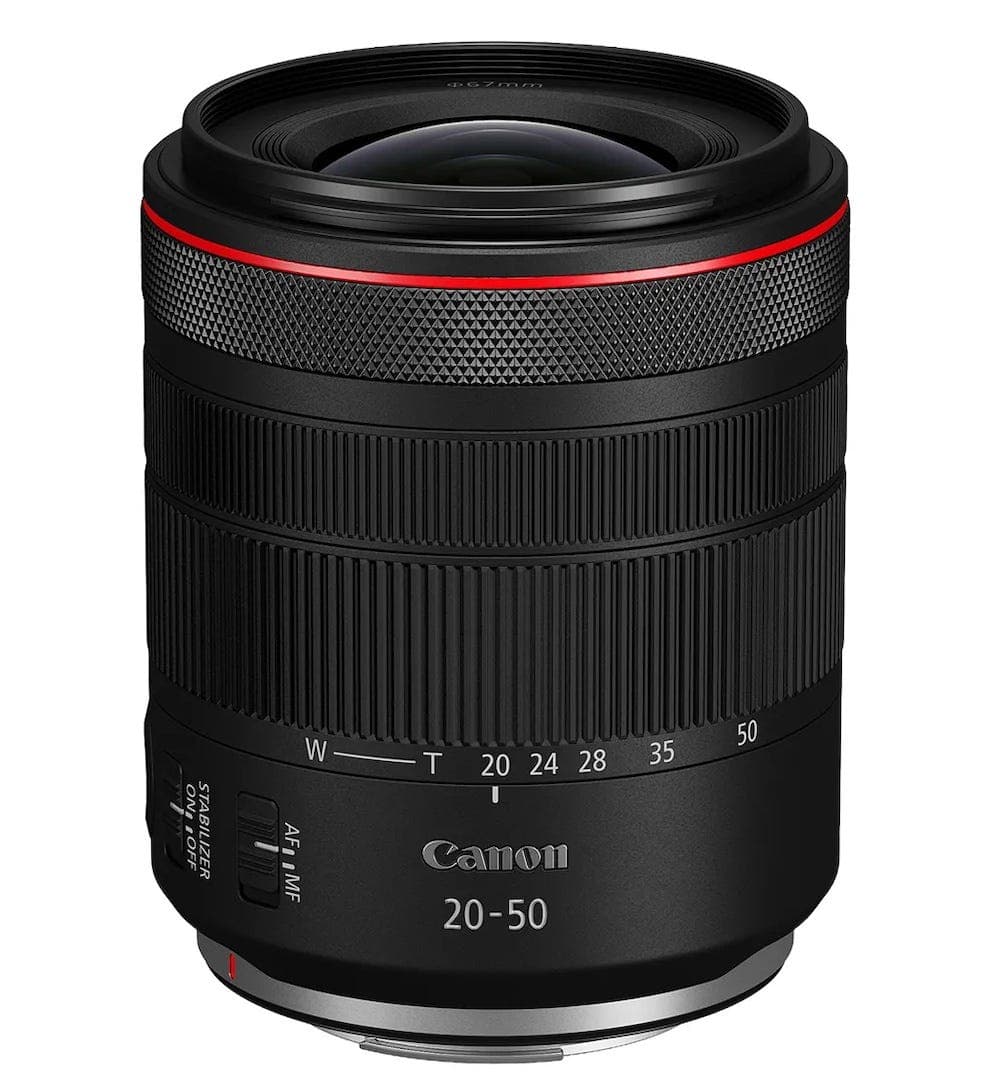
Canon built the RF 20-50mm f/4 L IS USM PZ for creators who move between clips and frames, but the surprise is how naturally it speaks to still photographers. The lens lands as a hybrid tool first and a video accessory second, and that matters because its most appealing traits are the same ones still shooters keep asking for: a useful wide starting point, a constant aperture, and a body small enough to stay in the bag.
Why the 20-50mm range feels so practical
The 20-50mm span is the heart of the story. Chris Niccolls’ hands-on reaction makes sense because this is not a novelty zoom built around one weird feature, it is a range with a real shooting logic. Twenty millimeters gives you breathing room in tight interiors, crowded streets, and travel scenes where a 24mm start can still feel cramped. Fifty millimeters then gives you just enough reach for people, details, and everyday framing without turning the lens into a bulky general-purpose monster.
That balance is why the lens invites comparison to favorites like Sony’s 20-70mm f/4. A versatile wide zoom becomes much more attractive when it stays small enough to vanish into the bag, and this Canon lens leans hard into that idea. It gives up some top-end reach versus a classic 24-70mm or 24-105mm walkaround, but it gains a wider starting point and a more compact personality.
A power zoom that does not feel like a compromise
The biggest curveball is the power zoom design. Canon says this is the first full-frame, switchable power zoom/manual zoom lens it has made, and that alone makes it one of the most interesting RF releases in years. Instead of forcing photographers to choose between a traditional zoom ring and a video-only control scheme, Canon gives the lens a switchable interface that can behave like a normal ring or like a rocker-style power zoom.
That matters more than it sounds. A stills photographer can keep using the lens in a familiar way, while a hybrid shooter can switch into smoother, more controlled zoom behavior when movement matters. Canon says three Nano USM motors handle focus and zoom behavior, and the lens can also be controlled through the Canon app or compatible accessories. Spec coverage points to 15 adjustable power zoom speeds, which should make the lens feel less like a gimmick and more like a tool you can tune to your shooting style.
For photo work, the question is not whether power zoom is useful in the abstract. It is whether it slows you down, adds clutter, or makes the lens feel fussy. Niccolls reported the opposite: the focus felt swift and silent, and the lens quickly became intuitive to use. That is the key test for a design like this. If it disappears into muscle memory, still shooters stop caring that it was born from a video brief.
Size, stabilization, and the carry-around test
Canon’s specs make the physical argument almost as strongly as the focal range does. The sample Niccolls used felt very small for an L-series optic at 14.8 ounces, or 420 grams, and it uses a 67mm filter thread. It also has weather sealing and customizable controls, two details that matter when a lens is meant to leave the studio and live in a shoulder bag.
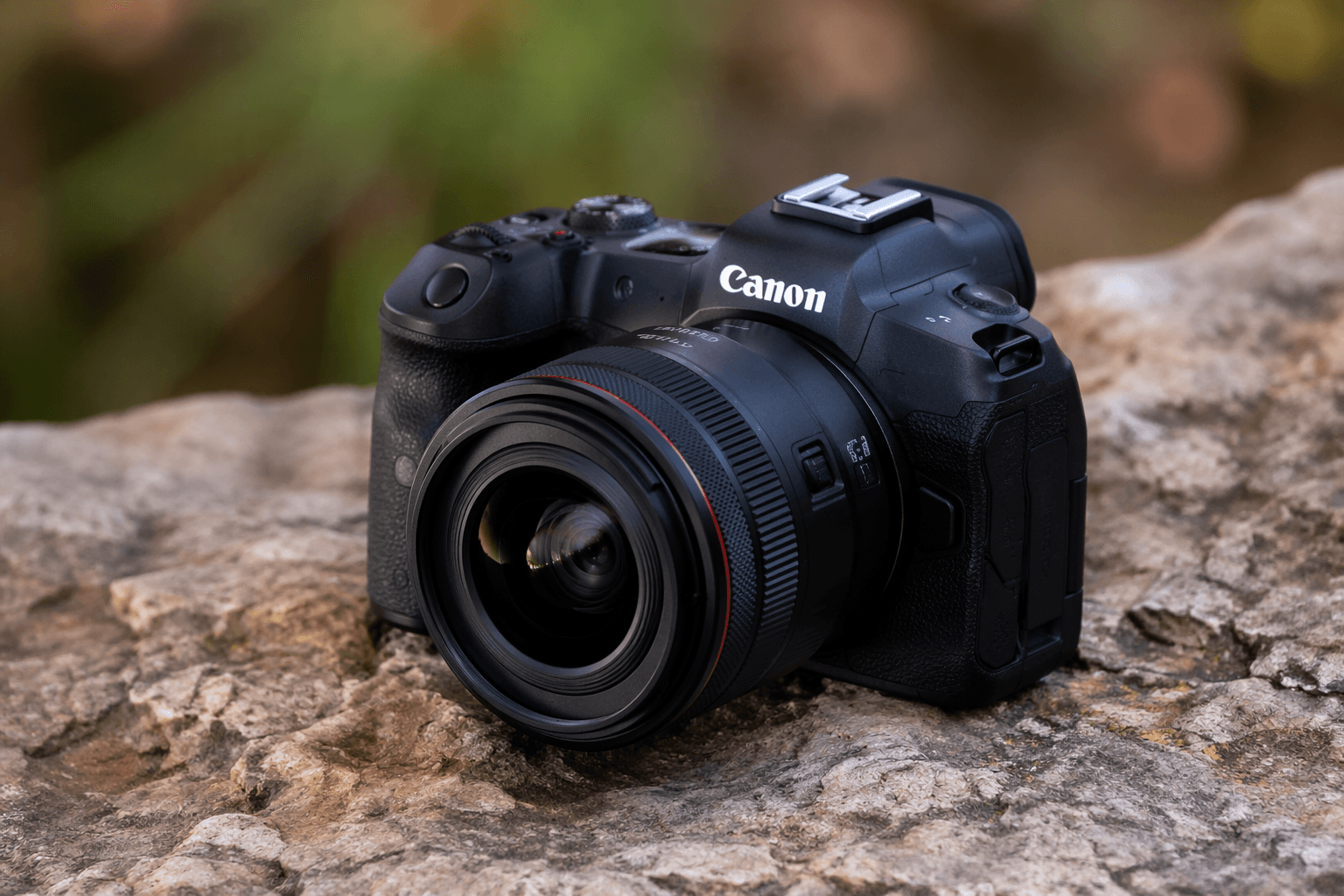
That compactness changes the buying question. A traditional walkaround zoom can be more versatile on paper, but if it makes you hesitate to pack it, the real-world range shrinks fast. This lens is trying to be the one you actually bring on travel days, street walks, or casual family outings, not the lens that looks great in a kit list and stays at home. The lightweight build is especially notable because this is an L-series lens, a category usually associated with a firmer grip on size and price.
The stabilization spec is equally important. Canon says the lens offers up to 8 stops of coordinated image stabilization, which should help in the kind of everyday shooting where you are not always setting up a tripod or pushing shutter speed aggressively. For stills, that buys you a little more confidence in dim interiors, evening streets, and handheld sequences where a wide zoom often becomes your only lens for the day.
What the optical design signals
On paper, Canon is not treating this as a stripped-down experiment. The lens has 13 elements in 11 groups, including two molded aspherical elements and ultra-low dispersion glass elements. That is the kind of formula you expect from a lens that needs to balance compactness with image quality and keep aberrations under control across a wide zoom range.
Because Niccolls’ sample was pre-production and not ready for full lab testing, final image quality still deserves a complete review. Even so, the early handling notes are encouraging. The lens was described as surprisingly good for photos, which is exactly the kind of verdict that matters here. A hybrid lens can be mechanically clever and still disappoint still photographers if it feels awkward in use. The early signs suggest Canon has avoided that trap.
Why Canon launched it with the EOS R6 V
The timing also tells you how Canon wants this lens to be read. It arrived alongside the EOS R6 V, a more video-centric body aimed at content creators and advanced videographers. Canon U.S.A. lists the body at $2,499 and the EOS R6 V kit with this lens at $3,699, with availability expected in late June 2026. That pairing makes the lens feel like part of a creator-first system, not just a standalone optic with a video party trick.
Still, the lens is bigger than that context. PetaPixel called it Canon’s first-ever L-series power zoom lens, and the first full-frame RF-mount lens to offer power zoom without external accessories. That is a real shift in Canon’s hybrid strategy, especially from a company that had already produced a cumulative 170 million RF and EF interchangeable lenses by October 2025. Scale matters here because it shows Canon is not guessing at lens demand, it is expanding an ecosystem with a new category that aims at a very modern shooting habit.
The RF 20-50mm f/4 L IS USM PZ is easy to understand once you stop thinking of power zoom as a video-only feature. It is a compact, stabilized, weather-sealed wide zoom with a constant f/4 aperture and a range that works for travel, street, and everyday use. The novelty is not that Canon built a creator lens. The novelty is that the lens is starting to look like a genuinely sensible stills lens too.
This article was produced by Prism’s automated news system from verified source data, official records, and press releases, then run through automated quality and moderation checks before publishing. The system is built and supervised by the people who set the standards it runs under. Read our full AI policy.
Know something we missed? Have a correction or additional information?
Submit a Tip