Chile’s Rubin Observatory launches 10-year survey with world’s largest camera
Rubin’s 3.2-gigapixel camera has begun a 10-year sky survey, turning 189 CCDs into a 9.6-square-degree time-lapse machine.

The Vera C. Rubin Observatory began its 10-year Legacy Survey of Space and Time on June 30, putting a 3.2-gigapixel camera with 189 CCD sensors to work on the southern sky. Each frame covers 9.6 square degrees, and the observatory will revisit the same regions again and again.
Rubin will shoot roughly 30-second exposures across about 18,000 square degrees in six filters, u, g, r, i, z and y, building a visual record of the sky that changes every few nights. The camera will generate about 10 terabytes of data every night, adding up to around 60 petabytes of raw data over the survey. By the end, the archive will hold more than 5 million images and catalogs with more than 37 billion astronomical objects and 7 trillion sources, including about 17 billion Milky Way stars, about 20 billion galaxies and around 10 million supernovas.
The LSST Camera was completed at SLAC National Accelerator Laboratory after two decades of work, Rubin released its first images on June 23, 2025, and test observations in June 2025 captured millions of galaxies and Milky Way stars and thousands of asteroids in just over 10 hours. Scientific alerts began in February 2026, and the alert stream will climb to seven million alerts per night, giving astronomers near-real-time notice of supernovae, variable stars, active galactic nuclei and asteroids.
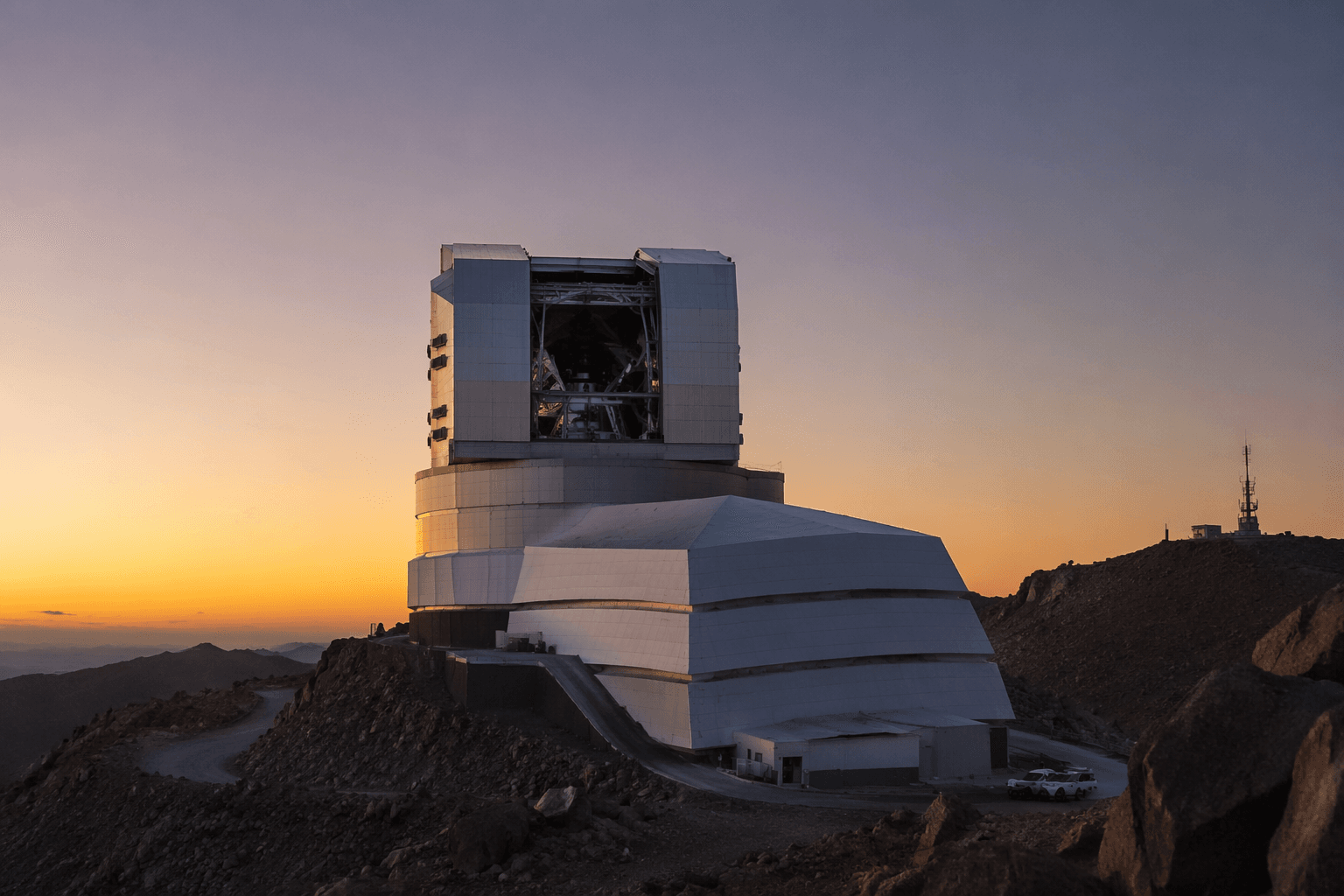
Rubin sits on Cerro Pachón in Chile at about 2,715 meters, or 8,900 feet, elevation. The site was chosen after a three-year selection process that began in 2003 and narrowed to Cerro Pachón and San Pedro Mártir before Cerro Pachón won on cost and site-performance grounds. The observatory was formally renamed from the Large Synoptic Survey Telescope to the Vera C. Rubin Observatory in December 2019, honoring Vera Rubin.
This article was produced by Prism’s automated news system from verified source data, official records, and press releases, then run through automated quality and moderation checks before publishing. The system is built and supervised by the people who set the standards it runs under. Read our full AI policy.
Did this article answer your question?