Chris Perani reveals insect wings with ultra-detailed macro stacking
Chris Perani’s insect-wing stackups turn thousands of frames into patterns that look built, with gels and rail-driven focus revealing color the eye misses.
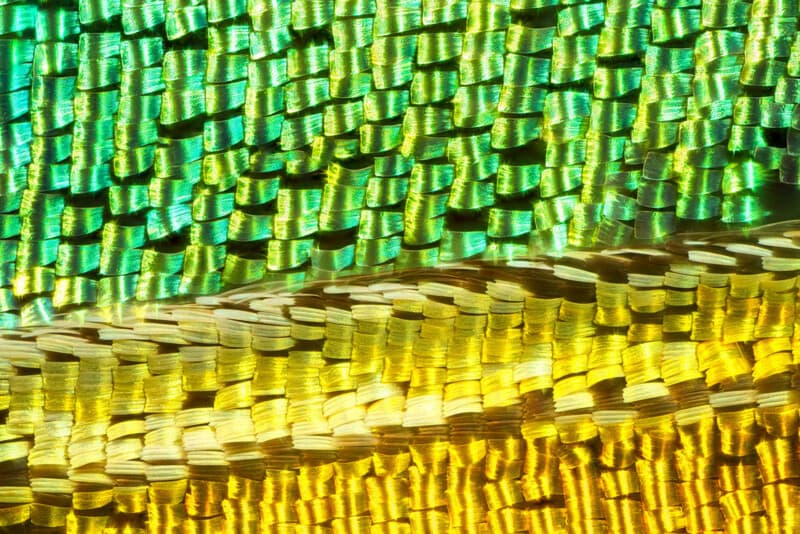
Chris Perani’s Wings series turns insect wings into something closer to architecture than anatomy. Built from thousands of individual frames, the images pull out textures, color shifts, and microscopic structure that disappear at normal viewing distance, giving macro photographers a clear lesson in what happens when light, pattern, and patience matter as much as magnification.
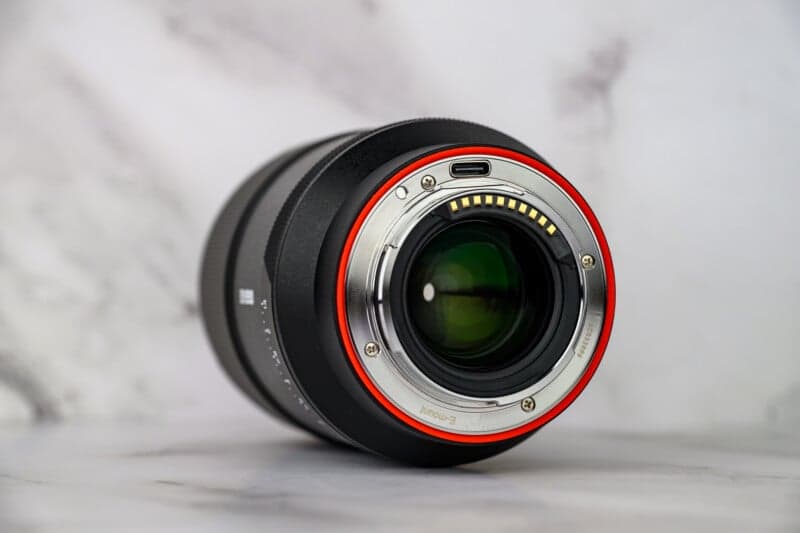
Perani works in a home studio with subjects that range from bees and wasps to damselflies, beetles, butterflies, and moths. He shoots with a Sony Alpha 7R V mounted on a Cognisys automatic rail system and Nikon 5x and 10x microscope lenses. A single subject can take about six hours, with Perani setting the start and end points while the rail steps through the focus range, then shifting the specimen and repeating the sequence until the full surface is covered.
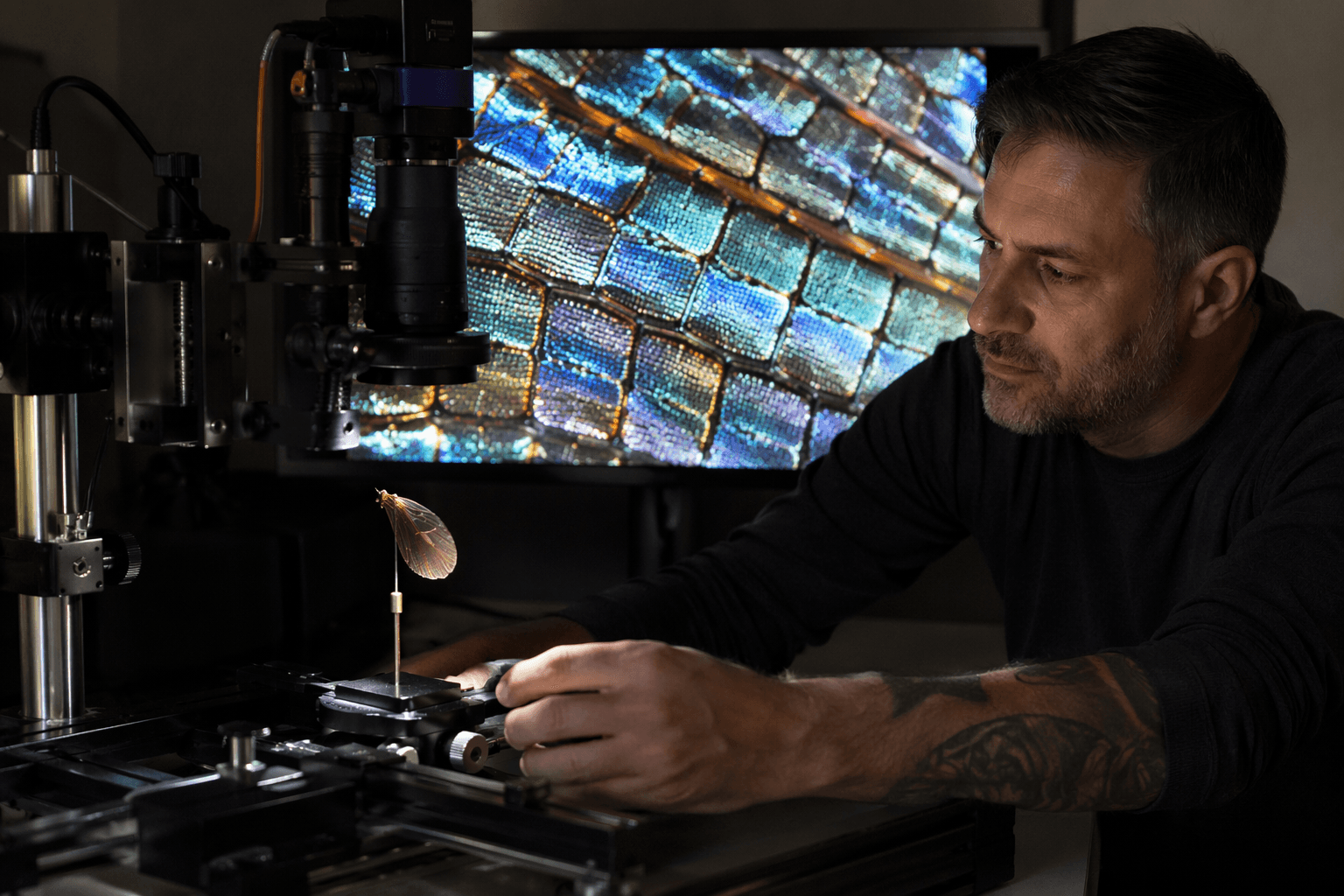
The files are then stacked in Helicon Focus and finished in Photoshop, where dust spots are cleaned and seams are blended. Perani has described the process as puzzle-like, and the description fits: each finished image is assembled from 10 to 15 sections, each one a small slice of a surface that the eye would never parse on its own. Colored gels and portrait-style illumination do crucial work here, pushing thin-film interference into view and turning wing membranes into luminous planes.
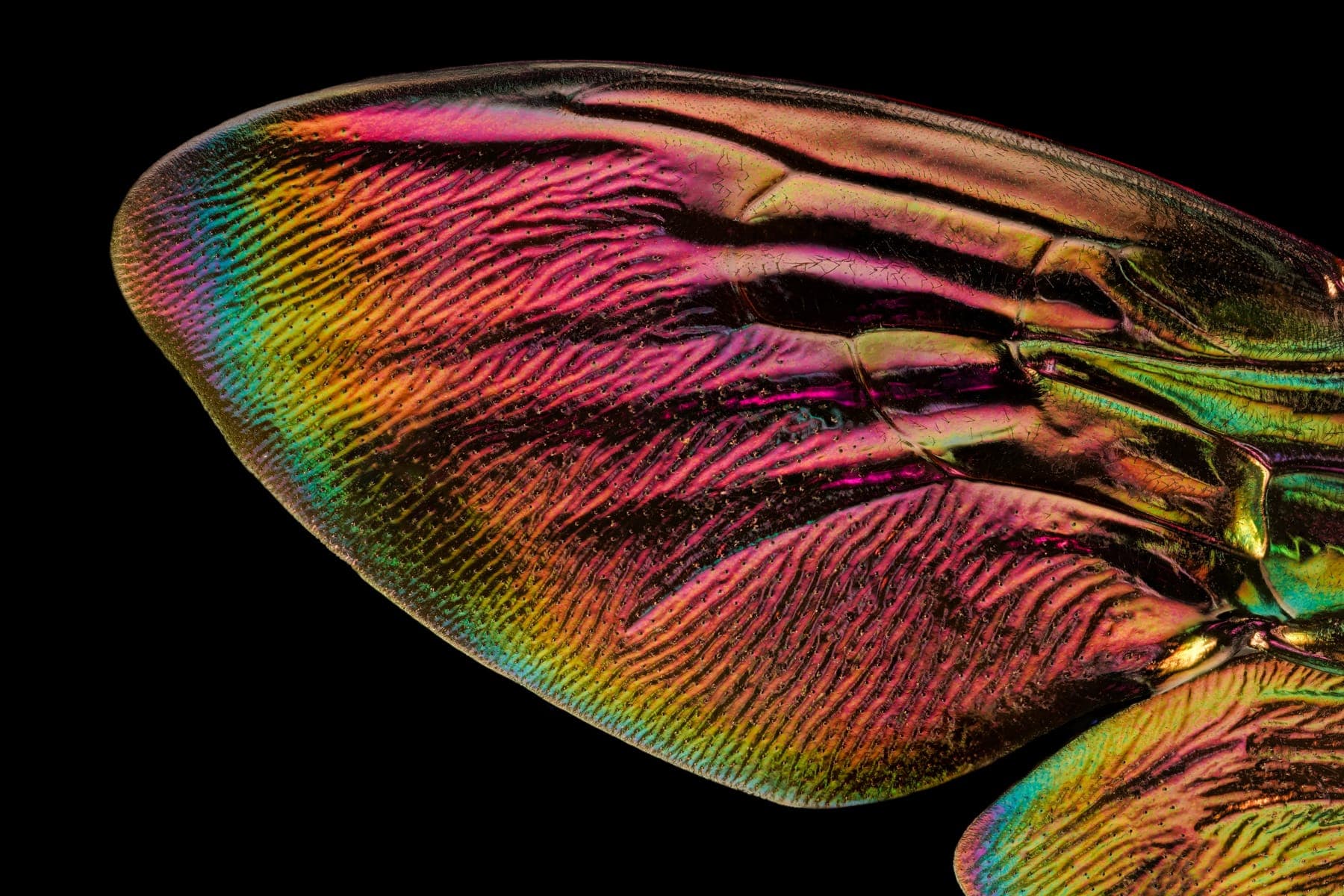
That visual payoff is rooted in biology. Lepidoptera literally means scale-wing, a reference to the microscopic scales that cover butterfly and moth wings. The Natural History Museum says there are more than 18,000 named butterfly species and about 140,000 moth species, all descended from a common ancestor that lived more than 225 million years ago. The Smithsonian National Museum of Natural History notes that these wings are built from tiny scales, and research on butterfly color shows that those scales create structural color through nanostructures that manipulate light. A 2023 meta-analysis found more than 300 optical nanostructures described in butterflies, with short-wavelength colors, especially blue, far more common than red. Other studies show those same micro- and nanostructures can contribute to waterproofing and, in some species, superhydrophobicity.
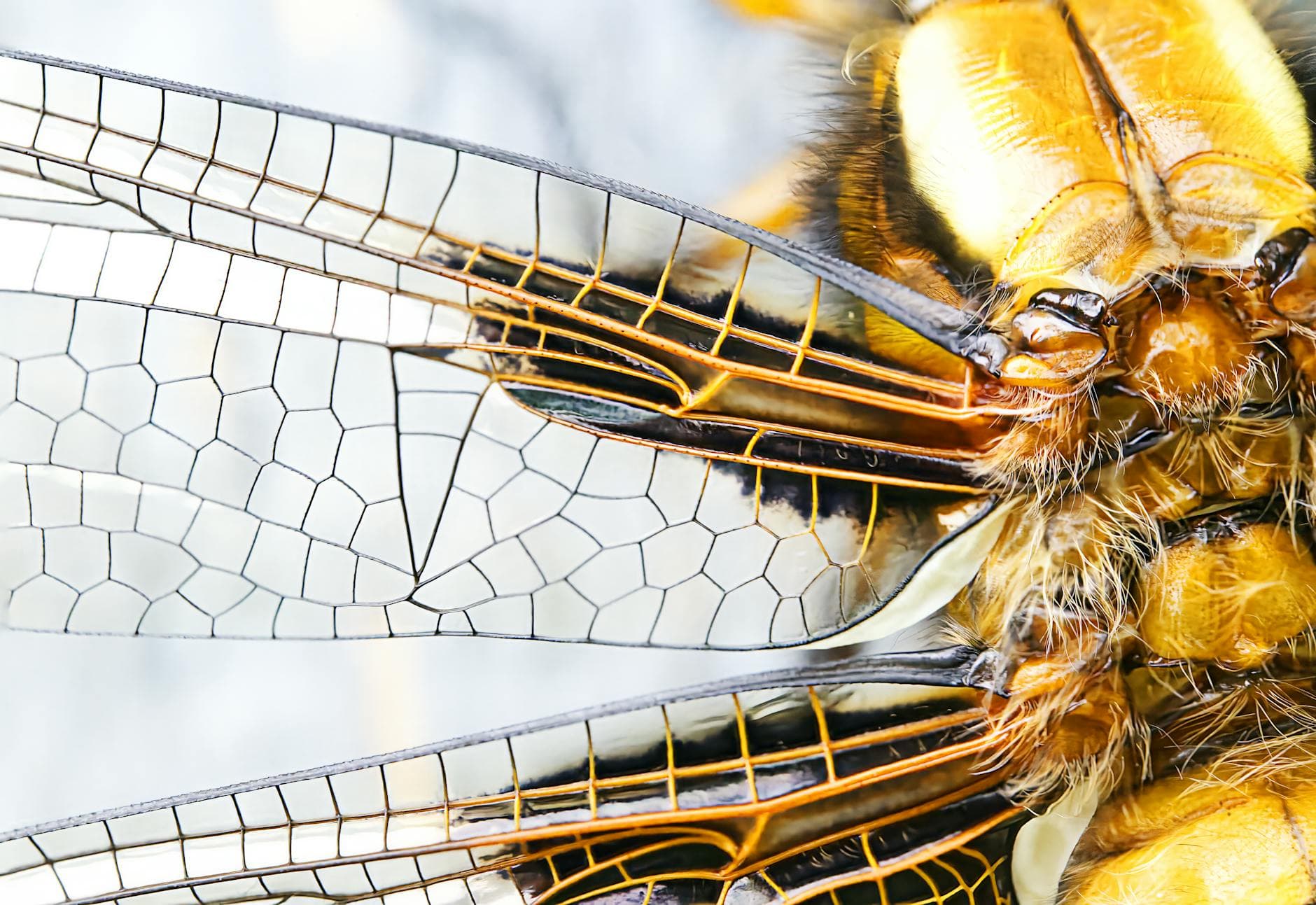
Perani’s approach has been building for years. PetaPixel reported in 2018 that one butterfly-wing image took 2,100 separate shots, and earlier coverage of his insect macro work described projects requiring 8,000 frames and 86 hours of editing. COS said Perani grew up in San Rafael, California, surrounded by hills, fog, and forests, and that he wants people to slow down, look closer, and appreciate complexity in nature. Wings does exactly that, with every stacked frame making the smallest structures feel vast.
This article was produced by Prism’s automated news system from verified source data, official records, and press releases, then run through automated quality and moderation checks before publishing. The system is built and supervised by the people who set the standards it runs under. Read our full AI policy.
Did this article answer your question?