Claudia Andujar biopic will trace her photography and activism
Claudia Andujar’s Yanomami photographs became medical records, land-rights evidence and art history at once. A new biopic aims to show photographers why that fusion still matters.
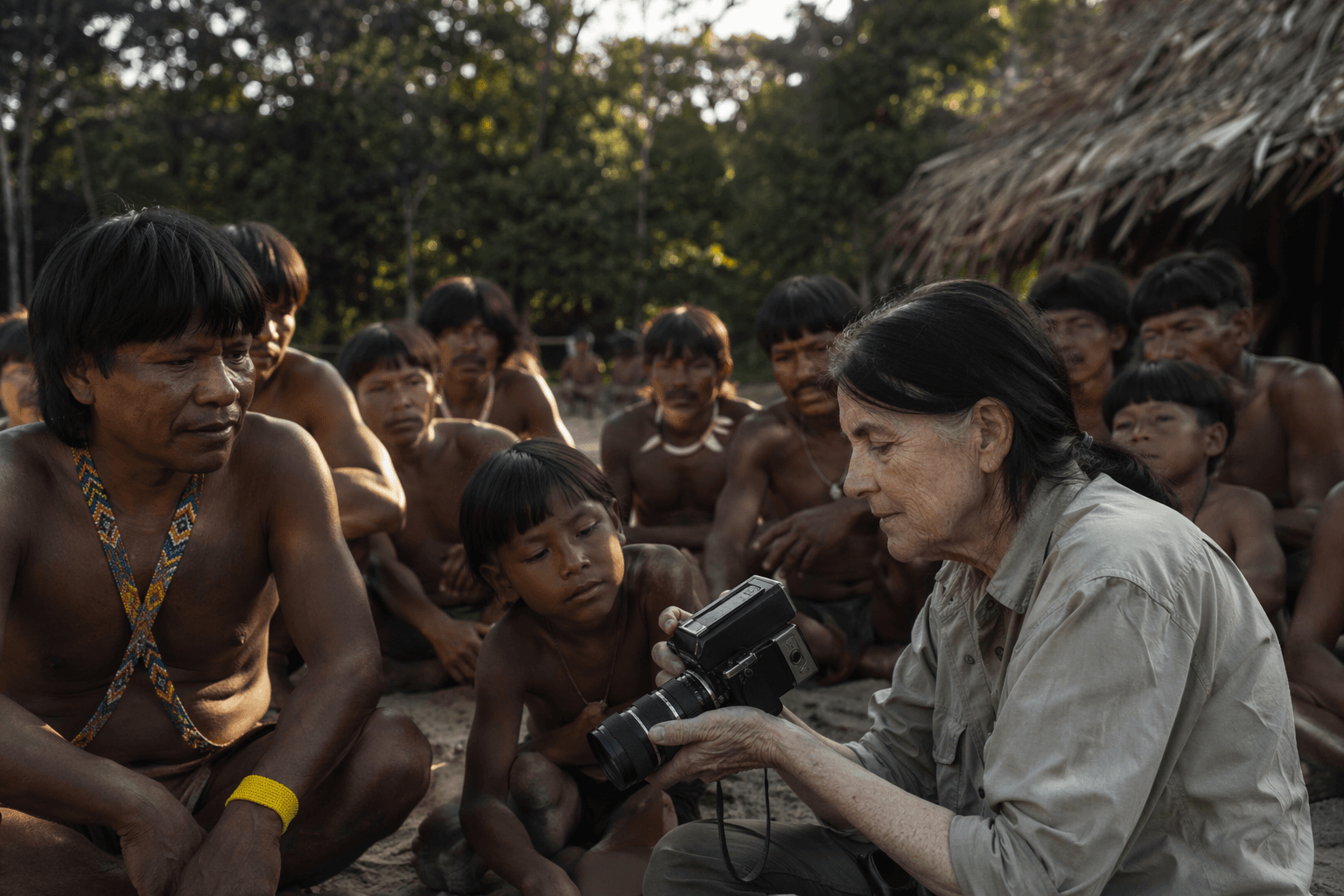
Claudia Andujar’s photographs of the Yanomami were never just images for the archive. They became tools for vaccination, records for medical care and proof in a decades-long fight over Indigenous land, which is exactly why a new biopic about her feels aimed as much at photographers as at moviegoers.
The film, The Outsider, was being developed by Brazilian production company Maria Farinha Filmes as an intimate biopic built from two decades of research into Andujar’s life. Sandra Delgado, a photographer and filmmaker, is set to direct in her fiction feature debut, with Oscar-nominated actor Wagner Moura on board as executive producer and also attached in a minor role. Norwegian actor Inga Ibsdotter Lilleaas has been cast to play Andujar.
For photographers, Andujar’s story starts long before the Amazon. She was born in 1931 in Neuchâtel, Switzerland, raised in Central Europe, and lost her father after he was taken to Dachau during the Holocaust. She later moved to New York in the late 1940s, studied humanities at Hunter College, worked as a guide and translator at the United Nations and moved to Brazil in 1955. That path matters because her practice was never isolated from history; it was shaped by displacement before it ever reached the rainforest.
By the late 1970s, Andujar had co-founded the Comissão Pró-Yanomami, or CCPY, and her camera became inseparable from advocacy. From 1981 to 1984, she photographed Yanomami people during a vaccination campaign, making numbered portraits so health workers could match each person to medical records. In 1992, after a long campaign involving Andujar and other advocates, the Brazilian government legally demarcated Yanomami territory as a continuous area. Her pictures were not simply illustrating a cause. They were part of the mechanism that pushed the cause forward.
That is the legacy The Outsider is stepping into. Andujar’s work is held in major collections, including MoMA and Tate, with MoMA listing 109 works online, but recent exhibition materials at Fondation Cartier pour l’art contemporain and the Barbican have stressed the same point from another angle: the art and the activism cannot be separated. Andujar received Germany’s Goethe Medal in 2018 for her human-rights work, a reminder that her influence has long extended beyond photography circles.
Delgado has said the project is driven by affection for Andujar and by a desire to introduce audiences to both her life journey and the damage caused by predatory development in Brazil. That framing fits the work itself. Andujar showed that a documentary project can grow into a long-term ethical commitment, and that the photographer behind the frame can end up changing the conditions of the lives being photographed.
This article was produced by Prism’s automated news system from verified source data, official records, and press releases, then run through automated quality and moderation checks before publishing. The system is built and supervised by the people who set the standards it runs under. Read our full AI policy.
Did this article answer your question?