Court Weighs Copyright Limits in Miniature Food Photography Dispute
A federal judge said bikes on bananas were too generic to copy, but the case still tests how far a repeatable concept can travel before copyright kicks in.
A federal judge has drawn a sharp line in one of photography’s strangest copyright fights: a miniature bicycle scene on bananas was not enough, by itself, to prove infringement. For photographers who build portfolios around instantly recognizable tabletop concepts, that ruling is a warning that copyright protects the finished expression, not the underlying gimmick.
In Boffoli v. McCormick, U.S. District Judge Janis L. Sammartino issued an order on April 10, 2026 in the Southern District of California after Christopher Boffoli sued Laurie McCormick over two Amazon-sold images. Boffoli, who created the Big Appetites series of tiny figures staged against real food, said he discovered McCormick’s allegedly infringing photographs in January 2025 and sent a takedown notice to Amazon Web Services on January 16, 2025. He also alleged that his own images had been publicly available since at least 2013 through his website, galleries, licensed publications, and major media outlets around the world.
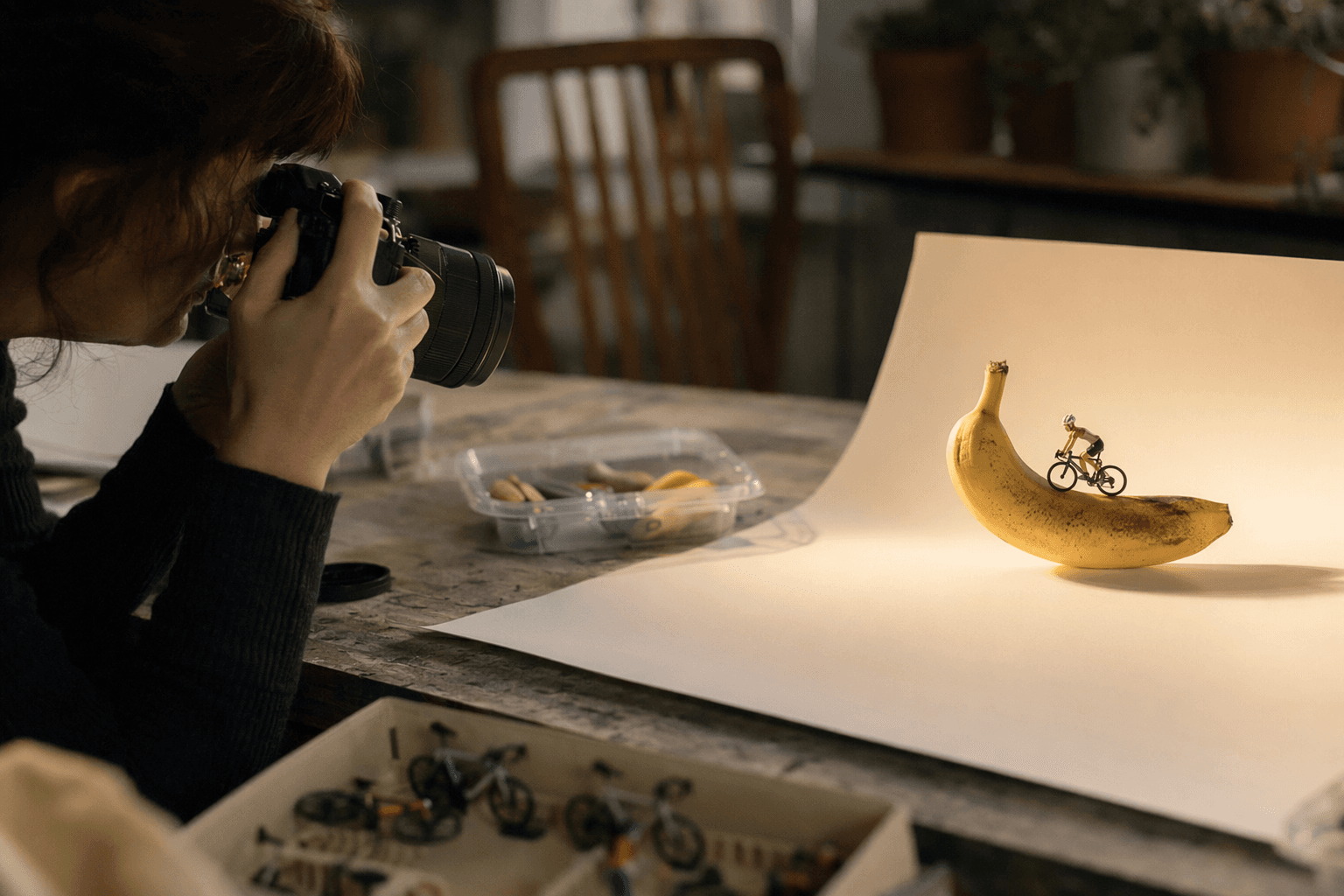
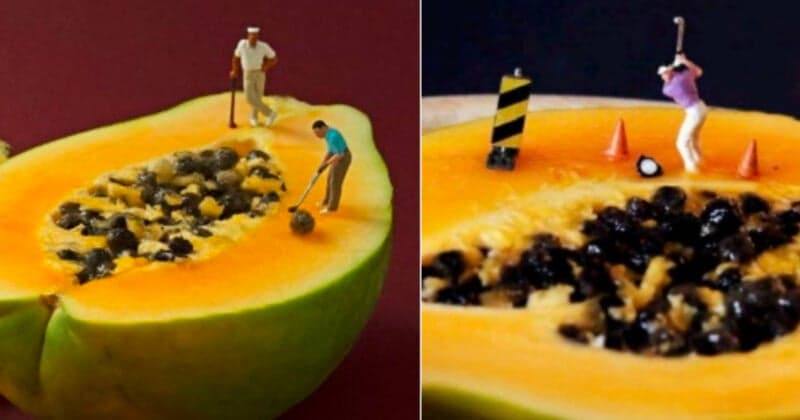
The disputed images carried the same visual joke that has made miniature food photography so clickable. Boffoli identified his own works as Papaya Golf and Banana Racers, while the images he challenged were McCormick’s Papaya Trap and The Big Banana. The court said Boffoli had offered enough at this stage to suggest McCormick could have seen his work. But on the banana-themed claim, the judge found the shared idea of bikes on bananas was too general to support substantial similarity as a matter of law.
That mattered because the court did not stop at the concept. It pointed to concrete differences in angle, color and background, distance from the subject, and the number of figures in the frame. For concept-driven photographers, those details are the difference between a protected photograph and an unprotected idea. A repeatable setup can be memorable, marketable, and easy to recognize in a feed. It can also be hard to defend if the strongest claim is that someone else used a similar premise.
Boffoli’s artist statement says the Big Appetites series began with images made around 2003 and drew inspiration from childhood-scale imagery and Gulliver’s Travels. His bio says he lives and works in Seattle and has shown work across the United States, Canada, Europe, and Asia. McCormick has described her own miniature photography as dating back to 2008, 2009, 2010, and 2011 in different series claims, which gives the dispute a second layer: not just who copied which frame, but who helped define the look in the first place.
This article was produced by Prism’s automated news system from verified source data, official records, and press releases, then run through automated quality and moderation checks before publishing. The system is built and supervised by the people who set the standards it runs under. Read our full AI policy.
Did this article answer your question?