DIY panoramic camera turns broken FED stereo into 93mm film beast
A broken FED Stereo becomes a 93mm panorama machine, offering XPan-level romance without XPan-level prices. The payoff is huge, but so are the build and shooting compromises.
Why this build hits a nerve
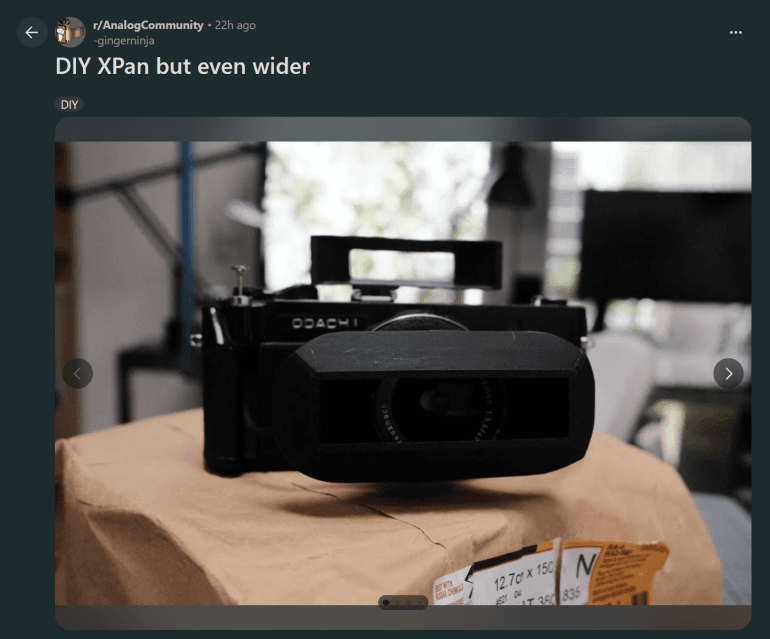
A hacked FED Stereo is the kind of project that speaks immediately to photographers who have been priced out of a Hasselblad XPan. It takes a broken Soviet stereo body, a lens with serious wide-angle pedigree, and a pile of mechanical ingenuity, then turns all of it into a panoramic camera that feels less like a clone and more like a dare.
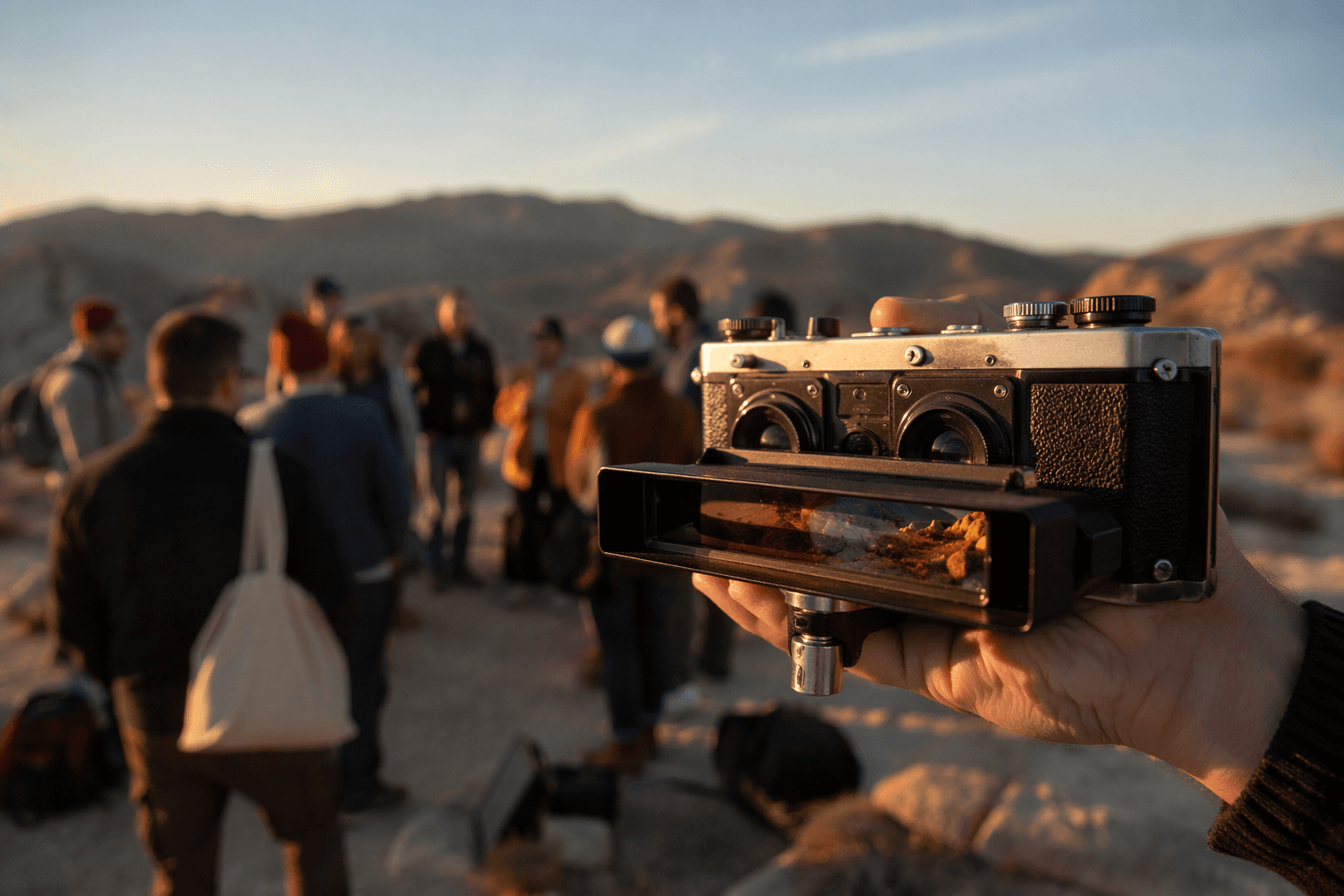
That is the appeal here: not just making a panoramic frame, but making one from a donor camera that was never meant to behave this way. The result is part repair job, part engineering exercise, and part playful refusal to pay collector-market money for a cult object.
How a stereo camera becomes a panorama body
The donor camera is a FED Stereo, a Soviet 35mm stereoscopic body introduced in 1988 and produced until about 1996 in Kharkov, Ukraine. In its normal form, it was built to record stereo pairs, and manuals list variants including the FED-stereo M and the FED B-O-Y stereo. That stereo layout matters because it leaves a central blank space between the twin image areas, and in this build that dead zone becomes usable real estate.
According to the maker behind the Reddit post, the camera’s roughly 47mm of unused middle space can be repurposed into a much wider film gate. By cutting the gate and double-stroking the film advance, the conversion pushes the frame width to about 93mm. In the standard FED Stereo setup, a 36-exposure roll yields about 21 stereo pairs, so this transformation changes not only the image shape but the entire rhythm of shooting.
Why the XPan comparison matters
The obvious benchmark is the Hasselblad XPan, and the comparison explains why this DIY camera has attracted so much attention. Hasselblad says the XPan was the first dual-format 35mm camera on the market to expand the format instead of masking it, and its panoramic mode used the full 24x65mm frame on 35mm film. Introduced in 1998 through the Hasselblad and Fujifilm collaboration, and sold in Japan as the Fujifilm TX-1, it became a cult object because it delivered genuine panoramic negatives rather than a cropped imitation.
That history gives the FED conversion its emotional charge. The XPan weighed 950 grams and used two CRV2 3V batteries, which only reinforces how much design and convenience went into the original. The DIY build is chasing the same spacious negative, but it is doing so with a donor camera and handwork instead of a premium commercial platform.
The 93mm claim also pushes beyond the familiar XPan frame and even beyond some 85mm-wide camera concepts. That extra width is not just a spec-sheet flex. It changes composition, negative real estate, and the sense of scale in the final image.
The lens and focusing workflow
The lens choice is as important as the body conversion. The build uses a Schneider Super-Angulon 47mm f/5.6 on a leaf-shuttered medium-format setup with a helicoid, and that is exactly the kind of optic that can support an extreme panorama. Schneider announced the Super-Angulon 47mm f/5.6 at Photokina in 1966, and published lens data describe it as an eight-element, four-group design with about 105 degrees of coverage.
That coverage is why this lens keeps turning up in DIY panoramic and large-format projects. It gives the image circle and angle of view needed to stretch a frame wide without immediately collapsing into useless corners. The photographer also relied on zone focusing, which is a practical answer to the realities of a hacked camera body that is being asked to behave like a specialist tool.
That practical compromise is part of the charm. The camera is not pretending to be a polished factory XPan replacement, and it is not trying to produce clinical perfection. It is trying to make the mechanics simple enough that the shooter can actually use the thing once it is built.
What you gain, and what you give up
The most tangible tradeoff is film economy. At about 93mm wide, the camera yields roughly 15 frames per roll of 35mm film, which is a very different pace from ordinary 35mm shooting. Film cost already forces a slower style, and this build pushes that slowdown further, making each frame feel more deliberate before the shutter even opens.
That restraint is not a flaw here. It is part of the attraction, because the whole project is built around the idea that a distinctive image can be worth more than a high frame count. The wider gate, the manual advance workflow, and the use of a broken donor camera all encourage a different relationship to the roll, one that values experimentation and imperfection over convenience.
For photographers who like the look of panoramic film but do not want to enter the XPan market, this is a genuine alternative path. It is not easier, and it is certainly not more predictable, but it gives you something the commercial route cannot: a camera with a story baked into every frame.
A niche that is still moving
This project also sits inside a broader panoramic revival that is still very alive. In 2024, Jeff Bridges and Silvergrain Classics announced a new Widelux project, a reminder that film panorama is not a museum category. Makers are still building, reviving, and reimagining the format rather than simply preserving it.
That is why the broken FED Stereo matters beyond the novelty of one Reddit build. It shows how hobbyists keep finding ways to turn discarded gear into something more personal, more extreme, and often more fun than the polished version on the shelf. If the XPan made panoramic film feel luxurious, the hacked FED makes it feel playable again, and that may be the more exciting trick.
This article was produced by Prism’s automated news system from verified source data, official records, and press releases, then run through automated quality and moderation checks before publishing. The system is built and supervised by the people who set the standards it runs under. Read our full AI policy.
Did this article answer your question?