DPReview readers showcase weather’s many moods in striking photos
DPReview’s reader gallery turns storms, fog, snow, and harsh sun into a field guide for exposing weather, staying safe, and finding mood.
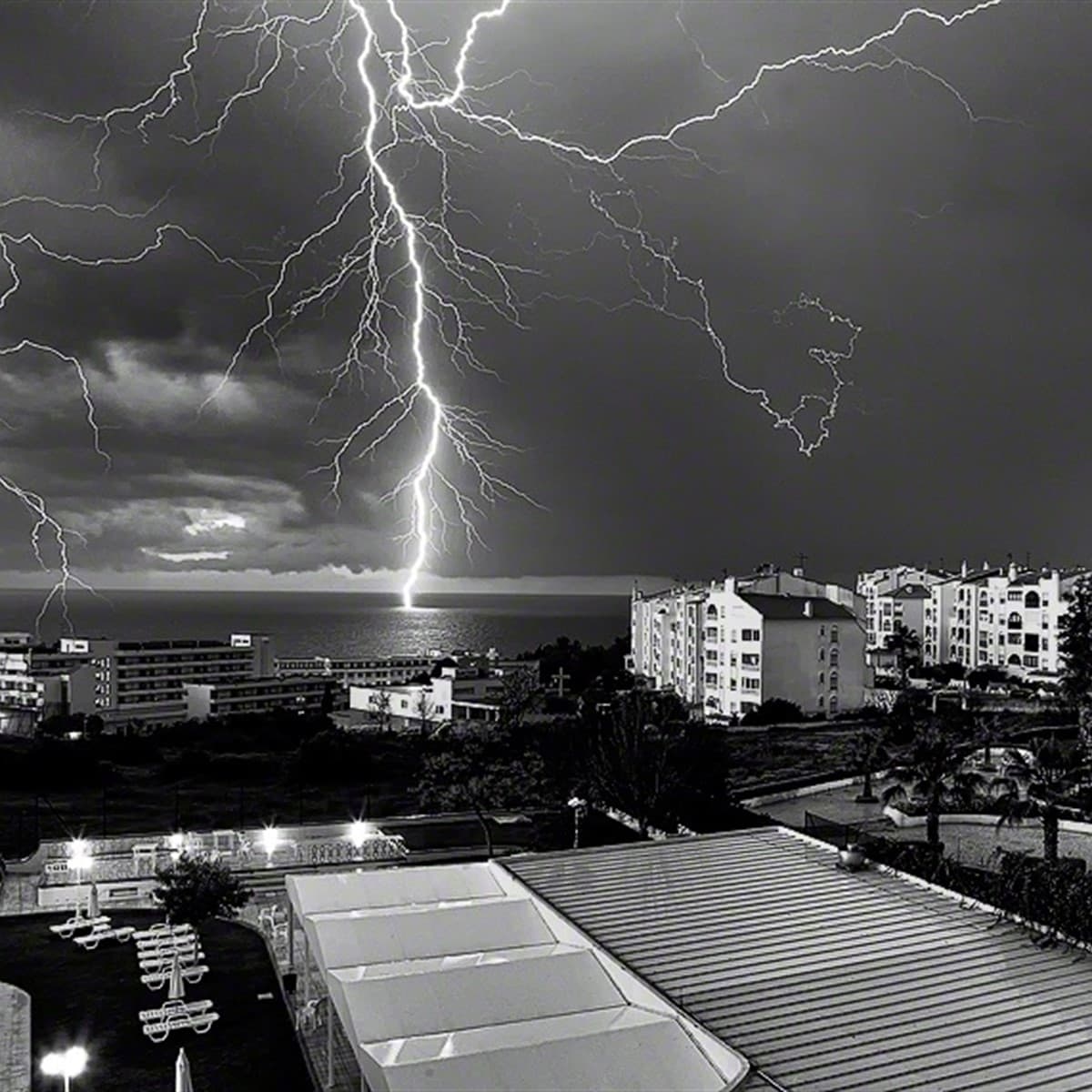
Weather is one of photography’s most persuasive subjects because it changes the rules in real time. DPReview’s reader gallery shows that clearly: the prompt pulled in everything from stormy seas to forest hillsides and sunlit vistas, and the best frames treat weather as both subject and atmosphere. The lesson is simple and useful: the sky is never just background, and the mood it sets can decide the whole picture.
Storms: when the scene demands restraint
The strongest storm images usually work because they balance spectacle with discipline. DPReview’s forum prompt explicitly invited everything from a “nasty tornado” to a beautiful snowfall along a mountainside, and that range matters because it shows how storm photography is not only about peak drama. A thunderhead over open water, a distant funnel, or waves driven sideways by wind can all create forceful images, but the photographer still has to keep exposure and position under control while the weather is changing fast.
That is where storm shooting becomes a real field skill. Dark clouds can trick metering into underexposure if the camera tries to average too much shadow, while bright breaks in the sky can blow out quickly and flatten the scene. The most useful storm frames often hold a clear anchor, such as a shoreline, sea wall, or horizon line, so the energy of the weather has something to push against.
Safety belongs in the frame too, even when it is not visible. The National Oceanic and Atmospheric Administration says lightning kills 20 to 30 people on average each year in the United States and injures hundreds more, and the Centers for Disease Control and Prevention advises people to go indoors if they hear thunder or see lightning. That makes storm photography less about getting close and more about knowing when to stop, which is why many of the best storm pictures are made from a safe, planned distance rather than in the middle of the action.
Fog: the quiet weather that edits the scene for you
Fog is the opposite of a thunderstorm in volume, but not in impact. It removes distractions, compresses depth, and turns a familiar place into something strange enough to notice again. In the DPReview gallery, the mix of weather conditions included mist and soft cloud cover, and that is where weather photography often gets most revealing, because the light becomes gentle while the scene becomes more graphic.
Fog rewards patience more than drama. A hillside, path, or line of trees can look ordinary until the haze wraps around it, then all the color and texture that matter move into a narrow band of attention. Exposure tends to work best when the photographer protects the highlights and lets the midtones stay soft, because fog is about subtle separation rather than hard contrast.
There is also a storytelling advantage here. Fog suggests arrival, retreat, mystery, or quiet, and it can do that without any obvious event in the frame. That is why weather photography does not need visible violence to feel powerful: a forest hillside disappearing into mist can carry just as much atmosphere as a storm line, only in a lower register.
Snow: structure, silence, and the value of timing
Snow is one of the most forgiving weather subjects emotionally and one of the trickiest technically. DPReview’s prompt singled out “a beautiful snowfall along a mountainside,” and that combination hints at why snow works so well in photographs: it simplifies the scene while also sharpening its structure. Branches, roofs, ridgelines, and footprints become stronger graphic elements when surrounded by white.

Exposure in snow is all about resisting the camera’s instinct to dull everything down. Fresh snow can fool metering into rendering the frame gray, so the photographer has to think about brightness as part of the subject, not a problem to be corrected away. The best snow pictures usually preserve a clean sense of whiteness without losing texture in the bright areas, especially when the light is soft and the sky is overcast.
Timing matters just as much as technique. Falling snow can hide detail and create motion, while settled snow gives crisp edges and calm surfaces, so the mood changes from minute to minute. That is what makes snow such a rich weather condition to shoot: it can feel active, quiet, and sculptural all at once.
Harsh sun: when weather becomes a compositional problem
Sunny weather often gets treated as the easy option, but the DPReview gallery’s range of sunlit vistas shows how harsh light can be its own creative challenge. Bright conditions push contrast hard, and that means shadows deepen fast while highlights can wash out if the scene is not handled carefully. In that sense, harsh sun teaches restraint in a way that storm clouds do not: the photographer has to work with shape, timing, and angle instead of leaning on drama.
This is where weather becomes a compositional tool. Sunlit vistas reward clean lines, strong silhouettes, and careful placement of the brightest area in the frame, because the light itself is part of the subject. A scene that might look flat in overcast conditions can become vivid once hard light carves out ridges, treetops, or cloud edges.
The broader lesson is that weather photography is not limited to visibly severe conditions. Calm light can still tell a story about heat, clarity, or distance, and that is one reason the reader submissions felt broader than expected. The gallery did not just celebrate disasters; it showed how ordinary sunlight can change the emotional register of a landscape just as completely as a storm front can.
The community lesson behind the slideshow
DPReview selected 15 memorable photographs for the slideshow and then sent readers back to the forums for more. That makes the piece feel less like a finished showcase and more like an invitation to keep looking, which is exactly how weather photography grows as a practice. The forum prompt turned into a shared classroom where readers compared their favorite conditions, their favorite moods, and the moments when the sky did the heavy lifting.
That community angle also echoes a larger competitive frame. The Royal Meteorological Society’s Weather Photographer of the Year competition presents itself as an international platform that showcases weather’s beauty and power while raising awareness of environmental issues. Its 2026 rules make the contest free to enter, open to individuals of all abilities, and limited to five images per category, with separate prizes of £1,500 for Weather Photographer of the Year, £500 for Mobile Weather Photographer of the Year, and £500 for the Climate Award.
Put together, those examples show why weather images travel so well beyond hobby circles. They can be art, observation, and environmental communication at the same time, whether the frame is built around a tornado, a fogbank, or a bright mountainside after snowfall. DPReview’s gallery lands on the same truth from a more intimate angle: weather is never just what is happening outside. It is the force that turns the ordinary scene in front of you into something worth holding still for.
This article was produced by Prism’s automated news system from verified source data, official records, and press releases, then run through automated quality and moderation checks before publishing. The system is built and supervised by the people who set the standards it runs under. Read our full AI policy.
Did this article answer your question?