DPReview spotlights LK Samyang's compact 14-24mm lens for real-world shooting
This 14-24mm f/2.8 solves a real ultrawide problem for L-mount shooters: it stays compact, takes 77mm front filters, and still looks ready for travel, interiors, and astro.
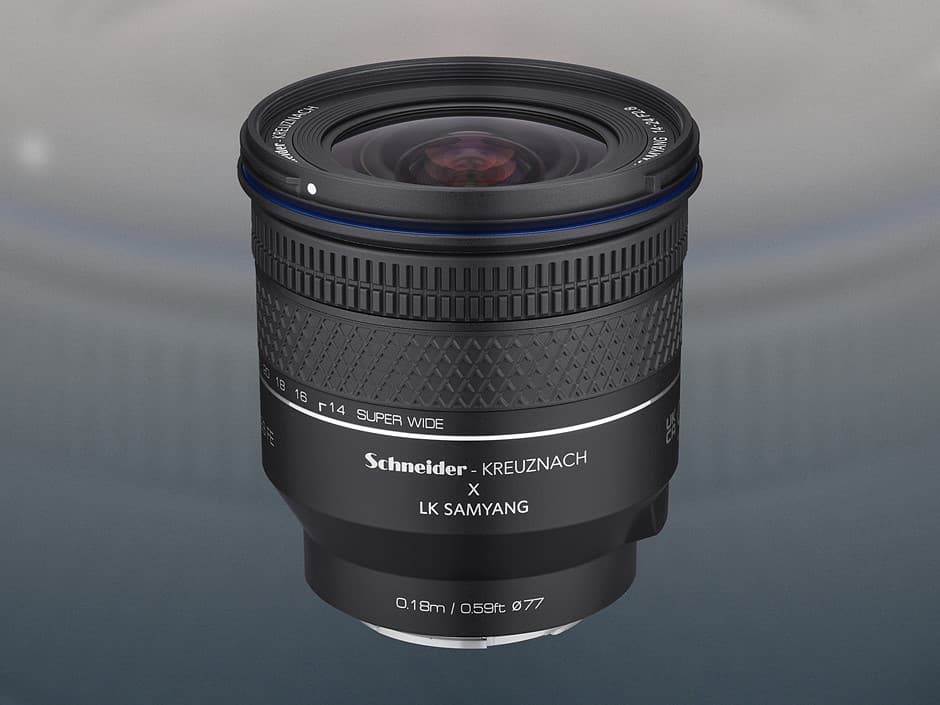
LK Samyang’s AF 14-24mm f/2.8 is trying to win over L-mount shooters by solving a problem, not just chasing a spec sheet. DPReview’s sample gallery makes that clear: this is a fast ultrawide that stays small enough to carry all day, accepts standard 77mm front filters, and avoids the usual bulbous-front-lens compromises that make many 14-24mm zooms awkward in the field.
Why this lens stands out in the L-mount lineup
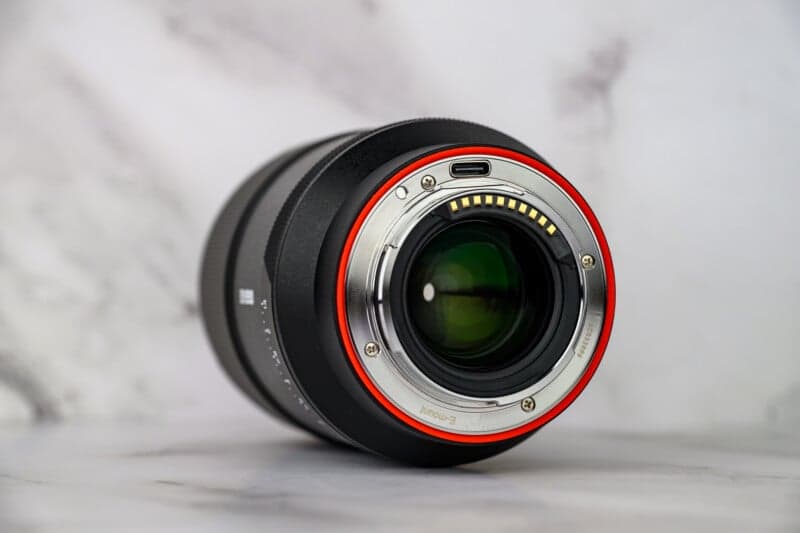
The core appeal is practical. DPReview notes the L-mount version at 87mm long and 441g, while LK Samyang’s own product pages put the FE version at about 88.8mm and 445g. That puts the lens in the compact class for a constant-f/2.8 full-frame ultrawide, and it is dramatically easier to travel with than the larger Sigma 14-24mm f/2.8 used as the comparison point in the gallery.
That size matters because ultrawides are often the lens you grab for long days, not just quick test shots. If you hike to a landscape, shoot a city break, or spend hours on location inside a building, every gram starts to matter. This is where the Samyang lens makes its case: it promises serious coverage without feeling like you packed a brick.
The filter advantage is the real buying trigger
The biggest differentiator is the front element design. LK Samyang says the AF 14-24mm f/2.8 FE is the world’s first ultra-wide zoom lens that allows front filters, and DPReview confirms the L-mount version takes 77mm front filters. That is a major deal for landscape and travel photographers who already own ND and polarizing filters and do not want to switch to special rear gels or awkward adapter systems.
For architecture, the filter compatibility is just as useful. Neutral-density work helps with controlled shutter speeds around people or traffic, while polarizers can cut glare and deepen reflections on glass, water, and polished surfaces. In practice, the lens is not only about going wide enough, it is about staying usable when the scene calls for filtration.
Who actually benefits from it
This lens is best suited to photographers who need an ultrawide that can stay on the camera without getting in the way. That includes landscape shooters who want to pack light, travel photographers who need one lens to cover interiors and city scenes, and architectural shooters who care about straight lines, perspective control, and filter use.
It also makes sense for astro and nightscape work, which LK Samyang explicitly targets. A fast f/2.8 aperture across the zoom range is useful when the light drops and you need to keep shutter speeds sensible without pushing ISO too far. For hobbyists, the appeal is straightforward: one lens can cover dramatic foreground landscapes, cramped rooms, downtown facades, and starscapes without demanding a huge shoulder bag.
Real-world handling, not just numbers
DPReview’s gallery notes point to handling details that matter after the unboxing glow fades. The zoom and focus rings have good texture, the manual-focus throw is short and manageable, and the control layout stays simple with an AF/MF switch and a single customizable function button. Those are small things on paper, but they are the details that make a lens easy to live with on a trip or in a fast-moving shoot.
That simplicity also fits the kind of lens this is. A compact ultrawide is often carried as a general field tool, not as a specialty optic that only comes out for one planned shot. Good ring feel, a sensible focus throw, and uncomplicated controls all support that use case.
Why the sample gallery matters
DPReview framed its coverage around images from actual shooting rather than lab-style testing, and that approach suits this lens. The point is not simply whether the glass is sharp on a chart, but how it renders in the conditions people actually buy an ultrawide for: landscapes, interiors, travel scenes, and night work.
That is where third-party lens makers are competing harder now. Price still matters, but so do weight, filter support, and whether the lens is pleasant to carry when the day runs long. The LK Samyang pitch is that you should not have to choose between a serious wide-angle zoom and a lens you will actually want to bring along.
The Schneider-Kreuznach partnership adds context
The lens also matters because it is part of LK Samyang’s collaboration with Schneider-Kreuznach. LK Samyang first launched the AF 14-24mm f/2.8 FE on April 22, 2025, describing it as its first super-wide zoom lens developed with Schneider-Kreuznach. Schneider-Kreuznach says LK Samyang handles product development, manufacturing, quality assurance, marketing, sales, and customer service, while Schneider-Kreuznach contributes optical design reviews, metrological analyses, product fine-tuning, and testing.
That division helps explain the positioning. LK Samyang is not just selling another ultrawide under a familiar badge, but building a product line that leans on optics credibility and a more practical shooting experience. The L-mount expansion, announced on April 30, 2026, was described as the first product in LK Samyang’s first compact zoom series to reach L-mount.
A broader compact-zoom strategy is taking shape
The 14-24mm is not being treated as a one-off. LK Samyang has paired it with the AF 24-60mm f/2.8 FE, and it has already signaled an AF 60-180mm f/2.8 FE to come. That matters because it shows a clear system play: compact, constant-aperture zooms that are easier to carry than many competing alternatives.
For L-mount users, that is especially relevant because the ecosystem already offers plenty of capable glass, but not always in the smallest possible package. A compact 14-24mm f/2.8 fills a gap for shooters who want a wide lens that does not force them into bulkier gear choices, and the filter-friendly design makes it even more distinct.
The result is a lens that answers a very specific question in the L-mount ecosystem: what if your ultrawide could be fast, travel-friendly, and ready for real filters without turning into a burden? DPReview’s sample gallery suggests that this is not just a neat idea on a spec sheet. It is the kind of lens that solves an actual kit problem the moment you put it in a bag and take it outside.
This article was produced by Prism’s automated news system from verified source data, official records, and press releases, then run through automated quality and moderation checks before publishing. The system is built and supervised by the people who set the standards it runs under. Read our full AI policy.
Did this article answer your question?