French Photographer Documents Mérida Elders in Two-Year Portrait Project
Bénédicte Desrus spent two years photographing Mérida's elderly downtown residents; the street-mounted portraits debuted on Paseo de Montejo at FILEY 2026.
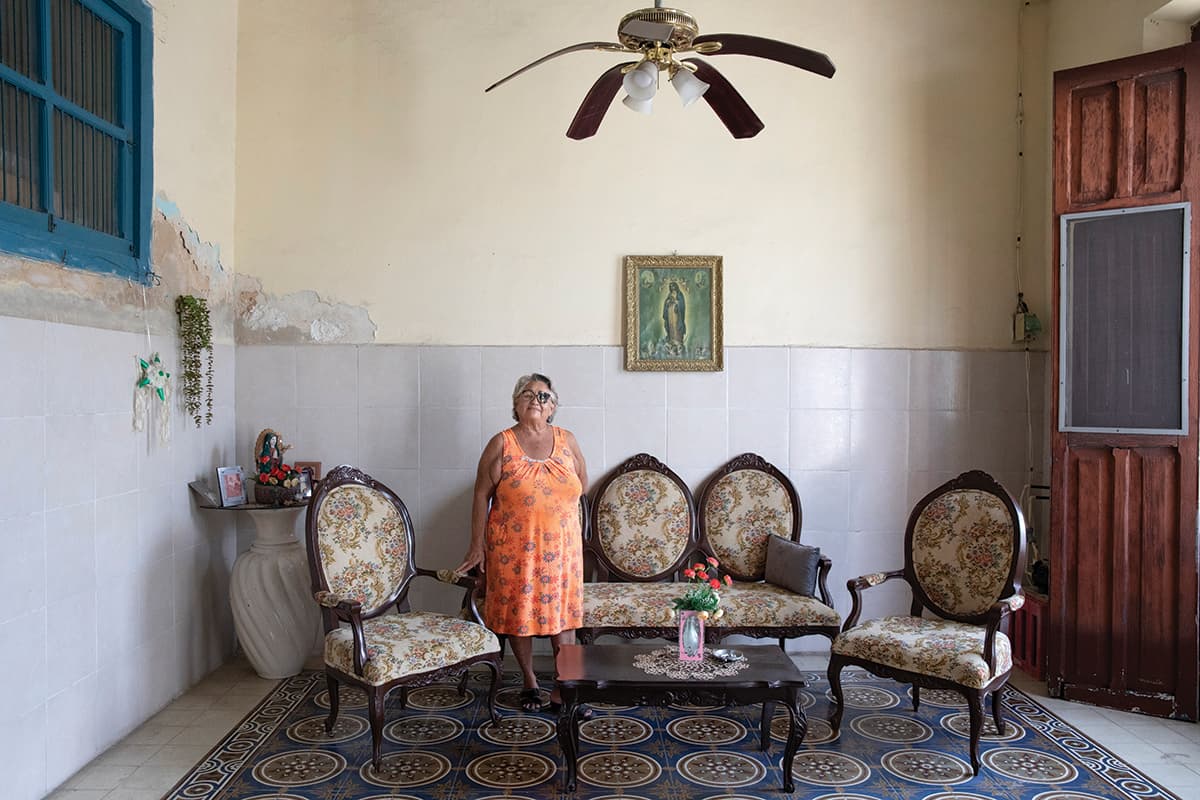
Arraigo, Bénédicte Desrus's two-year portrait and oral-history project documenting elder residents of Mérida's historic downtown, opened as a street-mounted exhibition on Paseo de Montejo and at Palacio Cantón on Tuesday, March 10, as part of FILEY 2026, the 14th annual Feria Internacional de la Lectura Yucatán.
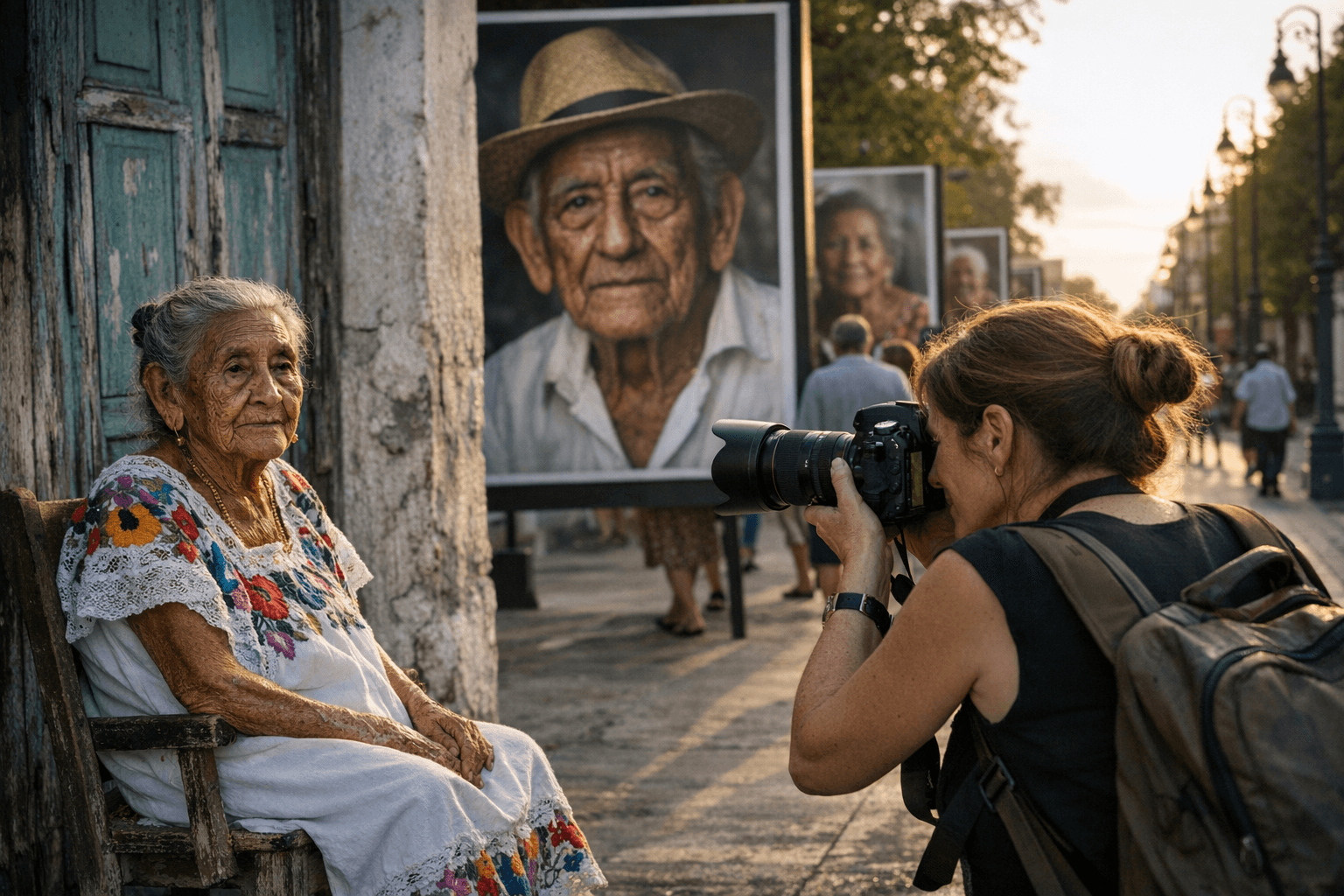
The inauguration began at 8 a.m., bringing Desrus's large-format portraits of longtime Mérida residents into one of the city's most prominent public corridors. The project title, Arraigo, translates roughly from Spanish as rootedness or anchoring, and the choice to mount the work outdoors rather than inside a gallery puts those faces directly in the neighborhood they have inhabited for decades.
Desrus, a French documentary photographer who has spent over two decades covering marginalized communities internationally, started the Arraigo project specifically to record the lives of elders in Mérida's historic center. Her approach is deliberately unmediated. "I don't balance, it's documentary photography meaning I capture what's there and as it is," she said. "I feel these photographs are accessible to national and international viewers because we can all relate to belonging to some place."
That philosophy runs through her broader career. Originally trained in visual arts and typography, she shifted to photography in 2005 with a project on street children in Lima, Peru. Since then, her work has taken her from elderly sex workers in Mexico City to persecuted minorities in Uganda and Tanzania. Her images are distributed by Sipa Press USA and have appeared in The New York Times, National Geographic, Time, and Al Jazeera.
Arraigo is also taking shape as a photobook. A preview appears in Issue 16 of Yucatán Magazine's quarterly print publication, alongside an interview with Desrus conducted by the magazine's editorial director, Lee Steele. The project received institutional support from the Ayuntamiento de Mérida, Fábrica de Mosaicos La Peninsular, Fundación Roberto Abraham A.C., Universidad Marista de Mérida A.C., Universidad Modelo, and Yucatán Magazine itself.
Placing a photobook project within FILEY, a literary fair now in its 14th year, underscores how documentary photography and oral history increasingly occupy the same cultural space as written literature. For Desrus, whose work has now appeared locally across subjects ranging from Yucatecan environmentalists to rock musicians, Arraigo represents the deepest sustained engagement yet with Mérida and the people who have defined its oldest streets.
This article was produced by Prism’s automated news system from verified source data, official records, and press releases, then run through automated quality and moderation checks before publishing. The system is built and supervised by the people who set the standards it runs under. Read our full AI policy.
Did this article answer your question?