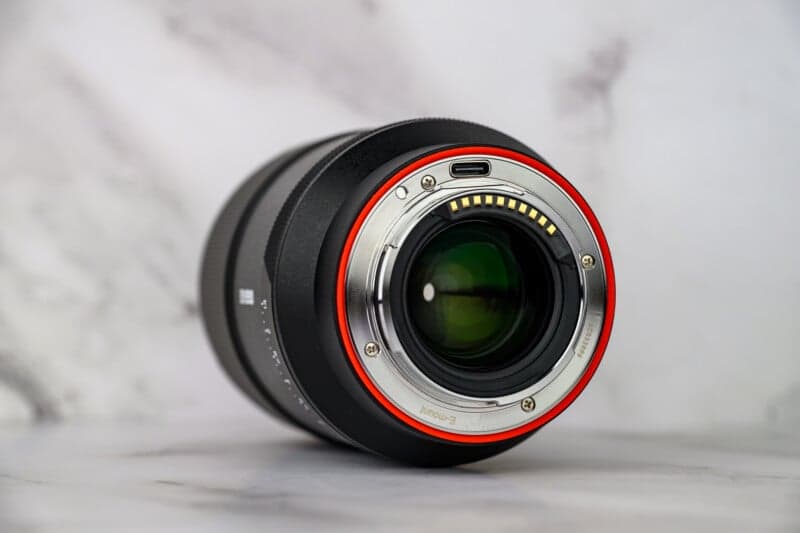
Fstoppers tests seven 85mm lenses, reveals sharpness is closer than expected
The sharpness gap at 85mm is smaller than it looks, so the real decision comes down to autofocus, rendering, weight, price, and system fit.

Sharpness alone will not settle the 85mm debate, and Christopher Frost’s seven-lens test makes that plain. When every lens is pushed to maximum aperture and judged on center and corner performance, the differences are real, but far smaller than the internet’s obsession with “the sharpest” portrait prime would suggest.
What the test actually measures
Frost’s approach matters because it rewards the conditions portrait shooters actually use. He tests each lens wide open, scores center and corner sharpness out of 10, and gives wider maximum apertures more weight because they are harder to engineer well. That means a lens that looks merely good on a spec sheet can still separate itself where it counts: at f/1.2 or f/1.4, when depth of field is thin and focus accuracy is unforgiving.
That framing is why this comparison works as a buying guide instead of a chart-chasing exercise. At 85mm, the question is not just which lens resolves the finest eyelashes in a lab. It is which lens gives you confidence in autofocus, enough subject isolation, the rendering you want on skin, and a package you can actually afford to carry.
The premium end still wins on character, not just resolution
Canon’s RF 85mm f/1.2L USM remains the overall winner in Frost’s view, which is no surprise once you look at the full portrait formula. Canon also gives the RF 85mm F1.2L USM DS a shout-out for its bokeh quality, and that lens was introduced on October 24, 2019 as the first RF lens to feature Defocus Smoothing. Canon’s goal there was obvious: smooth the out-of-focus highlights that make weddings, fashion, and portrait work look polished rather than clinical.
Nikon’s NIKKOR Z 85mm f/1.2 S sits in the same elite conversation, but for a different kind of buyer. Nikon announced it on February 7, 2023 and positioned it for portrait, wedding, and fashion work, emphasizing skin and hair rendering, large soft bokeh, and fast, quiet autofocus. At a launch price of $2,799.95, it is not a casual purchase, but it is aimed squarely at photographers who want both glamour and reliability from a flagship portrait prime.
Sony’s FE 85mm f/1.4 GM II shows how much a redesign can matter even when the optical recipe is already strong. Sony announced it on August 29, 2024 and said it is 20% lighter than the original and about 13% smaller in volume, which makes a big difference in day-long portrait sessions and event work. Frost describes it as extremely sharp even wide open on a high-resolution body, and the size reduction turns it into a lens that is easier to choose for real jobs, not just impressive to admire in a review.
Then there is the ZEISS Otus 85mm f/1.4 Apo-Planar, the reminder that some photographers still value rendering and build over autofocus convenience. ZEISS introduced it in 2014, aimed it at high-resolution DSLRs, and launched it at $4,490 for Canon EF and Nikon F users who wanted a manual-focus optic with a serious reputation. It is not the practical answer for most working portrait shooters today, but it still has a place when image character matters more than tracking a moving subject.
The value plays are more serious than they look
The surprise of the test is how close the cheaper lenses get to the flagships. Viltrox’s AF 85mm F1.4 Pro FE, listed at $598, uses a 15/11 optical design, weather sealing, and autofocus tuned for both photos and video. Frost says it even outperforms some of Nikon and Canon’s best glass in center sharpness, which is exactly the sort of result that changes how people spend their money.
Sigma’s 85mm F1.4 DG DN | Art is another lens that makes the premium-tier conversation more complicated. Sigma announced it on August 6, 2020 with an MSRP of $1,199, calling it a completely new mirrorless design for L-Mount and Sony E-Mount with dust- and splash-proof construction and edge-to-edge sharpness. Frost’s read on it is equally strong: near-perfect sharpness, smooth bokeh, solid autofocus, and a price he sees as reasonable at around $1,300.

Canon’s RF 85mm F2 Macro IS STM lives in a different lane, but it belongs in the discussion because it solves a different portrait problem. Canon lists it at $589.99 in the U.S. store, and it offers 0.5x maximum magnification plus hybrid image stabilization rated up to 5 stops. That makes it the lens for shooters who want one portrait prime that can also handle detail work, close-up storytelling, and less-than-perfect handheld conditions.
How the tradeoffs shake out in the real world
The practical split is clearer than any “winner” headline suggests:
- If you want the most complete flagship portrait look, the Canon RF 85mm f/1.2L USM is the one Frost puts on top.
- If bokeh polish is part of the assignment, the Canon RF 85mm F1.2L USM DS adds a more deliberate rendering signature.
- If you want flagship speed with skin and hair rendering for weddings and fashion, the Nikon Z 85mm f/1.2 S is built for that brief.
- If weight, size, and high-end sharpness need to coexist, the Sony FE 85mm f/1.4 GM II looks like the most practical Sony portrait prime yet.
- If you want high performance without flagship pricing, Sigma’s 85mm F1.4 DG DN | Art and Viltrox’s AF 85mm F1.4 Pro FE both push hard into the value lane.
- If you want close-focus versatility and stabilization at a much lower price, the Canon RF 85mm F2 Macro IS STM is the lens that bends the portrait formula.
What Frost’s comparison really proves is that the 85mm fight is no longer about a single universal winner. The sharpest lens is only the right lens if it fits your camera system, your autofocus demands, your budget, and the way you want skin, background blur, and subject separation to feel in the final image.
That is the real takeaway from the test: the sharpness race is closer than expected, and once you are working at 85mm, the best choice is the lens that solves your portrait problem without creating a new one.
This article was produced by Prism’s automated news system from verified source data, official records, and press releases, then run through automated quality and moderation checks before publishing. The system is built and supervised by the people who set the standards it runs under. Read our full AI policy.
Did this article answer your question?