Hand-painted Gundam film camera blends analog photography and model culture
A hand-painted Gundam film camera turns a simple 35mm point-and-shoot into a collectible object with real hobby-world pull.
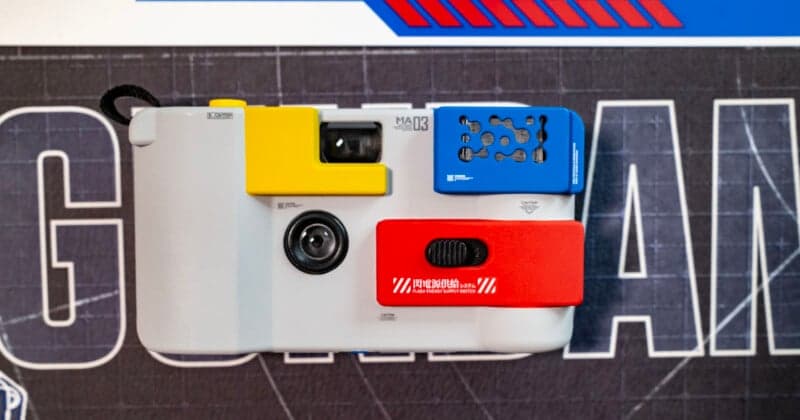
When a film camera becomes a display piece
A Gundam-themed camera like this works because it lands in two hobby languages at once: analog photography and model culture. Instead of treating a reusable 35mm camera as a purely practical object, David C W’s hand-painted version turns it into something you want to shoot with, and then put on a shelf.
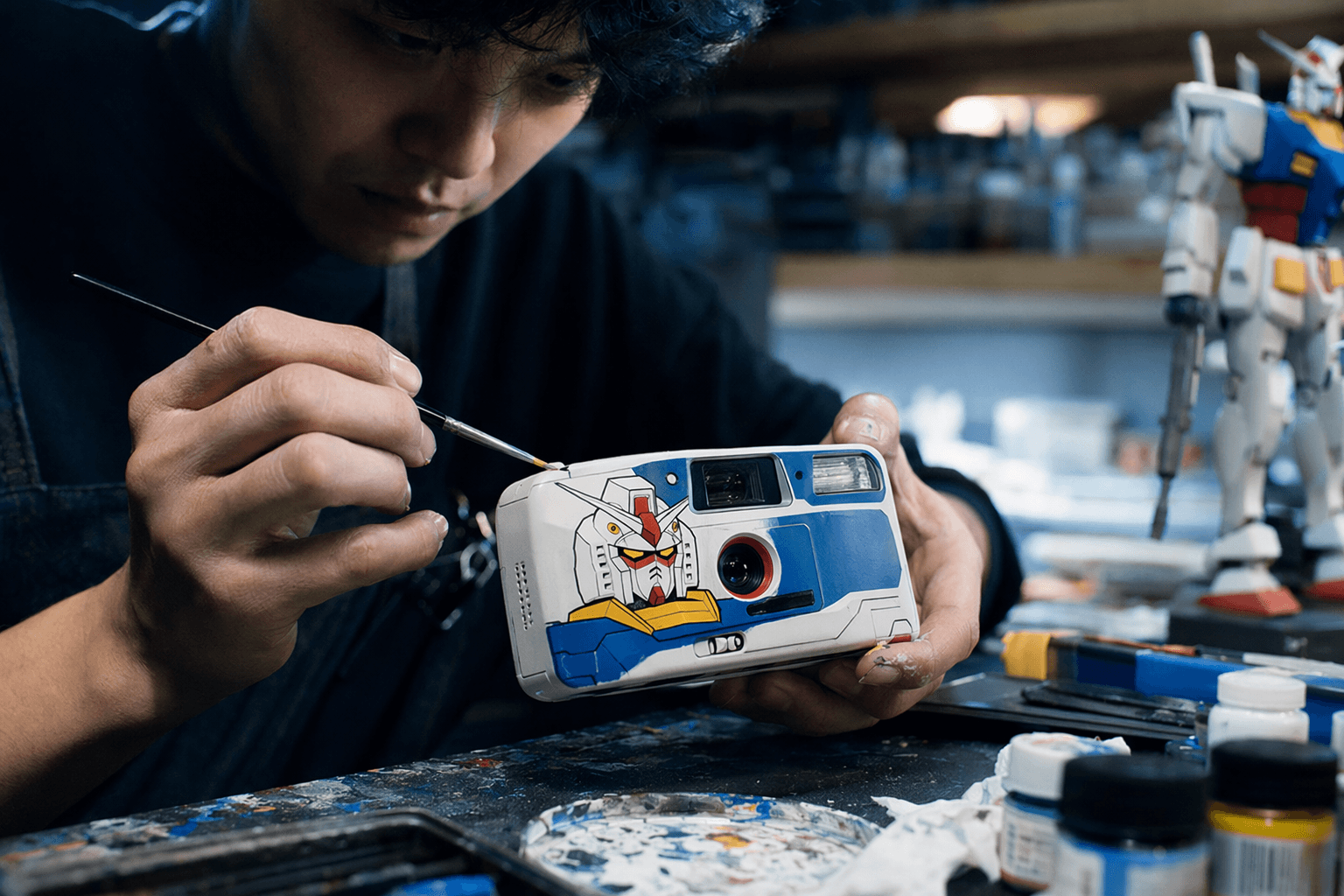
That overlap is the real story here. The camera is not trying to imitate a professional body or chase specs. It embraces the kind of small, tactile gear that film fans already love for its personality, and then layers on the visual codes of Gundam, one of Japan’s most recognizable pop culture franchises.
Why Gundam’s look translates so well
Gundam is built on a design vocabulary that collectors recognize instantly. The franchise began with the Mobile Suit Gundam TV series, which premiered in Japan on April 7, 1979 and ran 43 episodes. The RX-78-2 Gundam also arrived that same year, giving the series a flagship silhouette that has stayed central to the brand ever since.
The appeal goes beyond mechs. Gundam’s red, blue, yellow, and gray color palette, along with its decals and model-kit aesthetic, has become a shorthand for a whole kind of fandom. Bandai first released Gunpla plastic model kits in 1980, and that model-building culture has since become a huge part of how fans interact with the franchise.
That matters for this camera because the design is not just “anime-inspired.” It is tapping into an entire hobby tradition where color blocking, stickers, paint finish, and shelf presence are part of the object’s value.
The camera underneath the paint
The platform behind the project is the To Be Continued, a transparent reusable 35mm film camera originally designed by Joshua Cirjak, Shraeyas Massey, and Ferj David. PetaPixel described it as a simple point-and-shoot with a fixed 28mm f/8 lens, fixed shutter speed, fixed focus, and a built-in flash.
That hardware choice is important. A camera with fixed settings and a straightforward shooting experience gives the maker more room to treat the exterior as a canvas. It is practical in the most analog sense: load the film, point, shoot, and let the design carry part of the fun.
Because the base camera is already intentionally uncomplicated, it makes sense as a custom object. The body is not competing with advanced controls, and that leaves the visual treatment free to do the heavy lifting.
David C W’s hand-painted approach
The Gundam version comes from David C W in Taiwan, who works under the name Little Road Camera. Designboom identifies the project as his and links it to the Instagram handle @davidlittleroad, which fits the maker-driven, small-batch energy behind the piece.
What makes the camera stand out is the combination of hand-painted surfaces and water-transfer decals. Those details give the body a Gundam-style paint scheme while also making each unit feel slightly individual, even when the design language stays consistent. It is the kind of object that looks engineered for a collection case as much as for a camera bag.
That distinction is part of the appeal. In an era when a lot of photography gear is designed to disappear into the background, this camera insists on being seen. It does not hide its fandom. It wears it.
Why collectors respond to this kind of camera
The popularity of a piece like this says a lot about where film culture sits right now. People still care about image quality and shooting experience, but they also care about the emotional life of the object itself. A reusable film camera can be a tool, a toy, a tribute, and a display item all at once.
That is especially true in communities where photography and collecting already overlap. The same person who appreciates the mechanical charm of a 35mm point-and-shoot may also care about finishes, colorways, limited runs, and shelf appeal. This is where analog gear starts to resemble a model kit or a designer figure more than a disposable utility item.
The Gundam camera fits that world cleanly. It offers an entry point for photographers who understand film, and a visual reference point for fans who understand why a painted panel line or a decal placement can matter.
Bandai’s numbers show how deep the hobby runs
The scale of Gundam’s model culture helps explain why this crossover feels so natural. Bandai says Gundam plastic models have sold more than 810.72 million units domestically from 1980 through March 2025. That is not just a fandom marker, it is proof that the franchise’s design language has been absorbed into everyday hobby life for decades.
Bandai has also kept pushing the hobby into new territory. In April 2021, the company launched the Gunpla Recycling Project with four Bandai Namco Group companies, collecting model-kit runners as part of a recycling-oriented effort. That is a good reminder that the Gundam ecosystem is now about more than assembling kits and displaying finished builds. It also includes sustainability, material reuse, and the broader life cycle of hobby objects.
Taken together, those details show why a Gundam-themed camera resonates so strongly. It is not borrowing a random pop culture skin. It is entering a mature collector culture with established visual codes, manufacturing traditions, and a deep sense of what makes an object worth keeping.
The broader lesson for film photographers
The lasting appeal of this camera is that it reframes analog gear as personal property in the richest sense. It is still a functioning 35mm camera, but it is also a marker of taste, fandom, and craftsmanship. For photographers who love film, that combination is increasingly part of the draw.
This is what makes the Gundam camera more than a novelty. It sits right at the intersection of image-making and object culture, where a camera can feel as much like a curated artifact as a piece of equipment. That is the same appeal that keeps model builders, film shooters, and collectors orbiting the same shelf, and it is exactly why a hand-painted reusable camera can feel so alive before it ever sees a roll of film.
This article was produced by Prism’s automated news system from verified source data, official records, and press releases, then run through automated quality and moderation checks before publishing. The system is built and supervised by the people who set the standards it runs under. Read our full AI policy.
Did this article answer your question?