How Maddie McGarvey blended reporting and photography to tell a prison story
Maddie McGarvey turned a prison photo story into full reporting, proving that words can deepen the power, context, and ethics of a picture-led project.
When the camera alone is not enough
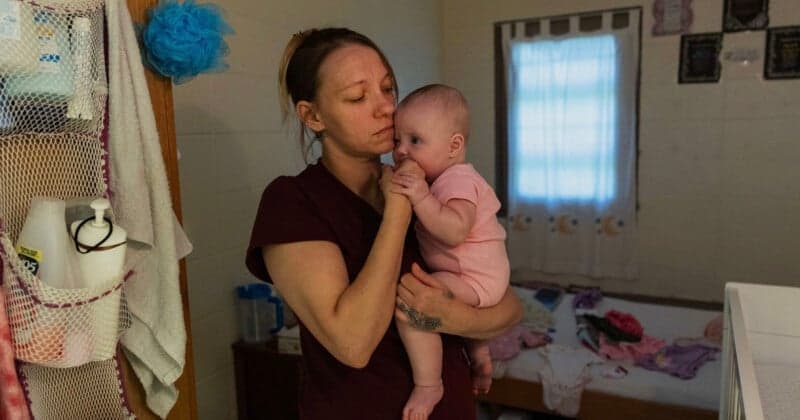
Maddie McGarvey’s prison story shows what happens when a photographer decides the assignment cannot stop at images. Instead of just shooting a feature for The Marshall Project, she pitched it, reported it, wrote it, and photographed it herself, turning one subject into a fuller piece of journalism. The result follows Heather Hornberger through pregnancy, prison motherhood, release, and her daughter Innocence’s second birthday, and it shows why some stories need both a lens and a notebook.
That shift matters because the strongest prison work is rarely built on visuals alone. McGarvey’s approach gave the story emotional continuity, factual scaffolding, and the kind of context photographs cannot carry by themselves. The images hold the reader in the lived reality of the Leath Unit at Indiana Women’s Prison, while the writing explains the legal status, the timeline, the institutional rules, and the broader stakes for mothers and babies behind bars.
Why this story needed reporting, not just coverage
Hornberger’s experience is specific and revealing. She was four months pregnant when she turned herself in in August 2023 for violating probation on a years-old drug possession charge. McGarvey first met her near the end of the pregnancy, then followed her through the birth, the day-to-day reality of prison motherhood, the eventual release, and Innocence’s second birthday. That arc is more than a sequence of pictures. It is a reporting problem, because the reader needs to understand what led there, what the prison allowed, and what happened after the cell door opened.
For photographers, that is the key lesson: when a subject’s story spans legal history, institutional policy, family life, and reentry, captions are not enough. Interviews can clarify motive and consequence. Records work can pin down dates and eligibility. Longer written context can connect a single scene to the larger system that shaped it. McGarvey’s own assessment was that combining writing and photography made the final piece feel more complete and more layered, and that is exactly what the subject demanded.
The prison unit at the center of the story
The setting is the Breann Leath Maternal Child Health Unit at Indiana Women’s Prison, a program designed to keep mothers and babies together during incarceration. The Indiana Department of Correction says the unit can hold 26 mom-baby pairs and has served more than 350 women and babies. That scale tells you this is not a symbolic pilot or an isolated exception. It is a working part of the state correctional system with enough history to matter and enough limits to force hard choices.
The unit’s timeline gives the story even more texture. It opened in 2008 as the Wee One’s Nursery, expanded in 2019, was renamed in 2020 in memory of Officer Breann Leath, and opened its first onsite pediatric clinic in 2022 in partnership with Mothers on the Rise. Those details are exactly the kind of institutional facts that photographers often skip when they are focused on visual moments, but they are also what gives a prison story durability. They tell readers whether a scene is a one-off or part of an established policy.
Eligibility is narrow. In general, the Indiana Department of Correction says an incarcerated person must be pregnant when received into custody, have an earliest possible release date of 30 months or less from the projected delivery, and meet additional health and conduct requirements. That kind of rule is essential context for any image set about prison motherhood, because it explains who is inside the frame and, just as importantly, who is excluded from the program.
What the larger data says about pregnancy behind bars
McGarvey’s story gains force because it sits inside a wider national pattern. The Bureau of Justice Statistics reported that in 2023, 88% of female admissions in reporting jurisdictions were tested for pregnancy, 2% of those tested were positive, and 328 pregnant women were in custody on December 31, 2023. Those numbers show that pregnancy in custody is not rare enough to be anecdotal, but not common enough to be broadly understood without reporting.
The Government Accountability Office adds the policy frame. It said the U.S. incarcerates women at the world’s highest rate, that women make up 15% of the local jail population and 8% to 9% of the state prison population, and that at least 23 U.S. Department of Health and Human Services grant awards were used to support maternal health care in state prisons or local jails. The GAO also found that one grant recipient supported a prison nursery where eligible incarcerated mothers could stay with their babies until release, up to 36 months. For a photographer, those facts are not background noise. They are the reason a prison mother story belongs in long form.
How to tell a story like this more completely
McGarvey’s project offers a practical blueprint for photographers who want their work to carry more weight without losing visual strength.
- Add interviews when the photograph captures an emotional truth but not the timeline behind it.
- Add captions that do more than identify subjects. Use them to explain where a scene fits in the arc of the story.
- Add longer written context when policy, medical care, or legal status changes how a reader should interpret the frame.
- Add records and institutional details when access is shaped by eligibility rules, correctional procedures, or public funding.
- Add follow-up reporting when the story includes release, reentry, or a child’s future, because the photograph often stops where the consequences do not.
That mix is especially important in prison coverage, where visual access can be limited and the ethical stakes are high. A strong image may show closeness, tenderness, or confinement, but it cannot by itself explain whether a mother’s care was supported, whether pregnancy outcomes were tracked, or whether a program exists to prevent separation. Reporting fills those gaps without weakening the photograph.
Why the prison nursery story reaches beyond one institution
The need for more complete reporting becomes even clearer when set against another Marshall Project investigation from Ohio. That reporting found that Ohio had no standards for tracking miscarriages or stillbirths in jails, and it described Linda Acoff, who was 17 weeks pregnant and later lost her pregnancy to an untreated infection after being given only pads and Tylenol despite pain and bleeding. The story also showed how the state discussion was tabled, leaving the outcome uncounted.
That background is why McGarvey’s Indiana story resonates beyond one mother and one nursery. It is about trauma prevention, maternal health, recordkeeping, and accountability, all wrapped inside a photograph-driven assignment that needed more than visual observation to land fully. The images bring readers into the room, but the reporting tells them what the room means.
A wider career pattern, not a one-off pivot
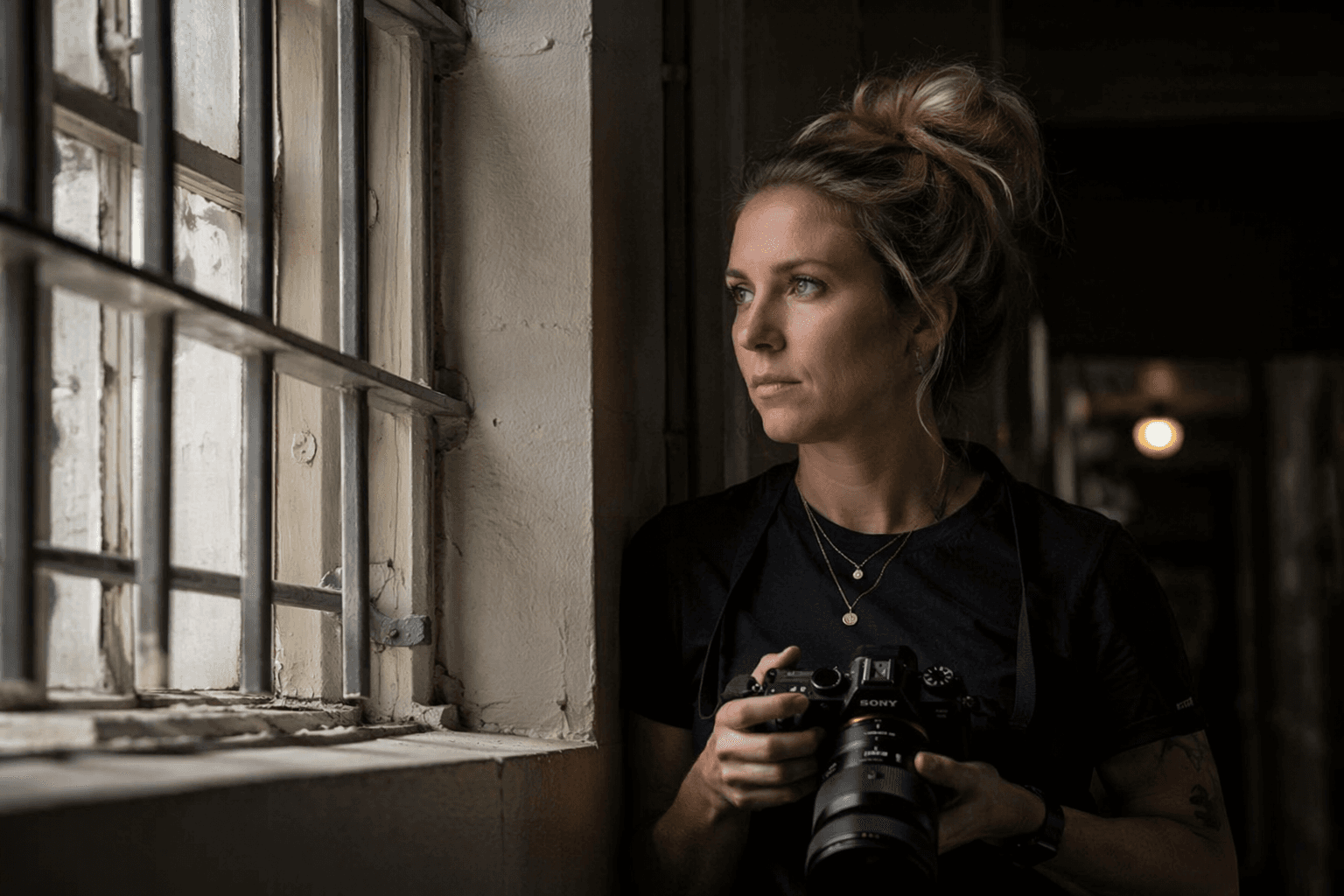
McGarvey’s move into writing did not come from nowhere. She has bylines on major outlets, has had work recognized by TIME and The New York Times, and previously won a Pictures of the Year award for a long-running documentary project. She is a Midwest-based documentary photographer in Columbus, Ohio, and a 2012 Ohio University graduate. Her career also includes a Trump rally photograph published on the front page of The New York Times and later included in TIME’s Top 100 Photos of 2023, plus a third-place finish in the Portrait category for Girl Power in the 76th annual Pictures of the Year competition.
That résumé matters because it shows the writing pivot is not a retreat from photography. It is an expansion of what documentary work can carry. McGarvey’s prison story is a reminder that the most powerful visual journalism often needs interviews, records, and narrative spine to reach its full force. When the subject is as layered as a mother raising a baby in prison, the picture gets stronger when the reporter stays long enough to explain what the frame cannot hold on its own.
This article was produced by Prism’s automated news system from verified source data, official records, and press releases, then run through automated quality and moderation checks before publishing. The system is built and supervised by the people who set the standards it runs under. Read our full AI policy.
Know something we missed? Have a correction or additional information?
Submit a Tip