Insta360 spent five years building Luna to challenge DJI cameras
Insta360’s Luna took about five years and about 30 million yuan to build, and the result is a modular pocket gimbal aimed squarely at DJI’s turf.
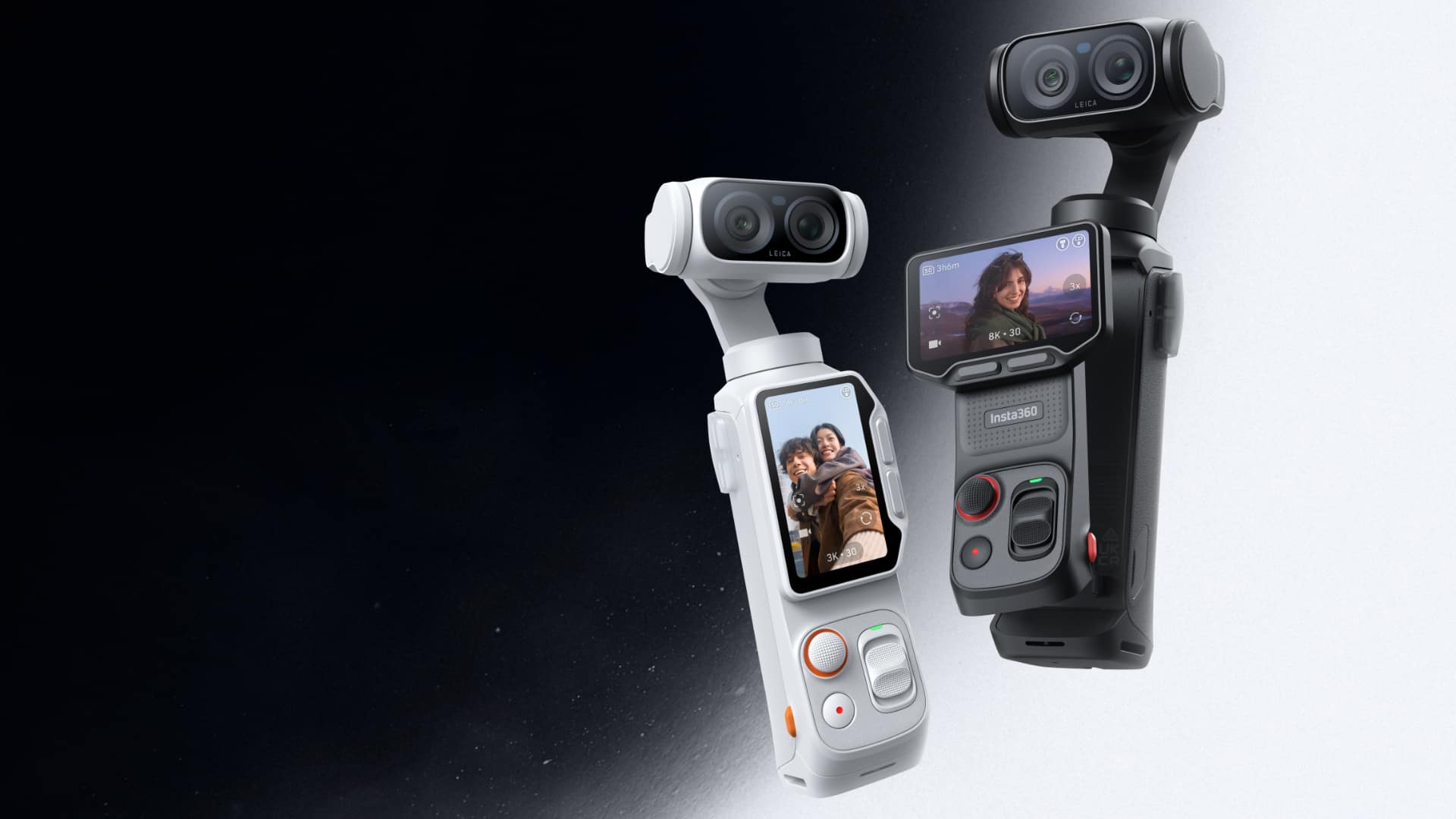
Insta360 launched Luna Ultra on June 29 as a dual-lens 8K gimbal camera, and founder Liu Jingkang said the project had already been in development for about five years. The long runway matters because Luna was not shaped as a quick answer to DJI’s pocket-camera lineup. It grew from a single-lens, more modular concept into a camera built around a detachable screen and controller, with Insta360 and Leica calling it a new category in their imaging partnership.
That detachable display became one of the defining design choices. JK Liu said it was important enough to delay the launch because it improved the experience for vlogging, telephoto shooting, and any setup where the camera sits farther from the operator. In practice, that points straight at the frustrations compact-camera users know well: cramped framing, awkward selfies, and the usual tradeoff between a small body and usable handling. The Luna approach tries to solve those problems without pushing creators back to a bigger rig.
Insta360’s own launch materials frame Luna Ultra as a flagship dual-lens 8K gimbal camera with a detachable 2-inch OLED touchscreen, Triple AI Chip system, AI-powered tracking, 10-bit I-Log, Dolby Vision support, Leica Summicron optics, and up to 12x zoom, including 6x lossless zoom. The camera weighs 233 grams, carries 47GB of built-in storage, and is rated for up to four hours of battery life, which keeps it in the pocketable category even as it leans into more ambitious shooting options.

The company had already been seeding the Luna series before launch. At NAB Show 2026 in Las Vegas, select creators and media got an early hands-on look and took the camera out to the Strip, a clear sign that Insta360 wanted Luna seen as a serious creator tool before it hit the market. Imaging Resource also noted that Luna Ultra appeared for pre-order at B&H Photo before the official launch, another clue that the rollout was being managed to build momentum around the category, not just the hardware.
The stakes are bigger than one camera. PetaPixel reported that the project began with about 30 million yuan, roughly $4.4 million, in funding, which suggests a heavy internal bet rather than a side experiment. That kind of investment, paired with the Leica tie-in and the US launch, shows Insta360 pushing beyond 360 cameras and action rigs into the compact creator segment DJI has owned for years. Luna’s real significance is not just that it exists, but that it was built to answer the exact pain points that make small cameras hard to live with, and to signal where the next round of pocket design is headed.
This article was produced by Prism’s automated news system from verified source data, official records, and press releases, then run through automated quality and moderation checks before publishing. The system is built and supervised by the people who set the standards it runs under. Read our full AI policy.
Did this article answer your question?