Jake Guzman’s Otherworldly America celebrates the United States’ visual range
Jake Guzman’s new book makes America feel strange again, using weather, color, and scale to turn everyday landscapes into scenes with a distant planet’s energy.
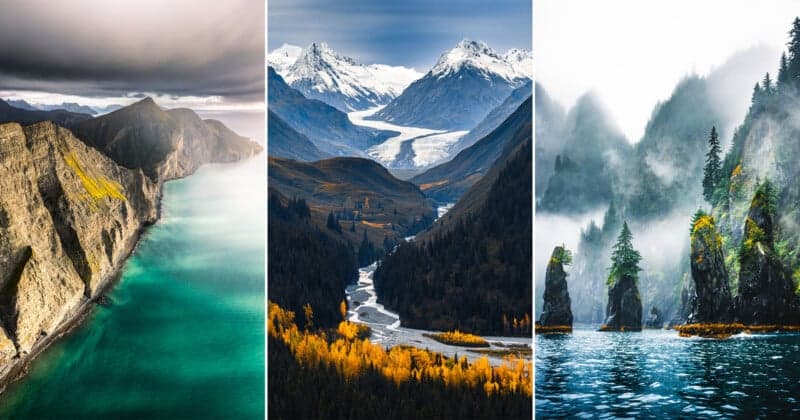
Jake Guzman’s Otherworldly America works because it does not chase exoticism for its own sake. The 256-page DK hardcover sends the eye from Alaska and Hawai’i to New England, then keeps surprising you by making coastlines, mountain valleys, roadside pull-offs, and other familiar ground look newly untamed. For landscape shooters, that is the real lesson: the magic is not in hunting only the rarest place, but in learning how to see ordinary American terrain as if it belonged somewhere else.
A landscape book built on range, not rarity
Otherworldly America, published in hardcover on May 19, 2026, is built as a broad survey of the United States rather than a narrow best-of reel. Publisher and retailer listings frame it as a tour through glacier-covered peaks, red-rock canyons, rainforests, and bright coastal scenes, with material drawn from hidden backcountry spots, iconic national parks, and overlooked state parks. That mix matters, because Guzman is not only showing the headline destinations. He is making the case that visual drama lives in the spaces between the famous landmarks too.
The book’s scope gives it a useful rhythm for photographers. One set of images can carry the clean scale of a remote coast; the next can pull you into moss, stone, or weathered texture that feels almost abstract. That sequencing, moving between the grand and the intimate, is one reason the project lands as more than a portfolio.
How Guzman makes familiar ground look unfamiliar
Guzman’s strongest move is contrast. He leans into wide open spaces, dramatic weather, and strong natural color, then frames those ingredients so that the scene stops reading as “travel photo” and starts feeling alien. A road, a ridge, or a shoreline can become strange when the light is low, the sky is unsettled, and the composition strips away easy scale cues.

The locations themselves do a lot of the work. Alaska and Hawai’i offer obvious extremes, but New England and the lower-contrast places in between are what make the project interesting. When a photographer can pull an otherworldly frame out of a mountain valley, a wet forest edge, or a roadside overlook, the image feels less dependent on spectacle and more dependent on seeing.
Sequencing also matters here. The book’s appeal is not just the individual hero frame, but the way hundreds of photographs can build a visual argument across regions. Remote coastlines, red stone, snow, surf, and dense green all create a different emotional register, and when they are presented together the country starts to feel less like a map and more like a collection of very different worlds.
The backstory that keeps the book grounded
Part of the book’s reach comes from Guzman’s own path. He says he started photographing as a teenager, first shooting hikes on an iPhone and posting the images online, then buying a used film camera for $10 at Goodwill because he wanted to keep learning without spending much money. That kind of beginning gives the project a practical edge. It says the work grew from repetition, curiosity, and persistence, not from a perfect first setup.
Guzman is now based in Seattle, Washington, and his site describes him as a professional outdoor adventure photographer and filmmaker working in travel, adventure, and automotive imagery. He also says he has visited more than 50 countries and almost every state in the USA. That breadth shows up in the book’s confidence: he understands scale, weather, and landscape variety because he has spent years moving through it.

His audience has grown with him. A PetaPixel summary says he has over a million Instagram followers, while a third-party bio page places him above 1.2 million. A TikTok profile associated with him describes him as Pacific Northwest-based and lists about 58K followers there. The numbers matter less as a status marker than as proof that his approach has connected with a large audience without losing its field-tested feel.
What to steal from the book when you head outside
The most useful takeaway from Otherworldly America is not to search for “epic” scenes in the abstract. It is to look for places where light, color, and weather can override familiarity. That can mean revisiting the same trail after a storm, waiting for fog to flatten a scene into shapes, or choosing a less famous overlook because the composition is cleaner and the colors are stronger.
A few practical ways to work this approach in the field:
- Go out when the weather is active. Rain, mist, snow, and broken cloud can simplify a scene and push it toward mood instead of postcard clarity.
- Use color with intention. Green moss, volcanic rock, wet sand, and red stone all become stronger when they are isolated against a limited palette.
- Break a location into layers. Shoot a wide frame for scale, then move in for texture, edge detail, or an odd shape that feels almost geological.
- Treat overlooked places as serious locations. State parks, roadside pull-offs, and backcountry edges often give you the visual surprise people assume only national parks can deliver.
- Return at different times. The same place can look ordinary at noon and surreal at sunrise, in storm light, or after fresh snow.
Those choices are what make Guzman’s images feel less like souvenirs and more like discoveries. He is not telling photographers to go farther just to see something new. He is showing that the United States already contains enough visual range to feel alien, if you give the scene the right weather, the right frame, and the patience to wait for it.
This article was produced by Prism’s automated news system from verified source data, official records, and press releases, then run through automated quality and moderation checks before publishing. The system is built and supervised by the people who set the standards it runs under. Read our full AI policy.
Did this article answer your question?