James Webb reveals 16.5 million stars in Cigar Galaxy image
Webb stitched 223 megapixels, 16.5 million stars and 65 hours of data into a Cigar Galaxy view that exposes new structure.
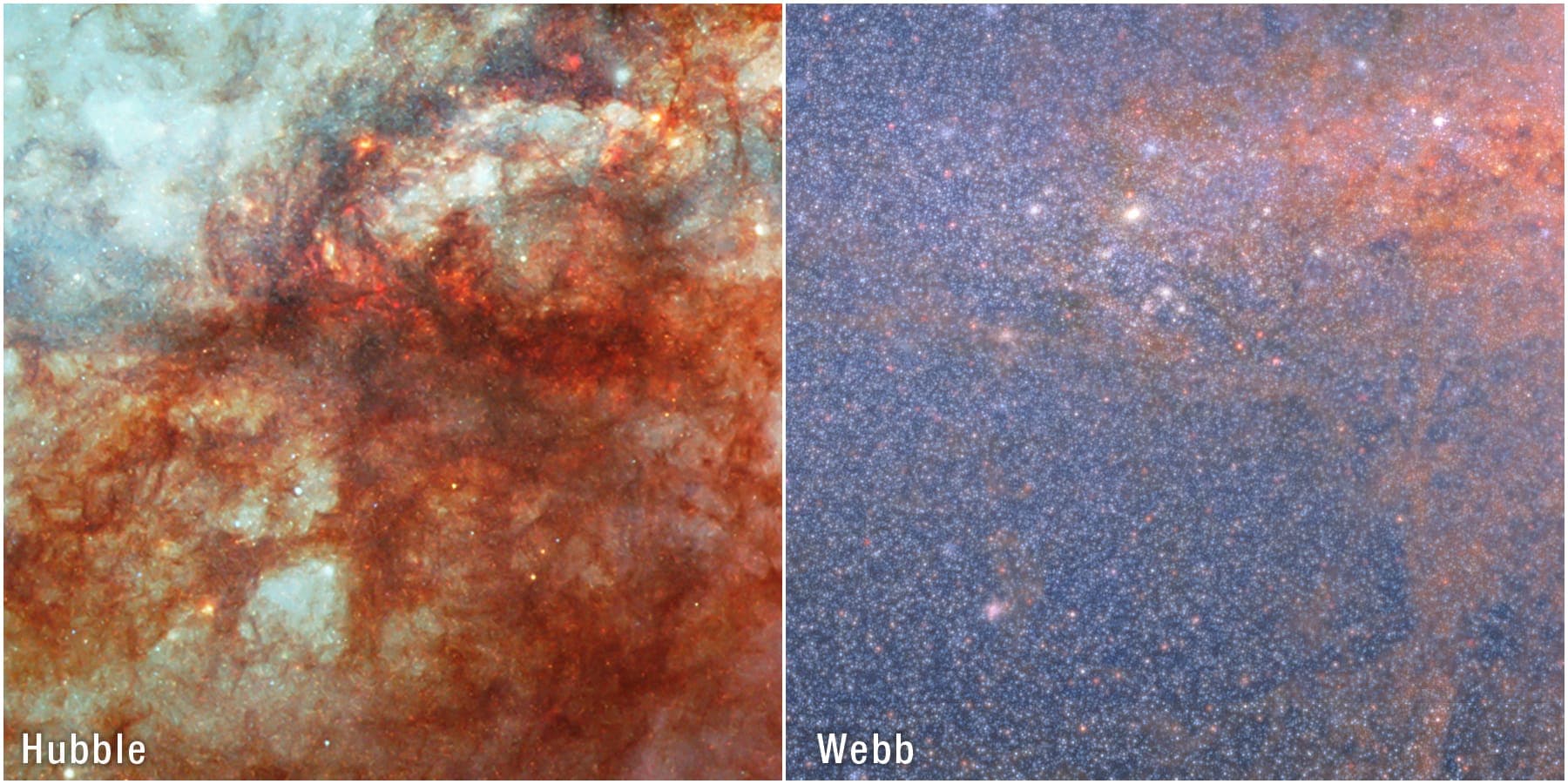
The James Webb Space Telescope has turned Messier 82 into a 223-megapixel star map, and the scale is the first thing that lands. Webb spent 65 hours, nearly three days, building a composite that NASA says now shows about 16.5 million stars in the Cigar Galaxy, along with dust grains and ionized hydrogen gas in distinct colors.
NASA describes the image as a Webb and Hubble composite, with Webb’s near-infrared data paired with archival visible-light observations from the Hubble Space Telescope. In the finished frame, blue-white marks the stars, red-orange traces dust grains, and yellow marks ionized hydrogen gas. That mix is more than a color exercise: Webb’s infrared view can cut through dust and gas to reveal the galaxy’s shape and, for the first time in this view, millions of individual stars.
Messier 82 sits about 12 million light-years away in Ursa Major and is one of the clearest examples of a starburst galaxy in the nearby universe. NASA says it is forming stars about 10 times faster than the Milky Way, and that pace is thought to have been triggered by a merger with another galaxy. The scene Webb captured is not frozen in a simple sense either; NASA says the near-infrared view reflects a system that has been evolving over a couple hundred million years.

For photographers, the appeal is easy to read. A 223-megapixel composite is not just a bragging number, it is the kind of file size that lets a single image hold multiple layers of information at once, from the broad structure of the galaxy down to the texture inside its dust lanes. The result feels closer to a deep, patient data build than a single exposure, which is exactly why it stands out in a field where detail is usually limited by sensor size, optics, or the atmosphere.
Hubble had already observed M82 in visible light, but Webb pushes the same target into a different register. The two telescopes together give the Cigar Galaxy a longer visual history and a more complete portrait, and this latest frame shows how extreme composite imaging keeps stretching what a photograph can contain.
This article was produced by Prism’s automated news system from verified source data, official records, and press releases, then run through automated quality and moderation checks before publishing. The system is built and supervised by the people who set the standards it runs under. Read our full AI policy.
Did this article answer your question?