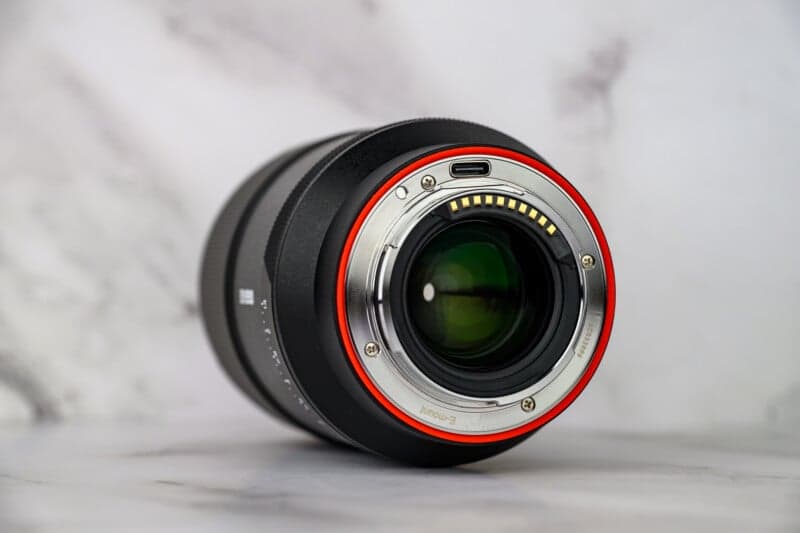
Light Lens Lab 35mm f/1.4 homage revives Leica’s legendary glow
The $1,399 Light Lens Lab 35mm f/1.4 is for M-mount shooters chasing Leica AA glow, not a museum-perfect clone.

A Leica legend, rebuilt for people who actually shoot
The Light Lens Lab 35mm f/1.4 “11873” is aimed squarely at the Leica M shooter who wants the original Summilux-ASPH double-aspherical mood without paying collector-market money. At $1,399, it is a fraction of the price of the rare Leica AA lens, yet it still goes after the same emotional territory: that soft-edged, glowing wide-open rendering that made the original famous, then quietly became financially out of reach. The appeal here is not just that it is cheaper, but that it tries to preserve the tactile, mechanical, and visual experience that makes a 35mm f/1.4 feel like a Leica lens in the first place.

Why the original AA became the reference point
The lens Light Lens Lab is chasing is the original 35mm f/1.4 Summilux-M AA, the double-aspherical version produced from 1991 to 1994 in a run of fewer than 4,000 lenses. Leica Wiki lists it as a 9-element, 5-group design with a 10-blade diaphragm and a weight of about 300 g, which helps explain why it still carries a near-mythic reputation among M users. Secondary-market pricing has drifted into the roughly $10,000 to $25,000 range, turning what was once a great working lens into something closer to a guarded artifact.
That scarcity matters because the AA is not just prized for rarity. It is loved for the way it draws, with a glow and character that sit between clean modern correction and the messier romance of older glass. For street and documentary shooters, that personality can matter more than headline sharpness, especially when the lens still feels compact and instinctive on a rangefinder body.
What Light Lens Lab is actually copying, and what it is not
Light Lens Lab says the 11873 is a homage to the double-aspherical concept, not a one-to-one reproduction frozen in amber. The company’s own materials describe added ED and achromatic elements, lanthanide-infused optical elements, and precision-molded, manually polished aspherical elements, all built to preserve the controlled glow at f/1.4 while improving behavior on modern high-resolution digital sensors. That is the crucial distinction: this lens is trying to keep the Leica-style signature while correcting for the realities of today’s cameras.
The company also says all mechanical and optical components are designed, manufactured, and assembled in-house. That kind of vertical control is part of why the lens feels more like a serious optical project than a novelty homage. Light Lens Lab’s development blog says the first prototype was completed in 2023 and submitted to Leica Society International for in-depth testing and review, and that feedback from that process pushed the company to postpone release and refine both the optical design and quality-control process.
The numbers that matter on the camera
On paper, the 11873 sits close to the old formula. Light Lens Lab lists it as a 9-elements-in-5-groups design with a minimum focus distance of 0.7 m, an E46 filter thread, and a clip-on 12587 hood. The lens is compact too, with the aluminum version listed at 278 g and the titanium version at 300 g. That keeps it in the same practical weight class as the original AA, and it is light enough to feel natural on a Leica M11-P or any similar M body.
The handling details are very Leica-like: a half-stop aperture ring and a 10-blade diaphragm help it feel deliberate in the hand, while the manual focus experience is clearly meant to reward the same kind of careful, zone-focused shooting that M users already know. There is one important omission, though. The lens does not offer 6-bit coding, so the camera will not receive EXIF lens data. For some photographers that is a trivial compromise; for others, especially those who rely on metadata organization, it is the cleanest sign that this is a homage and not a factory Leica product.
How it differs from Leica’s current 35mm Summilux
Leica’s own current Summilux-M 35 f/1.4 ASPH takes a different path. Leica Camera describes it as a classic reportage lens, and the current version uses 9 elements in 5 groups, a floating-element design, a close-focus distance of 1.3 feet, 11 aperture blades, a 176° focusing rotation, and an integrated hood. Leica also emphasizes its improved bokeh and the move from nine blades to eleven, which shows how the modern lens has been tuned for smoother out-of-focus rendering and more flexible close work.
That comparison makes the Light Lens Lab lens easier to place. The 11873 is not trying to surpass Leica’s current 35mm Summilux-M on every modern convenience. It is chasing the older AA aesthetic and rendering, the thing that made the lens famous before Leica’s later refinements shifted the design toward a more polished, more modern reportage tool. If you want the latest Leica formula, the current Summilux is the answer. If you want the legendary glow with a more vintage-leaning personality, the homage is the more interesting proposition.
What it looks like in real shooting
Chris Niccolls’ take is especially useful because it keeps the discussion grounded in actual use rather than spec-sheet theater. The lens delivers vibrant flare, maintained contrast, and rainbow-like ghosting patterns, which sounds like a liability until you see how controlled the effect is in practice. That kind of rendering gives frames a visible signature without flattening them into mush, and that balance is exactly what makes character lenses worth carrying on a working rangefinder.
That is why this lens makes the most sense for a very specific kind of M-mount photographer: someone who wants the visual romance of the AA, shoots street or documentary work where personality counts, and values a compact, tactile lens more than perfect modern neutrality. If you want sterile perfection, this is not the point. If you want a lens that can add mood, flare, and a bit of emotional lift while still staying usable day to day, Light Lens Lab is speaking directly to you.
The value proposition, plain and simple
The broader market context is hard to ignore. The original Leica AA has become scarce, expensive, and largely collector territory, while the 11873 stays within reach at $1,399. Light Lens Lab opened pre-orders on November 8, 2025, with deliveries expected between December 2025 and January 2026, and later added a Titanium Grey limited edition with a November 21, 2025 pre-order close. Those dates matter because they show how quickly this lens moved from prototype curiosity to a real option for buyers who had long ago written off the AA look as financially unrealistic.
In the end, the 11873 makes its case by understanding what made the original legendary. It is not pretending to be the only 35mm f/1.4 that matters, and it does not need to. It gives Leica M users a compact, beautifully made, character-rich alternative to a five-figure original, and that is enough to make the old glow feel newly available again.
This article was produced by Prism’s automated news system from verified source data, official records, and press releases, then run through automated quality and moderation checks before publishing. The system is built and supervised by the people who set the standards it runs under. Read our full AI policy.
Did this article answer your question?