Major Camera Brands Unite Against Generative AI Inside Cameras
Eight competing camera brands walked out of CP+ 2026 with a rare consensus: generative AI that fabricates imagery has no place inside a camera.

Eight competing camera manufacturers rarely agree on anything. After CP+ 2026, they agreed on this: generative AI that synthesizes or fabricates image content does not belong inside a camera.
Canon, Nikon, Sony, Fujifilm, OM System, Panasonic, Sigma, and others put forward the same position when their executives were interviewed following the trade show. The consensus wasn't coordinated in any formal sense; it emerged independently across brands that normally guard their technological roadmaps closely. That kind of convergence signals something more than a talking point.
The distinction these brands drew matters. None of them rejected AI outright. What they rejected was on-camera generative AI: features that add, synthesize, or invent scene elements that weren't captured by the lens. Noise reduction, smarter autofocus, composition aids like Live GND-style gradients, and metadata-driven workflows all cleared the bar. The line was drawn at features that replace captured reality with manufactured imagery.
Sigma's CEO was direct about the stakes, cautioning against solutions that substitute synthetic results for human creativity. Nikon's marketing leadership framed it in complementary terms, emphasizing support for the human element and signaling interest in content authenticity tools rather than on-body image generation.
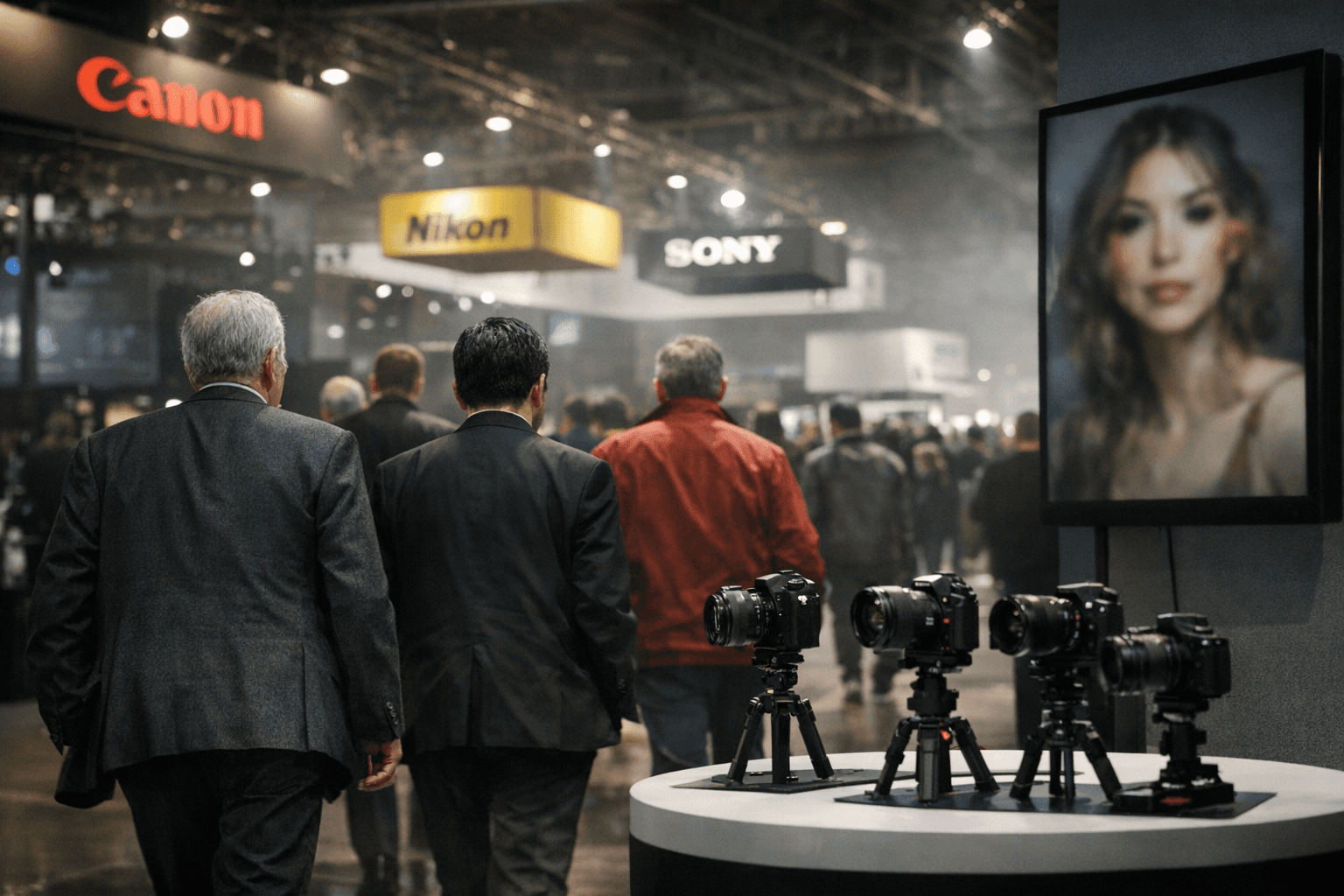
The backdrop for this industry stance is recent history with smartphones. Several makers briefly shipped features that could alter or add scene elements, and the backlash from photographers and journalists was swift. Concerns about provenance, about whether a published image actually reflected what happened, cut to the core of what photography is supposed to document. Camera brands took note.
For photojournalists and documentary shooters, the manufacturers' position carries real weight. The editorial and professional markets depend on the credibility of the record. A camera that can silently synthesize scene elements would be, for those practitioners, worse than useless; it would be a liability. The industry's reluctance to cross that line suggests they understand exactly which customer they're protecting.
What comes next, based on the collective signals out of CP+ 2026, is more investment in AI that makes the captured moment cleaner and easier to achieve: better denoising algorithms, more reliable subject tracking, and framing assists that guide without overriding judgment. The camera stays a recording instrument, and the photographer stays in charge.
Know something we missed? Have a correction or additional information?
Submit a Tip

