Meta Launches Prescription-Friendly Ray-Ban Smart Glasses With Built-In Cameras
Meta's first prescription-built Ray-Ban smart glasses pack a 12MP camera into frames designed for corrective lenses, opening hands-free capture to the roughly two billion people who need them.
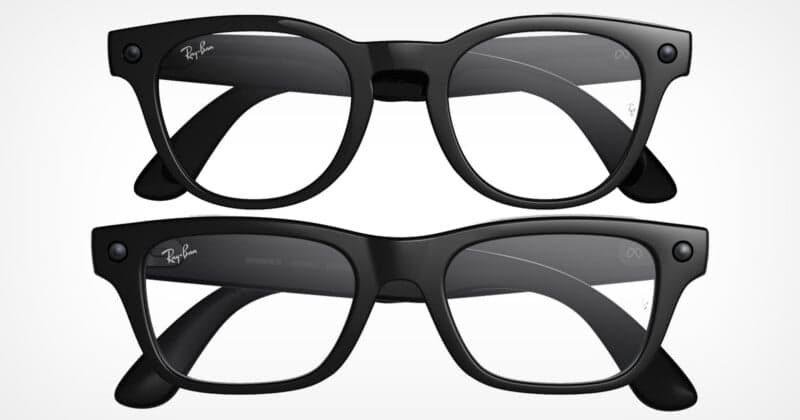
The surprise isn't that Meta built prescription-compatible Ray-Ban smart glasses; it's that it took this long. Roughly two billion people worldwide either use or need corrective lenses, and every previous Ray-Ban Meta made wearing them a compromise: frames engineered for plano lenses, nose pads that never quite fit a prescription blank, and hinges that strained under the added thickness.
The Blayzer Optics (Gen 2) and Scriber Optics (Gen 2) were developed with EssilorLuxottica and redesigned from the hinge outward. The new frames feature overextension hinges offering an additional 10 degrees of rotation, interchangeable nose pads, and adjustable temple tips that can be shaped to match the wearer's head precisely. Preorders opened March 31, with both frames available at optical retailers in the U.S. and select international markets starting April 14, priced from $499. The $499 price point sits above the $299 entry-level Ray-Ban Meta and well below the $799 display-equipped model. Prescription lenses are purchased separately through optical retailers.
The Blayzer is rectangular and available in standard and large sizes; the Scriber offers a more rounded profile. Both are available on Meta.com and Ray-Ban.com and, critically, through traditional prescription eyewear channels, meaning opticians can fit the lenses and the smart glass hardware in a single appointment. On the hardware side, the specs match the existing Ray-Ban Meta Gen 2: a 12MP camera, speakers on the temples, microphone, and eight-hour battery. There is no built-in display; these are capture-and-AI-assist devices, not augmented-reality viewfinders.
That distinction matters for photographers. A street shooter with a -3.00 correction previously had two options on a walk: prescription glasses with no camera, or contacts plus standard Ray-Bans. The Blayzer and Scriber eliminate that trade-off. The 12MP sensor won't challenge a Sony A7R V on raw image quality, but for documentary instants, a hands-free camera you're already wearing beats reaching for a phone left in a bag. The practical workflow is the same as any Ray-Ban Meta: capture on the glasses, pull files to your phone via the Meta app, edit in Lightroom Mobile or Snapseed, archive. Meta also added Wi-Fi 6 UNII-4 band support to both new models, which should tighten the quick-capture-to-phone offload pipeline.

The privacy calculus gets harder as the installed base grows. A lone Ray-Ban Meta wearer in a café is unusual and noticeable. Prescription wearers in Blayzer frames will be indistinguishable from anyone in standard glasses. Meta is limiting these glasses to the more widely accepted use case: recording video and interacting over voice, without a screen. But that operational opacity is precisely what demands a clear personal ethic around the capture button. Street and documentary shooting with a wearable still operates under the same framework as any candid photography; consent, context, and intent all apply, but the device makes that conversation harder to initiate.
What to watch: Meta's software roadmap will determine whether the 12MP sensor gets smarter through computational photography updates, or whether the hardware ceiling stays flat. EssilorLuxottica's deeper involvement raises the longer-term question of whether future optics tiers, better coatings, and anti-reflective prescriptions tuned to the camera's field of view, could close some image-quality gap. For now, the Blayzer and Scriber are best understood as an accessibility correction: the first Ray-Ban Metas genuinely built for the majority of the population that actually wears glasses.
Know something we missed? Have a correction or additional information?
Submit a Tip

