Motorsports Photographer Jamey Price Reveals Secrets of F1 Spy Photography
Jamey Price shoots rival F1 cars at 40,000 ISO and 1/12000 shutter speed — spy photography that's quietly shaped race strategy since the 1980s.
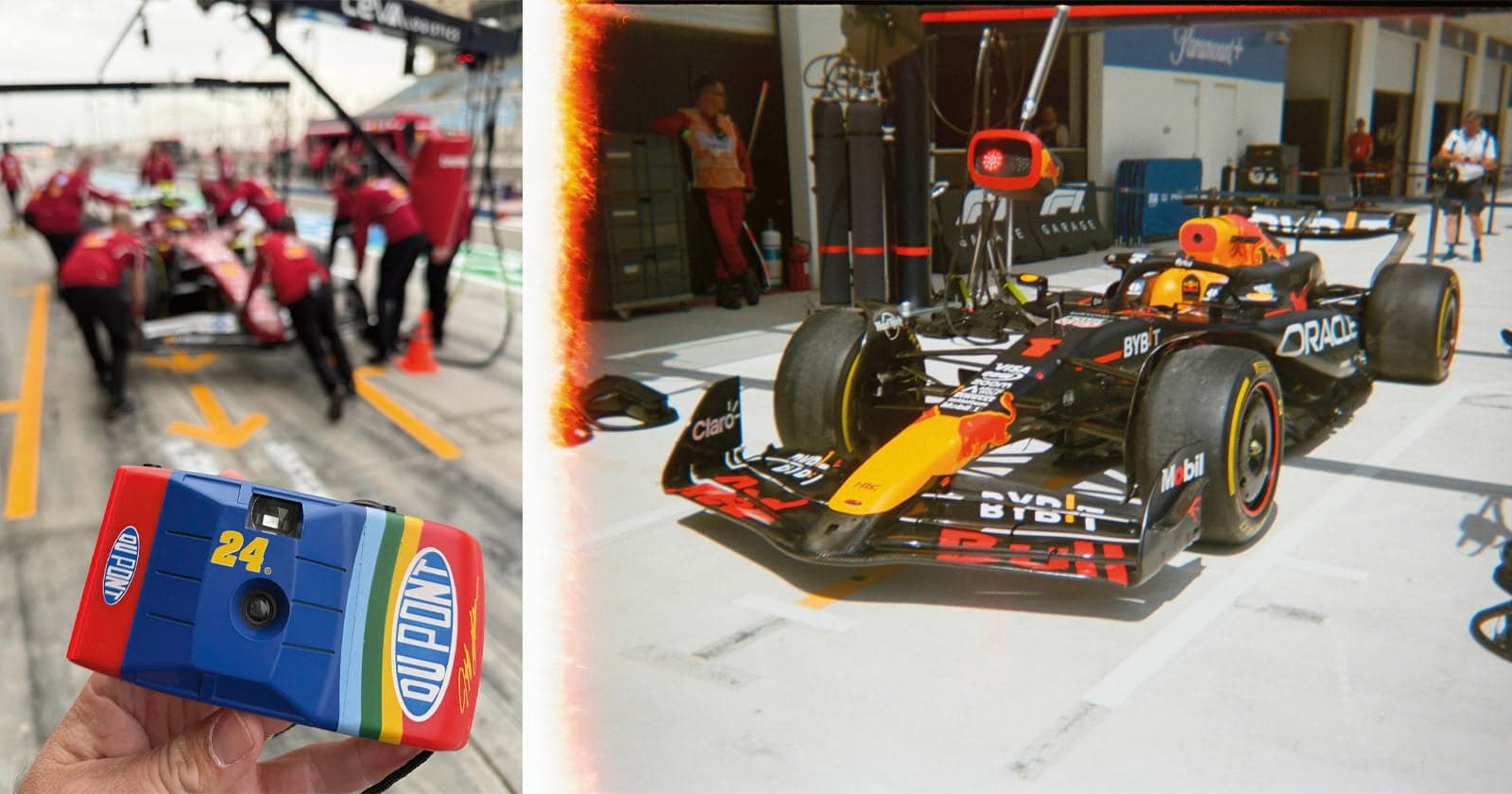
Most people watching Formula 1 see the photographers crouched at the apex of a corner and assume they're chasing the hero shot. Some of them are doing something else entirely.
Motorsports photographer Jamey Price has pulled back the curtain on F1's long-running spy photography culture, a practice most fans don't know exists and teams have no interest in advertising. The work is technically demanding and strategically consequential: teams employ photographers specifically to shoot rival cars at close range, mining those images for technical intelligence that feeds directly into development decisions.
"The teams utilize photographers to kind of figure out how to make their own cars go faster but also keep their competition in check," Price says.
The reason this matters more in F1 than in any other motorsport comes down to the series' structure. Formula 1 is a prototype series, meaning every team enters a slightly different car built around its own interpretation of the technical regulations. That makes competitor hardware genuinely worth studying. A diffuser edge, a suspension pickup point, a bargeboard geometry that seems to be working in sector two — all of it is fair game for a photographer with a long lens and a fast enough setup.
And the setups get extreme. Price describes situations that require what he calls "crazy" settings: 40,000 ISO and a shutter speed of 1/12,000 to ensure a car moving at racing speed comes out frozen sharp. For context, most sports photographers are already pushing limits at ISO 6400 or 12,800. At 40,000, you're trusting your noise reduction pipeline and the quality of your glass as much as the sensor itself.
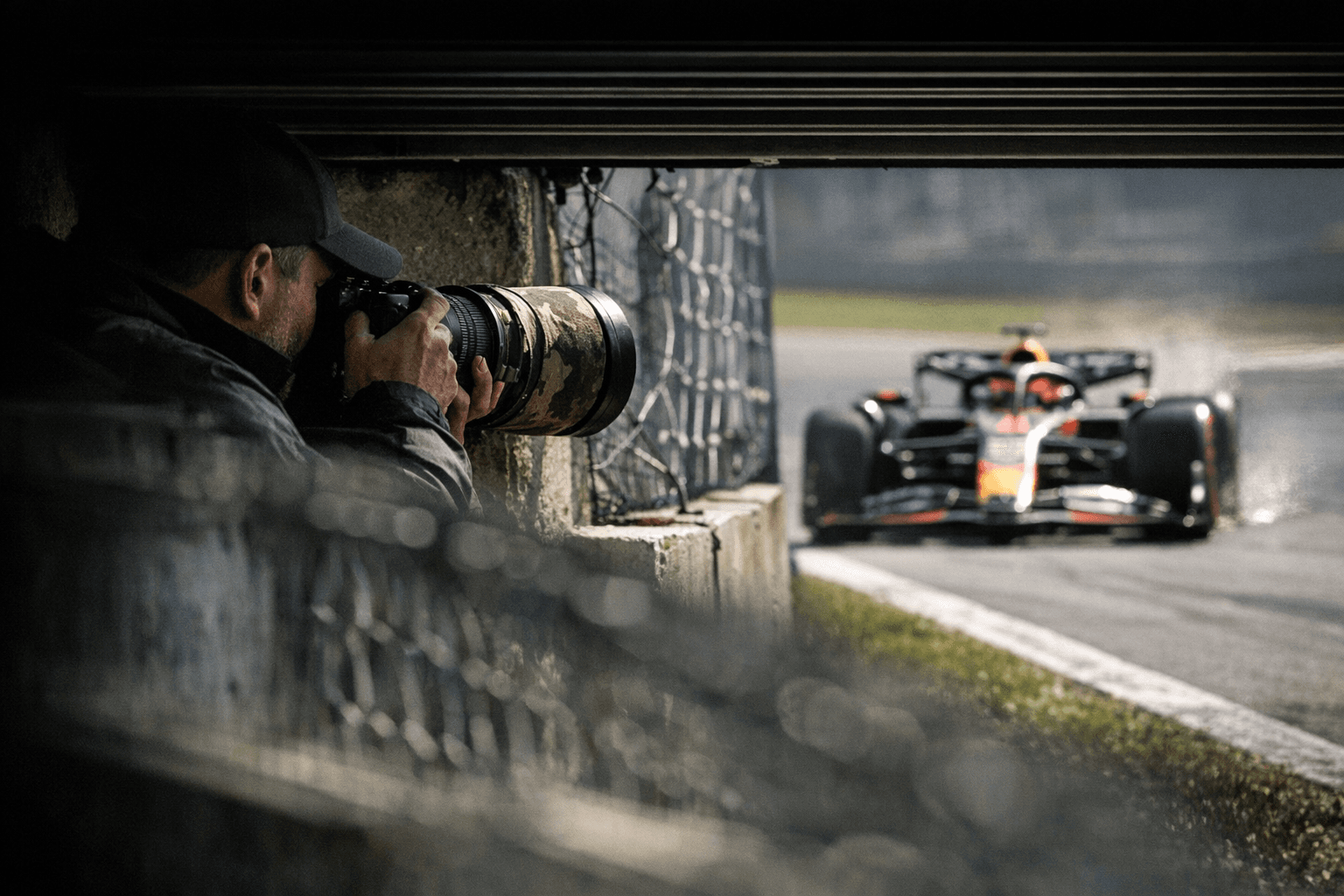
The practice isn't new. Price traces it back to the 1980s, when teams were already using photographers to gather intelligence on the competition. The operational difference between then and now is enormous, though. Back then, teams were forced to wait for film to be developed before anyone could look at the results. Today, photos can be transmitted immediately from a photographer's position on track, letting engineers and strategists see what's happening in real time. That shift from hours-later intelligence to live intelligence is the thing that makes modern F1 spy photography genuinely useful rather than just interesting.
Long lenses are the essential tool. No specific focal lengths were disclosed, but the physics of an F1 circuit, where barriers and marshaling zones limit how close anyone gets to a car at speed, make super-telephoto glass non-negotiable. You're isolating technical details on a car that's doing 200 mph through a corner, and you need the image to be sharp enough for an engineer to actually read what they're looking at.
Price's account reframes what you see at a Grand Prix. Those photographers clustered at the Japanese Grand Prix, cameras raised toward the barriers, are not all working for magazines.
Know something we missed? Have a correction or additional information?
Submit a Tip

